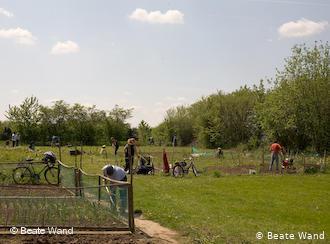
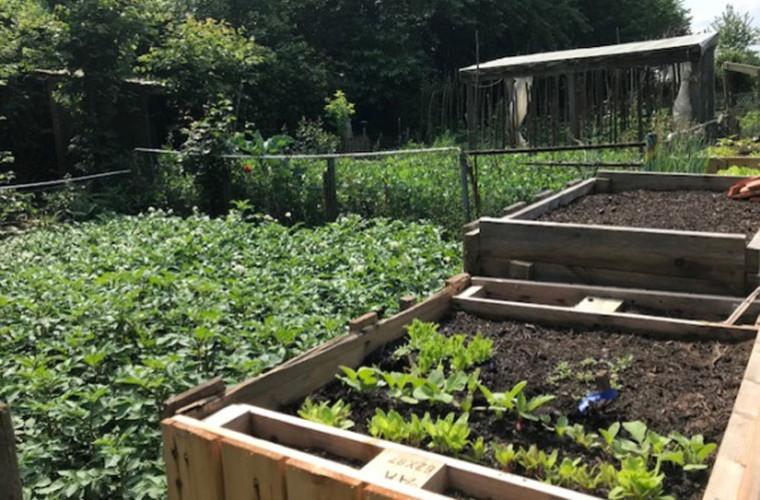
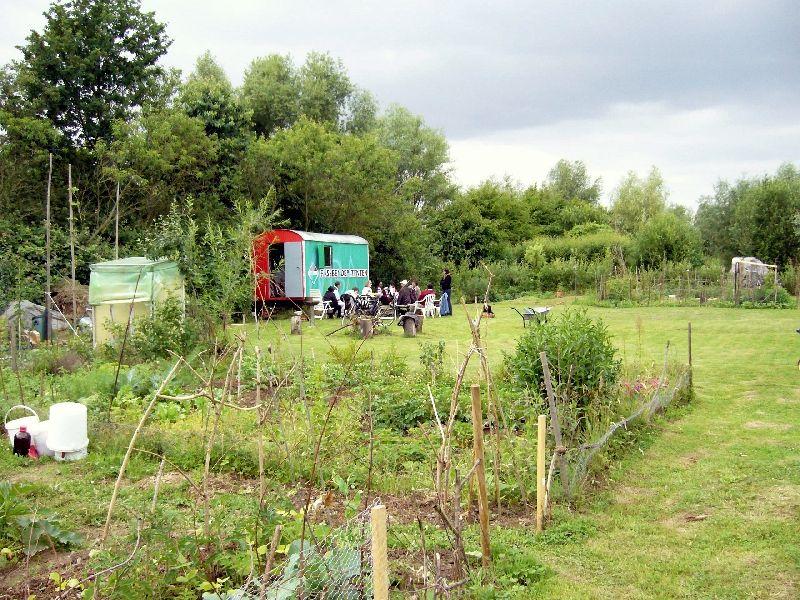
Since 2007, in the area of a former tree nursery, the international garden in Bonn gives space for social integration. Covering 3,000 m2 the area was turned into an allotment garden with garden plots of approximately 40 m2. The plots are allocated to 25 families from different cultural backgrounds, living in the deprived neighbourhood of Bonn-Dransdorf to support their self-sufficient agricultural practices and foster their social integration (1,10). The aim of the project is to provide gardening families with the option for intercultural exchange and a chance to take roots in a new country. In 2003, the International Garden Bonn project was initiated is implemented by "Wissenschaftsladen Bonn", a community service group who persuaded the city of Bonn to provide the once city property free for this social inclusion project (1).
Overview
Nature-based solution
- Community gardens and allotments
- Allotments
- Community gardens
Key challenges
- Environmental quality
- Soil quality improvement
- Social justice, cohesion and equity (SDG 10)
- Environmental education
- Social cohesion
- Social interaction
- Economic development and employment (SDG 8)
- Economic development: agriculture
- Employment/job creation
- Cultural heritage and cultural diversity
- Promotion of cultural diversity
- Sustainable consumption and production (SDG 12)
- Sustainable consumption
- Sustainable production
Focus
Project objectives
Implementation activities
Main beneficiaries
- Citizens or community groups
- Marginalized groups: Refugees, asylum seekers, and migrants, Socio-economically disadvantaged populations (e.g. low-income households, unemployed)
- Food producers and cultivators (i.e. farmers, gardeners)
Governance
Management set-up
- Led by non-government actors
Type of initiating organisation
- Non-government organisation/civil society
Participatory approaches/ community involvement
- Co-planning (e.g. stakeholder workshops, focus groups, participatory mapping)
- Joint implementation (e.g. tree planting)
- Co-management/Joint management
Details on the roles of the organisations involved in the project
Project implemented in response to ...
Financing
Total cost
Source(s) of funding
- Public regional budget
- Public local authority budget
Type of funding
- Earmarked public budget
- Direct funding (grants, subsidies, or self-financed projects by private entities)
Non-financial contribution
- Provision of land
- Provision of labour
- Provision of expertise
- Citizens (e.g. volunteering)
Impacts and Monitoring
Environmental impacts
- Green space and habitat
- Increased green space area
- Increased conversion of degraded land or soil
- Restoration of derelict areas
Economic impacts
- Increase of green jobs (e.g. paid employment positions)
- Increase in agricultural production (for profit or not)
Socio-cultural impacts
- Social justice and cohesion
- Improved social cohesion
- Fair distribution of social, environmental and economic benefits of the NBS project
- Increased visibility and opportunity for marginalised groups or indigenous peoples
- Increased opportunities for social interaction
- Increased involvement of locals in the management of green spaces
- Increased access to healthy/affordable food
- Health and wellbeing
- Improved mental health
- Cultural heritage and sense of place
- Increased sense of place identity, memory and belonging
- Education
- Increased support for education and scientific research
- Increased knowledge of locals about local nature
Type of reported impacts
Presence of formal monitoring system
Presence of indicators used in reporting
Presence of monitoring/ evaluation reports
Availability of a web-based monitoring tool
References
2. Peter, B. (2008) ‘Internationaler Garten Bonn: Ein Stück Zuhause’, WILAinform, p. 3. Accessed September 3, 2020, Source link.
3. Jochum, K. (2008). Week 7 – Venturing into the Science Shop. [podcast] The Garden Project. Accessed September 3, 2020, Source link (Accessed 20 Jun. 2017).
4. Jochum, K. and Spurway, L. (2008). Week 10: Garden Project Highlights. [podcast] The Garden Project. Accessed September 3, 2020, Source link
5. Spurway, L. (2008). Week 5: Finding Common Grounds. [podcast] The Garden Project. Accessed September 3, 2020, Source link
6. Skowski, J. (2013) ‘Heimat finden durch interkulturelle Gärten’, Informationen zur Raumentwicklung, 5, pp. 421–426. Accessed September 3, 2020, Source link.
7. Wissenschaftsladen Bonn (2016) Projekte Archiv Grüne Spielstadt international. Accessed September 3, 2020, Source link
8. Wissenschaftsladen Bonn (no date) ‘Internationaler Garten Bonn’. Bonn: Wissenschaftsladen Bonn.
9. Hirsch, D. et al. (2016). Urban AgriCulture and Food Systems Dynamics: Urban Gardening and Urban Farming of the Bonn-Rhein-Sieg region, German. International Journal on Foodsystem Dynamics. pps. 406-419. Source link
10. Wissenschaftsladen Bonn. (2018). Der Internationale Garten in Bonn - wie Nahrungsmittel-Herstellung in der Stadt funktionieren kann. Accessed September 3, 2020. Source link