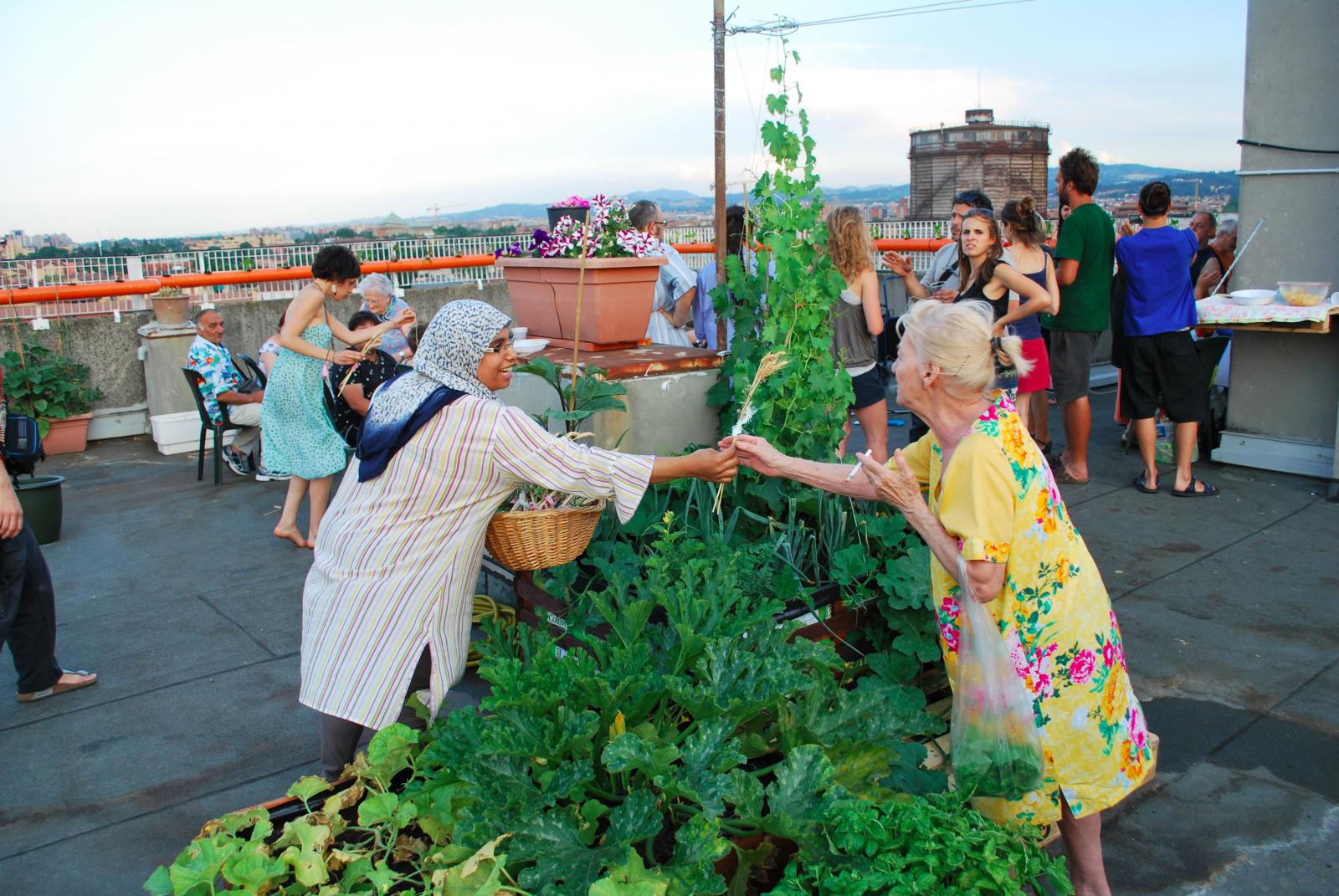
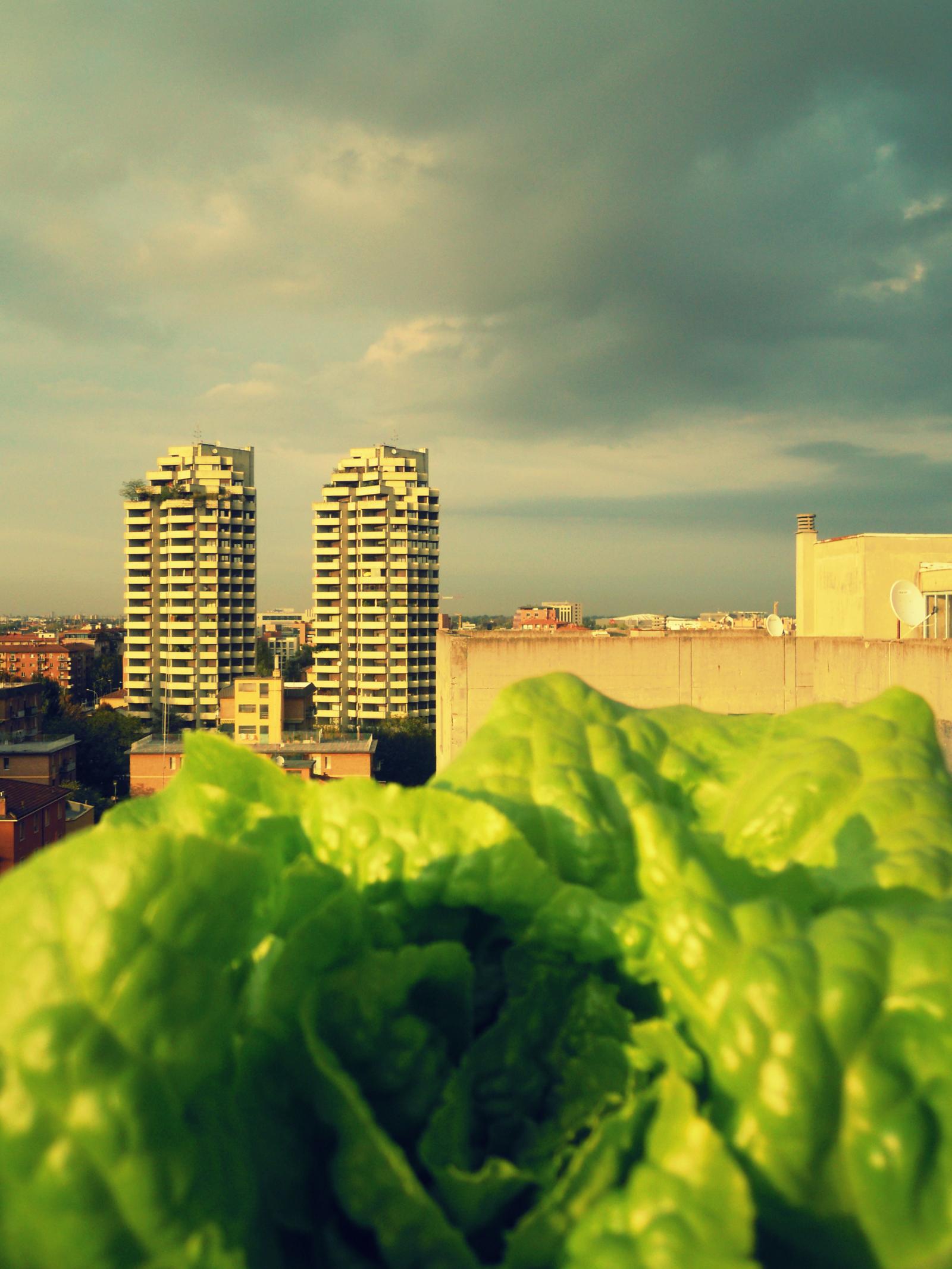
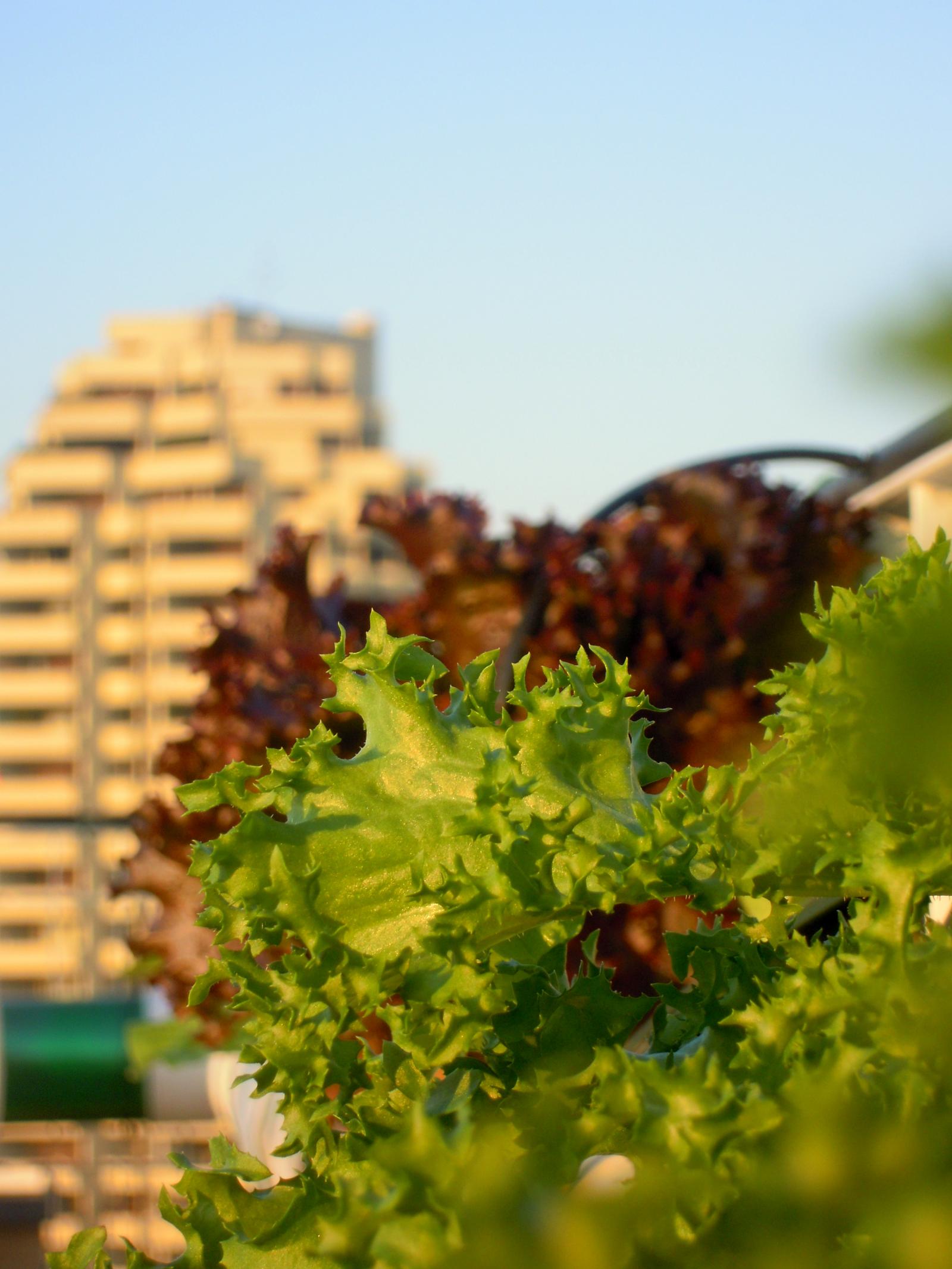
Via Gandusio is a social housing complex in the North of Bologna that was originally built for hosting workers that migrate from South Italy in the 60s. Nowadays, it hosts two different communities: advanced-age Italians and current international immigrants. The differences create some conflicts and limits relationships among the community. In 2010 a group of researchers tried to implement a community garden that was designed with the aim of setting a meeting point for the community where food production is the link between neighbours to exchange knowledge, culture and experiences. The 250 m2 roof garden started in 2011 becoming the first of the city of Bologna and of Italy (Ref. 7 and 8). Over the years the project has undergone changes and variations, has seen the end of funding and known voluntary management (2013). Since 2013 there is an urban vegetable garden cared for by some residents with the support of the Biodiversity association. (Ref.10)

Overview
Nature-based solution
- Nature on buildings (external)
- Green roofs
- Community gardens and allotments
- Community gardens
- Green areas for water management
- Sustainable urban drainage systems
Key challenges
- Green space, habitats and biodiversity (SDG 15)
- Green space creation and/or management
- Environmental quality
- Waste management
- Inclusive and effective governance (SDG 16)
- Inclusive governance
- Effective management
- Social justice, cohesion and equity (SDG 10)
- Social cohesion
- Social interaction
- Health and well-being (SDG 3)
- Enabling opportunities for physical activity
- Improving mental health
- Improving physical health
- Creation of opportunities for recreation
- Cultural heritage and cultural diversity
- Protection of historic and cultural landscape/infrastructure
- Promotion of cultural diversity
- Sustainable consumption and production (SDG 12)
- Sustainable consumption
- Sustainable production
Focus
Project objectives
Implementation activities
Main beneficiaries
- Researchers/University
- Citizens or community groups
- Marginalized groups: Elderly people, Refugees, asylum seekers, and migrants, Socio-economically disadvantaged populations (e.g. low-income households, unemployed)
Governance
Management set-up
- Co-governance with government and non-government actors
Type of initiating organisation
- Local government/municipality
- Researchers/university
- Citizens or community group
Participatory approaches/ community involvement
- Joint implementation (e.g. tree planting)
- Co-management/Joint management
Details on the roles of the organisations involved in the project
Project implemented in response to ...
Financing
Total cost
Source(s) of funding
- Public regional budget
- Public local authority budget
Type of funding
- Direct funding (grants, subsidies, or self-financed projects by private entities)
Non-financial contribution
- Provision of land
- Provision of labour
- Provision of expertise
- Public authorities (e.g. land, utility services)
- Citizens (e.g. volunteering)
Impacts and Monitoring
Environmental impacts
- Environmental quality
- Improved waste management
- Water management and blue areas
- Improved stormwater management
- Green space and habitat
- Increased green space area
Economic impacts
- Unknown
Socio-cultural impacts
- Social justice and cohesion
- Improved social cohesion
- Fair distribution of social, environmental and economic benefits of the NBS project
- Improved access to urban green space
- Increased visibility and opportunity for marginalised groups or indigenous peoples
- Increased opportunities for social interaction
- Increased involvement of locals in the management of green spaces
- Increased access to healthy/affordable food
- Increased sustainability of agriculture practices
- Health and wellbeing
- Gain in activities for recreation and exercise
- Cultural heritage and sense of place
- Increased sense of place identity, memory and belonging
- Education
- Increased knowledge of locals about local nature
- Increased awareness of NBS and their benefits
Type of reported impacts
Presence of formal monitoring system
Presence of indicators used in reporting
Presence of monitoring/ evaluation reports
Availability of a web-based monitoring tool
References
Ref. 2 Orsini, F. et al. (2014). Exploring the production capacity of rooftop gardens (RTGs) in urban agriculture: the potential impact on food and nutrition... Springer Science+Business Media Dordrecht and International Society for Plant Pathology, Available at Source link (Accessed 19-6-2020)
Ref. 3 Official webpage of BiodiverCity (Website not available in 2020)
Ref. 4 Bologna Today (2016), „Agricoltura urbana, agricoltura sostenibile: parte il progetto Susturbanfoods“, Available at Source link (Accessed 19-6-2020)
Ref. 5 Bologna University webpage on the Green Housing - Community Garden project, Available at Source link, (Accessed 10-7-2020)
Ref.6 Bologna Municipality Page on the project (Website not available in 2020)
Ref. 7 Community Garden in Via Gandusio official page (Website not available in 2020)
Ref. 8 SustUrbanFood Official Page: Source link
Ref. 9 Corrierre di Bologna (2017), “La ristrutturazione del condominio li farà sparire
«Acer e Comune non dicono nulla sul futuro», Available at Source link (Accessed 19-6-2020)
Ref. 10 L’Altra Babele (no date), L’orto sul tetto di Gandusio, Available at Source link, (Accessed 10-7-2020)
Ref. 11 Source link (no date), Salviamo l'orto sul tetto di via Gandusio Save the Gandusio Rooftop Garden, Available at Source link (Accessed 10-7-2020)