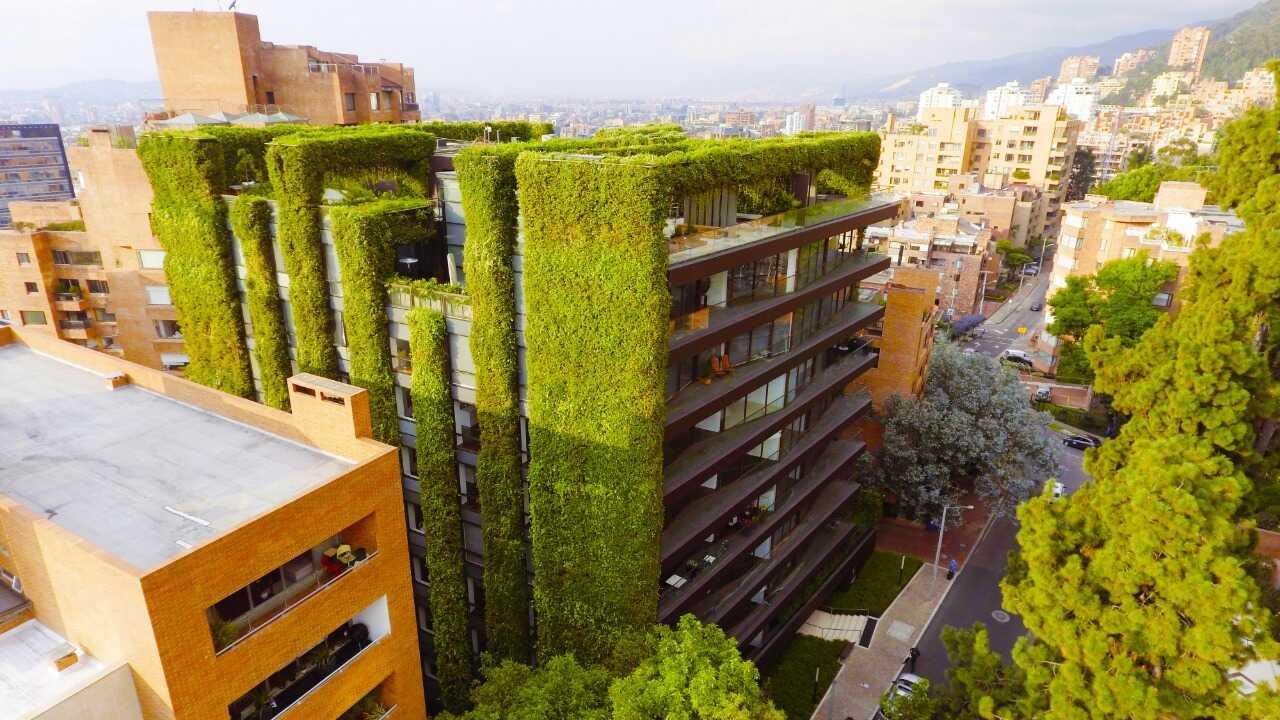
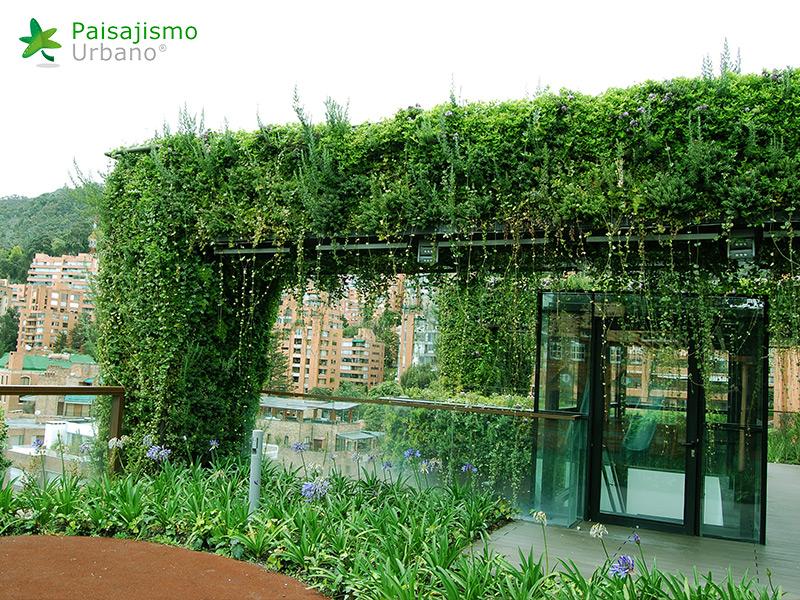
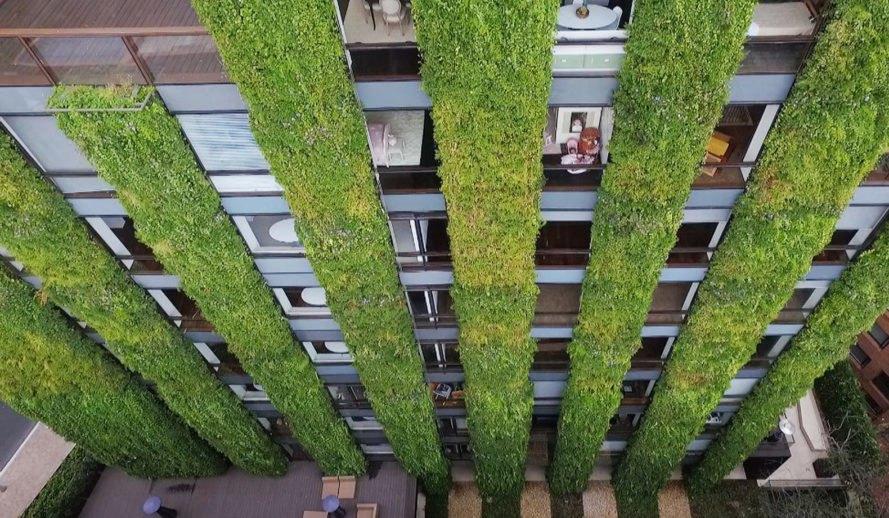
Santalaia is a high-end, multi-family residential building located in the heart of downtown Bogota, Colombia. Santalaia is often referred to as "the green heart of Bogota" and is seen as an icon of sustainability [1]. The 11-story building was completed in 2015 and all eleven floors are engulfed in many species of plant wildlife to encourage biodiversity. There are 115,000 native plants of 10 different species covering a total area of 3117 m² [2,3]. The plants included on the exterior of the building rely on a hydroponic system and provide a model of how to increase green zones in urban areas. A vertical garden of this size provides natural beauty in the middle of concrete Bogota while mitigating the carbon footprint of more than 700 people. An additional benefit of Santalaia’s vertical garden is that the plants create a “green carpet” that serve as insulation and reduce the use of air conditioners, an increasingly valuable contribution during times of rising temperatures due to climate change [5,6].

Overview
Nature-based solution
- Nature on buildings (external)
- Green walls or facades
Key challenges
- Climate action for adaptation, resilience and mitigation (SDG 13)
- Climate change adaptation
- Climate change mitigation
- Water management (SDG 6)
- Improvements to water quality
- Green space, habitats and biodiversity (SDG 15)
- Habitat and biodiversity conservation
- Environmental quality
- Air quality improvement
- Noise reduction
Focus
Project objectives
Implementation activities
Climate-focused activities
Climate change adaptation:
- Increase or improve urban vegetation cover to help reduce outdoor temperature
- Implement green walls or roofs to lower indoor temperature and provide insulation
Climate change mitigation:
- Implement solutions to help reducing energy consumption or support the use of sustainable energy resources
- Install vertical or horizontal artificial surfaces that help with carbon storage and cooling
Biodiversity conservation or restoration-focused activities
Biodiversity conservation:
- Protect and enhance urban habitats
- Create new habitats
- Protect species
- Undertake specific measures to protect species
- Undertake specific measures to protect native species
Main beneficiaries
- Private sector/Corporate/Company
- Citizens or community groups
Governance
Management set-up
- Led by non-government actors
Type of initiating organisation
- Private sector/corporate actor/company
Participatory approaches/ community involvement
- Unknown
Details on the roles of the organisations involved in the project
Project implemented in response to ...
Financing
Total cost
Source(s) of funding
- Corporate investment
Type of funding
- Unknown
Non-financial contribution
Impacts and Monitoring
Environmental impacts
- Climate change
- Lowered local temperature
- Reduced emissions
- Enhanced carbon sequestration
- Environmental quality
- Improved air quality
- Green space and habitat
- Promotion of naturalistic styles of landscape design for urban development
- Increased green space area
- Increased number of species present
Economic impacts
- Unknown
Socio-cultural impacts
- Social justice and cohesion
- Improved liveability
Type of reported impacts
Presence of formal monitoring system
Presence of indicators used in reporting
Presence of monitoring/ evaluation reports
Availability of a web-based monitoring tool
References
2. Container Gardenville. 2021. Santalaia: The Coolest Vertical Garden in the World - Container Gardenville. [online] Available at: Source link [Accessed 28 September 2021].
3. Greenroofs. 2021. Santalaia - Source link. [online] Available at: Source link [Accessed 28 September 2021].
4. Icities4greengrowth. 2021. Santalaia Building Vertical Garden (Bogotá - Colombia) | Indian Cities 4 Green Growth. [online] Available at: Source link [Accessed 26 September 2021].
5. Infobae. 2021. Algunos de los jardines verticales más grandes del mundo están en América Latina: cuáles son. [online] Available at: Source link [Accessed 28 September 2021].
6. Wonderful Engineering. 2017. World's Largest Vertical Garden Blooms In The Heart Of Bogota. [online] Available at: Source link [Accessed 28 September 2021].
7. Ideassonline. 2021. Available at: Source link [Accessed 29 September 2021].