

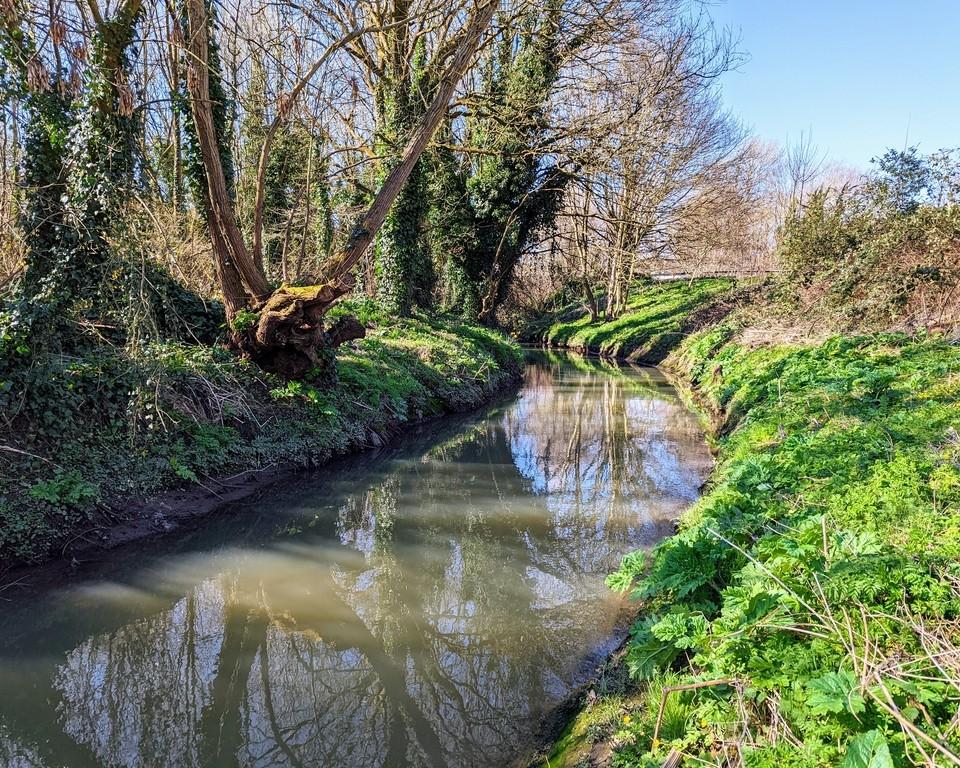
Sourced from Northern Worcestershire, the River Stour has played a significant role in the industrial heritage of Birmingham and the Black Country (Ref 1). It consists of 11 Water Framework Directive water bodies and multiple tributaries, spanning 200 km in length (Ref 2, 3). Once a pristine Salmonid river that powered the Industrial Revolution, rapid industrialization severely impacted the river, leaving it heavily polluted with sewage (ibid.). Initiated by the Birmingham and Black Country Wildlife Trust (BBCWT) in 2021, the Love Your River Stour (LYRS) project focuses on Dudley and Wolverhampton, aiming to transform the River Stour and its surrounding green spaces into a beautiful, wildlife-rich source of pride for local communities and to create a corridor for wildlife to thrive through the heart of the Black Country (Ref 4). Phase 1 of the project was completed in June 2023, bringing significant improvements along the river (Ref 5, 6, 7, 8). In Phase 2, the project will extend to a stretch running through Cradley Heath and Lye (Ref 7, 8). This initiative is funded by the UK Government's Green Recovery Challenge Fund.
Overview
Nature-based solution
- Blue infrastructure
- Lakes/ponds
- Rivers/streams/canals/estuaries
- In-land wetlands, peatlands, swamps, and moors
- Parks and urban forests
- Large urban parks or forests
- Other
Key challenges
- Green space, habitats and biodiversity (SDG 15)
- Green space creation and/or management
- Habitat and biodiversity restoration
- Habitat and biodiversity conservation
- Water management (SDG 6)
- Improvements to water quality
- Health and well-being (SDG 3)
- Creation of opportunities for recreation
- Social justice, cohesion and equity (SDG 10)
- Social justice and equity
- Environmental education
- Sense of community and community engagement
Principal problems in Functional Urban Area (FUA)
- Environmental Degradation
- Biodiversity loss
- Invasive alien species
- Poor water quality
- Land use and Socio-economic change
- Rapid urbanization
- Unequal availability and access to public green spaces
Key priorities
Focus
Project objectives
Implementation activities
Specification of climate or environmentally vulnerable communities
Biodiversity conservation or restoration-focused activities
Biodiversity conservation:
- Protect and enhance urban habitats
- Preserve and strengthen existing habitats and ecosystems
- Protect species
- Undertake specific measures to protect species
- Undertake specific measures to protect native species
- Control and clean invasive alien species
- Means for conservation governance
- Create and use scientific knowledge for conservation
Biodiversity restoration:
- Rehabilitate and restore damaged or destroyed ecosystems
- Restore species (native, endangered, or unspecified)
- Restore native species
- Clear and control invasive alien species
Main beneficiaries
- Local government/Municipality
- Public sector institution (e.g. school or hospital)
- Non-government organisation/Civil Society
- Researchers/University
- Citizens or community groups
- Young people and children
Governance
Management set-up
- Co-governance with government and non-government actors
Type of initiating organisation
- Non-government organisation/civil society
Participatory approaches/ community involvement
- Dissemination of information and education
- Joint implementation (e.g. tree planting)
- Co-management/Joint management
- Citizen monitoring and review
Details on the roles of the organisations involved in the project
Project implemented in response to ...
Type of enablers
Financing
Total cost
Source(s) of funding
- Public national budget
- Public regional budget
Type of funding
- Earmarked public budget
- Direct funding (grants, subsidies, or self-financed projects by private entities)
Non-financial contribution
- Provision of labour
- Provision of expertise
- Citizens (e.g. volunteering)
Impacts and Monitoring
Environmental impacts
- Water management and blue areas
- Improved water quality
- Achieved improved water quality
- Enhanced protection and restoration of freshwater ecosystems
- Achieved enhanced protection and restoration of freshwater ecosystems
- Green space and habitat
- Increased green space area
- Expected increased green space area
- Increased conservation or restoration of ecosystems
- Expected increased conservation or restoration of ecosystems
- Reduced biodiversity loss
- Achieved reduced biodiversity loss
- Increased number of species present
- Expected increased number of species present
- Improved prevention or control of invasive alien species
- Achieved improved prevention or control of invasive alien species
- Enhanced support of pollination
- Expected enhanced support of pollination
Economic impacts
- Increase of green jobs (e.g. paid employment positions)
- Achieved increase of green jobs (e.g. paid employment positions)
- Generation of other type of work opportunities (e.g. voluntary, work for rehabilitation)
- Achieved generation of other type of work opportunities (e.g. voluntary, work for rehabilitation)
Socio-cultural impacts
- Social justice and cohesion
- Improved access to urban green space
- Achieved improved access to urban green space
- Increased opportunities for social interaction
- Achieved increased opportunities for social interaction
- Increased involvement of locals in the management of green spaces
- Expected increased involvement of locals in the management of green spaces
- Health and wellbeing
- Gain in activities for recreation and exercise
- Expected gain in activities for recreation and exercise
- Improved physical health
- Achieved improved physical health
- Cultural heritage and sense of place
- Improvement in people’s connection to nature
- Expected improvement in people’s connection to nature
- Protection of natural heritage
- Achieved protection of natural heritage
- Education
- Increased support for education and scientific research
- Achieved increased support for education and scientific research
- Increased knowledge of locals about local nature
- Expected increased knowledge of locals about local nature
Type of reported impacts
Presence of formal monitoring system
Presence of indicators used in reporting
Presence of monitoring/ evaluation reports
Availability of a web-based monitoring tool
Potential risks of implementation and trade-offs
References
 Information about this nature-based solution was collected as part of the Naturescapes project funded by the European Union under Grant Agreement No 101084341.