

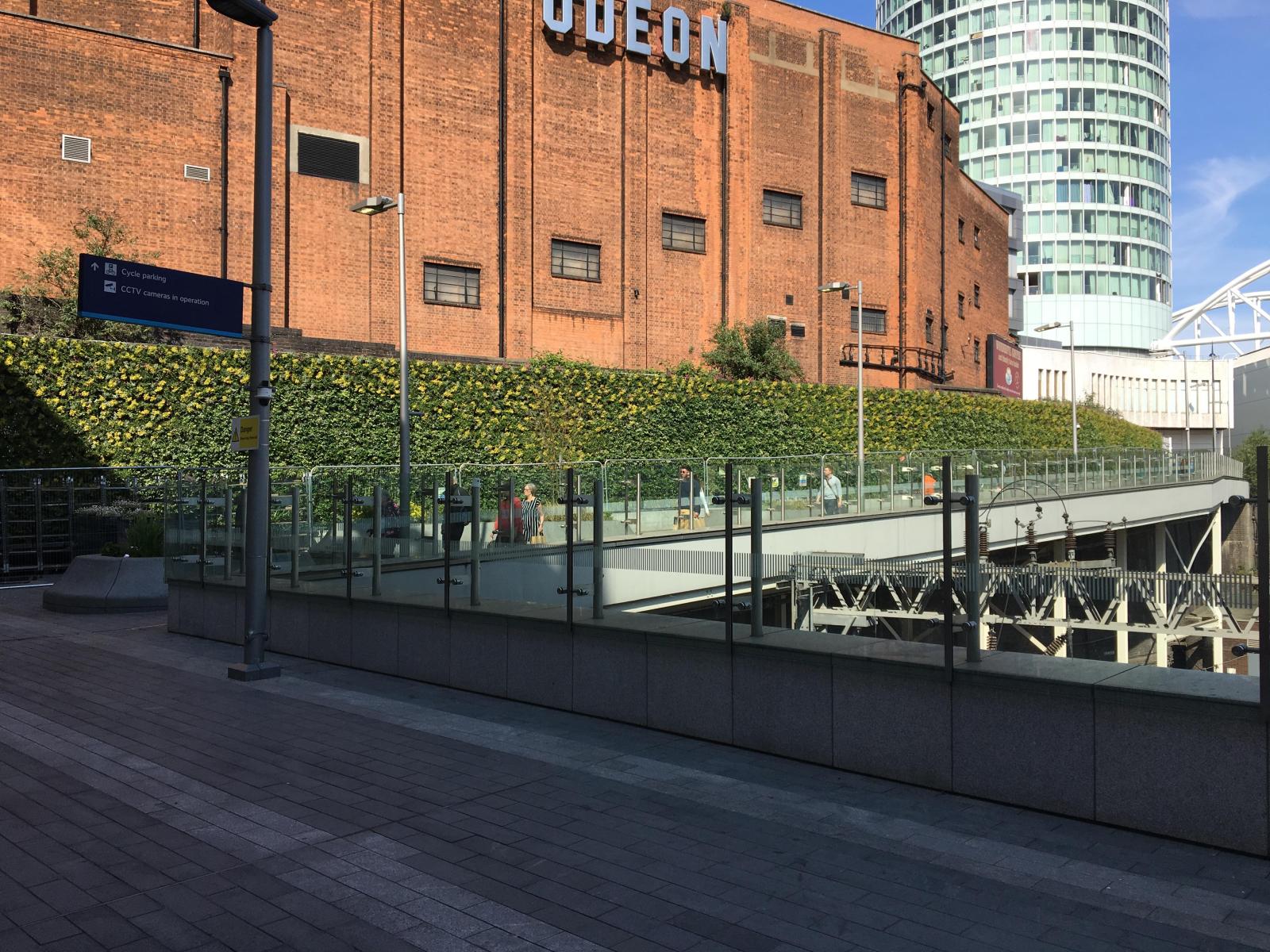
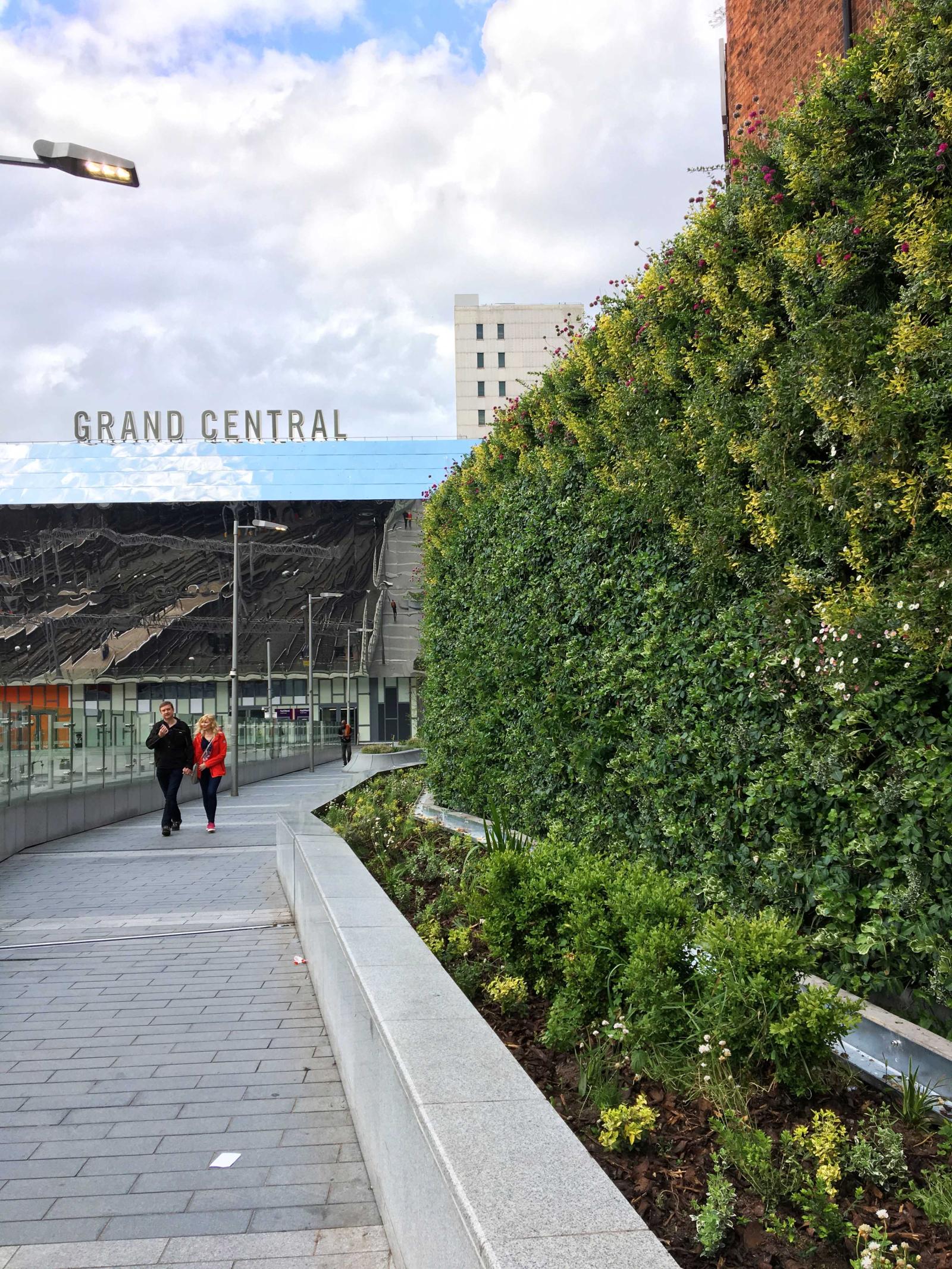
Air pollution is one of the most pressing sustainability challenges in the UK, with particulate levels exceeding both WHO guidelines and EU safe limits in many cities (Ref 6). In 2014, Birmingham was identified by the WHO as one of nine UK cities breaching air pollution safety guidelines (Ref 2, 3). In 2012, a soil-based green wall was installed at Birmingham New Street Train Station as part of a project aimed at improving air quality, as diesel train services contribute significantly to nitrogen oxide (NOx) pollution. However, most of the plants did not survive. In 2017, Network Rail commissioned a private company to reconstruct the wall using a hydroponic system (Ref 3). The new green wall was installed in 2018 and completed in May 2019 (Ref 1, 3). This hydroponic green wall not only enhances the urban environment with calming green infrastructure, but also helps mitigate air pollution and promotes biodiversity with the addition of 16,600 plants (Ref 1, 2, 3).
Overview
Nature-based solution
- Nature on buildings (external)
- Green walls or facades
Key challenges
- Climate action for adaptation, resilience and mitigation (SDG 13)
- Climate change mitigation
- Environmental quality
- Air quality improvement
- Green space, habitats and biodiversity (SDG 15)
- Green space creation and/or management
- Regeneration, land-use and urban development
- Promote natural styles of landscape design for urban development
- Health and well-being (SDG 3)
- Creation of opportunities for recreation
- Social justice, cohesion and equity (SDG 10)
- Social interaction
Principal problems in Functional Urban Area (FUA)
- Climate-Related Hazards
- Heat stress & Extreme temperatures
- Environmental Degradation
- Air pollution
- Land use and Socio-economic change
- Rapid urbanization
Key priorities
Focus
Project objectives
Implementation activities
Climate-focused activities
Climate change mitigation:
- Install vertical or horizontal artificial surfaces that help with carbon storage and cooling
Specification of climate or environmentally vulnerable communities
Main beneficiaries
- Public sector institution (e.g. school or hospital)
- Citizens or community groups
Governance
Management set-up
- Co-governance with government and non-government actors
Type of initiating organisation
- Public sector institution
Participatory approaches/ community involvement
- Co-planning (e.g. stakeholder workshops, focus groups, participatory mapping)
- Co-management/Joint management
Details on the roles of the organisations involved in the project
Project implemented in response to ...
Type of enablers
Financing
Total cost
Source(s) of funding
- Public local authority budget
- Public regional budget
Type of funding
- Earmarked public budget
Non-financial contribution
Impacts and Monitoring
Environmental impacts
- Climate change
- Enhanced carbon sequestration
- Expected enhanced carbon sequestration
- Environmental quality
- Improved air quality
- Expected improved air quality
- Green space and habitat
- Increased green space area
- Achieved increased green space area
- Increased number of species present
- Achieved increased number of species present
Economic impacts
- Increase of green jobs (e.g. paid employment positions)
- Achieved increase of green jobs (e.g. paid employment positions)
Socio-cultural impacts
- Health and wellbeing
- Enhanced cognitive restoration, relaxation and stress relief
- Expected enhanced cognitive restoration, relaxation and stress relief
Type of reported impacts
Presence of formal monitoring system
Presence of indicators used in reporting
Presence of monitoring/ evaluation reports
Availability of a web-based monitoring tool
Potential risks of implementation and trade-offs
References
 Information about this nature-based solution was collected as part of the Naturescapes project funded by the European Union under Grant Agreement No 101084341.