

Last updated: October 2021
In 2015, Bilbao City Council launched a pilot project of municipal urban gardens in the district of Rekalde. These urban gardens aim to improve the quality of life of residents by promoting a healthy lifestyle within the neighborhood. Additionally, the municipal urban gardens support a broader initiative to create ecological connectivity across the city’s Green Belt, by linking forest parks with urban parks. (Ref 1)
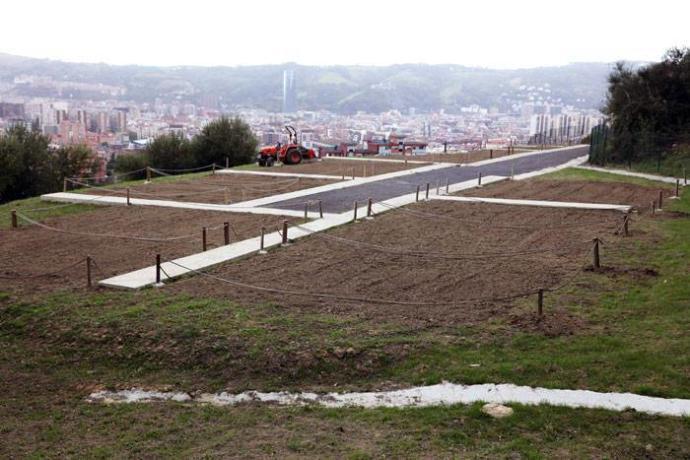
Source: Ref. 6, Juan Lazkano
Overview
Nature-based solution
- Community gardens and allotments
- Community gardens
Key challenges
- Green space, habitats and biodiversity (SDG 15)
- Green space creation and/or management
- Regeneration, land-use and urban development
- Promote natural styles of landscape design for urban development
- Social justice, cohesion and equity (SDG 10)
- Environmental education
- Social justice and equity
- Social cohesion
- Social interaction
- Health and well-being (SDG 3)
- Creation of opportunities for recreation
- Cultural heritage and cultural diversity
- Preservation of natural heritage
Focus
Creation of new green areas, Knowledge creation and awareness raising
Project objectives
1. Improve the quality of life of residents (Ref 1)
2. Create a new leisure space that serves to stimulate social cohesion and improve the surroundings of the neighborhood (Ref 1)
3. Create green spaces that will be a part of the green belt of the city, in order to preserve the value of the natural environment and the mountain traditions (Ref 1)
4. Generate an environmental culture, especially for children (Ref 6)
Implementation activities
The City Council's Area of Works and Services awards garden plots to different groups of people. The award is made through an open competition, for a term of 2 years, with the potential for a 1-year extension. Those awarded the plots are responsible for the maintenance of the space, and in the social activities that are carried out, including collaborating with the Children of the School Agenda 21 in promoting environmental values. Furthermore, the vegetables planted in the municipal plots cannot be sold to third parties (Ref 1)
The allocation of plots is as following: (Ref 1)
- 9 plots are for residents of the neighborhood. Residents between the ages of 18 and 24, or those over 65, are prioritized.
- 5 plots are for families in the neighborhood.
- 4 are for unemployed people in the neighborhood, with a priority for those unemployed for the longest time.
- 2 plots are for non-profit associations from the neighborhood.
- 2 are for people with disabilities or representative associations of people with disabilities. People with disabilities registered in the neighborhood, or associations with registered offices in the neighborhood, have higher priority.
- 1 plot is for non-profit associations in Bilbao, especially for those that promote the natural environment and social cohesion in Bilbao. Higher priority goes to: mountain groups, scout and leisure groups, parish groups, or social-educational intervention teams.
After the plots are rewarded, various environmental education activities are implemented. For example, municipal technicians provide a course on the basic rules of cultivation and operation in the orchards (Ref 6)
Main beneficiaries
- Local government/Municipality
- Non-government organisation/Civil Society
- Citizens or community groups
- Marginalized groups: Elderly people, Socio-economically disadvantaged populations (e.g. low-income households, unemployed), People with functional diversities
- Young people and children
Governance
Management set-up
- Government-led
Type of initiating organisation
- Local government/municipality
Participatory approaches/ community involvement
- Dissemination of information and education
- Joint implementation (e.g. tree planting)
Details on the roles of the organisations involved in the project
This NBS is led by the Municipality of Bilbao. (Ref 1)
The City Council’s Works and Services Area awards garden plots to different groups. (Ref 1)
The different groups include individuals (especially young adults and the elderly), families, unemployed people, people with disabilities or representative organizations of people with disabilities, non-profit organizations in the neighborhood, and non-profit organizations in the city. (Ref 1)
Municipal technicians are responsible for some environmental educational activities in the gardens. (Ref 6)
Project implemented in response to ...
... an EU policy or strategy?
Unknown
(Even though this NBS is not a response to a EU Directive, one must mention the fact that the NBS refers to Agenda 21, a United Nation program which has been implemented in Bilbao as well. Agenda 21 is a non-binding, voluntarily implemented action plan of the United Nations with regard to sustainable development (3))
... a national policy or strategy?
Unknown
... a local policy or strategy?
Yes
(This NBS mentions its connection to Bilbao Agenda 21, a project "of the municipality and for the municipality" , which advocates a change in municipal policy towards a more environmentally friendly position and gives the municipality an instrument of great strategic value to face future challenges and to achieve an improvement in the quality of life of all citizens. (Ref 3) )
Financing
Total cost
Unknown
Source(s) of funding
- Unknown
Type of funding
- Unknown
Non-financial contribution
Type of non-financial contribution
- Provision of labour
Who provided the non-financial contribution?
- Citizens (e.g. volunteering)
Impacts and Monitoring
Environmental impacts
- Green space and habitat
- Increased green space area
- Increased ecological connectivity across regeneration sites and scales
Economic impacts
- Unknown
Socio-cultural impacts
- Social justice and cohesion
- Improved social cohesion
- Improved access to urban green space
- Increased visibility and opportunity for marginalised groups or indigenous peoples
- Increased opportunities for social interaction
- Increased involvement of locals in the management of green spaces
- Increased access to healthy/affordable food
- Health and wellbeing
- Gain in activities for recreation and exercise
- Cultural heritage and sense of place
- Protection of natural heritage
- Protection of historic and cultural landscape / infrastructure
- Education
- Increased support for education and scientific research
Type of reported impacts
Expected impacts, Achieved impacts
Presence of formal monitoring system
Unknown
Presence of indicators used in reporting
No evidence in public records
Presence of monitoring/ evaluation reports
No evidence in public records
Availability of a web-based monitoring tool
No evidence in public records
References
1. Bilbao's Municipality. (2015). BILBAO CONTARÁ CON LOS PRIMEROS HUERTOS URBANOS MUNICIPALES EN EL BARRIO DE REKALDE. Available at: Source link [Accessed: 11 October 2020].
2. Bilbao Turismo. (2020). Bilbao Green Belt. Available at: Source link [Accessed: 11 October 2020].
3. Bilbao Agenda 21. (n.d.) Qué es la Agenda 21. Available at: Source link [Accessed: 11 October 2020].
4. Bilbao Buenas Noticias. (2015). Huertos urbanos en Bilbao a partir de verano. [Not available in 2020].
5. Deia. (2017). Bilbao extiende el proyecto de huertos ecológicos urbanos al barrio de Otxarkoaga/Txurdinaga. Available at: Source link [Accessed: 11 October 2020].
6. Deia. (2015). Rekalde acoge los primeros huertos urbanos de Bilbao. Available at: Source link [Accessed: 11 October 2020].
7. Alvarez, I. (2020). Los puerros han echado flor y las cebolletas no han engordado. El Correo. Available at: Source link [Accessed: 13 October 2020].
2. Bilbao Turismo. (2020). Bilbao Green Belt. Available at: Source link [Accessed: 11 October 2020].
3. Bilbao Agenda 21. (n.d.) Qué es la Agenda 21. Available at: Source link [Accessed: 11 October 2020].
4. Bilbao Buenas Noticias. (2015). Huertos urbanos en Bilbao a partir de verano. [Not available in 2020].
5. Deia. (2017). Bilbao extiende el proyecto de huertos ecológicos urbanos al barrio de Otxarkoaga/Txurdinaga. Available at: Source link [Accessed: 11 October 2020].
6. Deia. (2015). Rekalde acoge los primeros huertos urbanos de Bilbao. Available at: Source link [Accessed: 11 October 2020].
7. Alvarez, I. (2020). Los puerros han echado flor y las cebolletas no han engordado. El Correo. Available at: Source link [Accessed: 13 October 2020].