

Last updated: October 2021
This project deals with the creation of a green roof and a green area around the new headquarters of the IDOM Group (an independent multinational company that offers professional integrated services in Consulting, Engineering and Architecture around the world), located in an old French warehouse (a customs warehouse) on the Deusto canal in the port of Bilbao. It has an area of 14,400 m2 dedicated to offices, research and development spaces such as white room and workshop prototypes, and social spaces. (Ref 1)
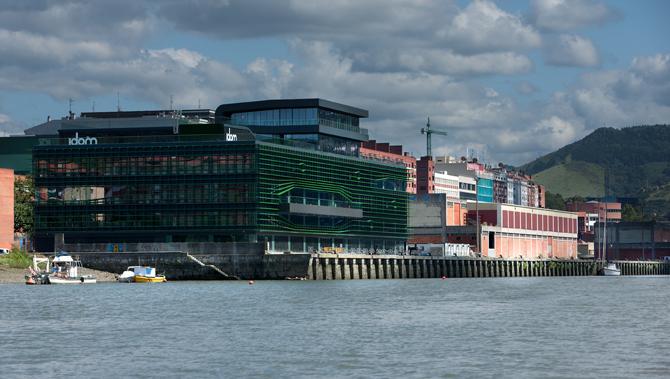
Source: Ref. 4, Aitor Ortiz
Overview
Nature-based solution
- Nature on buildings (external)
- Green roofs
- Grey infrastructure featuring greens
- Institutional green space
Key challenges
- Climate action for adaptation, resilience and mitigation (SDG 13)
- Climate change adaptation
- Green space, habitats and biodiversity (SDG 15)
- Green space creation and/or management
- Regeneration, land-use and urban development
- Promote natural styles of landscape design for urban development
Focus
Creation of new green areas
Project objectives
The new headquarters of the IDOM Group was designed to reflect the philosophy of its own company, which is rooted in sustainability ideals. The intervention is a result of incorporating passive bioclimatic architecture design principles and climate change adaptation criteria (Ref 2). It aimed at installing a green roof and creating green areas around the building (Ref 1).
Implementation activities
The roof deck consists of a ‘green blanket’ that is made of grass for the flat surfaces and artificial turf for the folded surfaces. This ‘green blanket’ hides the air conditioning equipment of the building, and thus reduces sonic and visual impacts. Furthermore, the green space on the roof serves as a resting area, as its hill-like surface design encourages peers to stroll, relax, and converse with peers. (Ref 4)
Climate-focused activities
Climate change adaptation:
- Increase or improve urban vegetation cover to help reduce outdoor temperature
Main beneficiaries
- Private sector/Corporate/Company
Governance
Management set-up
- Led by non-government actors
Type of initiating organisation
- Private sector/corporate actor/company
Participatory approaches/ community involvement
- Unknown
Details on the roles of the organisations involved in the project
The project is the oeuvre of a private company, IDOM, which financed the project in collaboration with an architectural firm. The close collaboration with Javier Pérez Uribarri, author of the project and head of ACXT, the engineering architecture firm Bilbao, was essential to ensure the correct realization of the creative freedom of the architect and, at the same time, to maximize the strict premises of established sustainability and energy efficiency. (Ref 3)
Project implemented in response to ...
... an EU policy or strategy?
Unknown
... a national policy or strategy?
Unknown
... a local policy or strategy?
Yes
(This NBS mentions its connection with the Proyecto de Ley Vasca de Cambio Climático, Climate Change Strategy of the Basque Country (regional government) to 2050 (Ref 5))
Financing
Total cost
More than €4,000,000
Source(s) of funding
- Corporate investment
Type of funding
- Direct funding (grants, subsidies, or self-financed projects by private entities)
Non-financial contribution
Unknown
Impacts and Monitoring
Environmental impacts
- Climate change
- Lowered local temperature
- Enhanced carbon sequestration
- Environmental quality
- Improved air quality
- Reduced noise exposure
- Water management and blue areas
- Improved water quality
- Improved stormwater management
- Green space and habitat
- Promotion of naturalistic styles of landscape design for urban development
- Increased green space area
Economic impacts
- Unknown
Socio-cultural impacts
- Social justice and cohesion
- Increased opportunities for social interaction
Type of reported impacts
Achieved impacts
Presence of formal monitoring system
Yes
Presence of indicators used in reporting
No evidence in public records
Presence of monitoring/ evaluation reports
Yes
Availability of a web-based monitoring tool
No
References
1. Bilbao Architecture. (n.d.). Sede de Idom. [Not available in 2020].
2. ihobe. (2014). Edificación y Rehabilitación Ambientalmente Sostenible en Euskadi: 13 casos prácticos de excelencia ambiental. [Document provided].
3. Iturbe, M. (2015). CALORYFRIO. Techos verdes para reducir el consumo de energía en los edificios. Available at: Source link [Accessed: 7 October 2020].
4. Mascontext. (2020). Project by IDOM. Available at: Source link [Accessed: 7 October 2020].
5. Basque Country. (2015). Climate Change Strategy of the Basque Country to 2050. [Document provided].
6. FloorNature. (2013). Sustainable architecture: Idom Headquarters in Bilbao, ACXT. Available at: Source link [Accessed: 7 October 2020].
2. ihobe. (2014). Edificación y Rehabilitación Ambientalmente Sostenible en Euskadi: 13 casos prácticos de excelencia ambiental. [Document provided].
3. Iturbe, M. (2015). CALORYFRIO. Techos verdes para reducir el consumo de energía en los edificios. Available at: Source link [Accessed: 7 October 2020].
4. Mascontext. (2020). Project by IDOM. Available at: Source link [Accessed: 7 October 2020].
5. Basque Country. (2015). Climate Change Strategy of the Basque Country to 2050. [Document provided].
6. FloorNature. (2013). Sustainable architecture: Idom Headquarters in Bilbao, ACXT. Available at: Source link [Accessed: 7 October 2020].
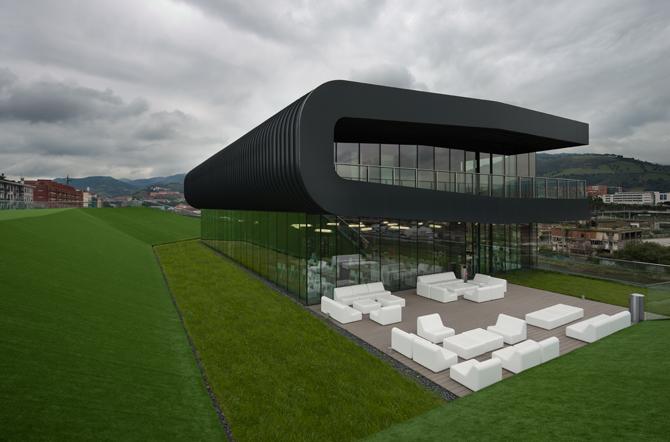
Source: Ref. 4, Aitor Ortiz
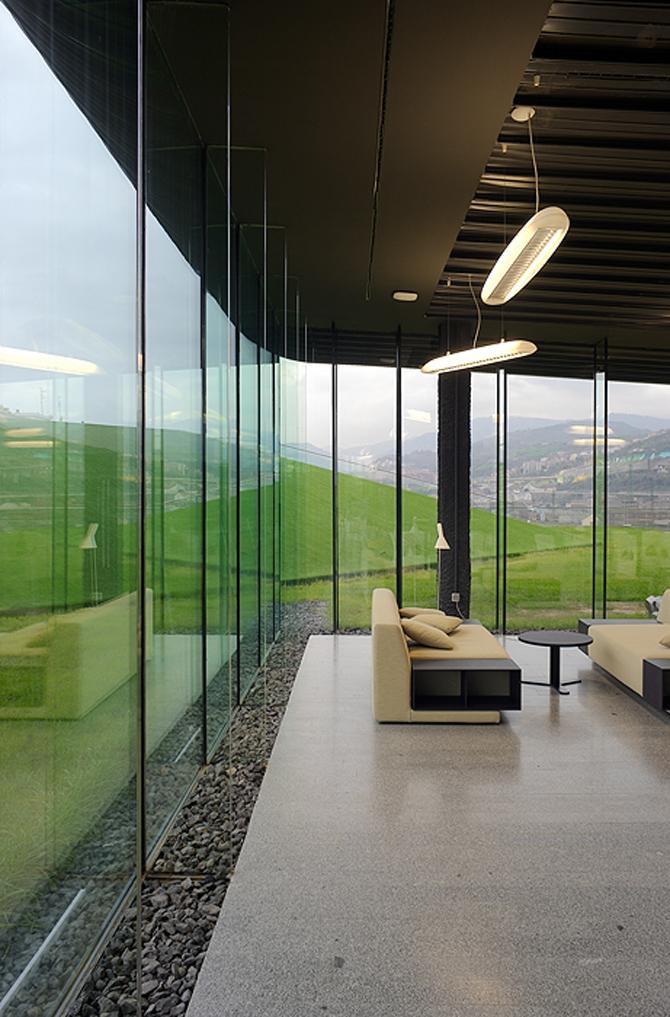
Source: Ref. 4, Aitor Ortiz