

Last updated: October 2021
Ametzola is a neighborhood of Bilbao District 7 located on the left bank of the Bilbao estuary. In 2005 the construction of a park began since the neighborhood was seen as being alienated from other quarters of Bilbao and solicited a regeneration and integration into the urban life of the city. (Ref 1)

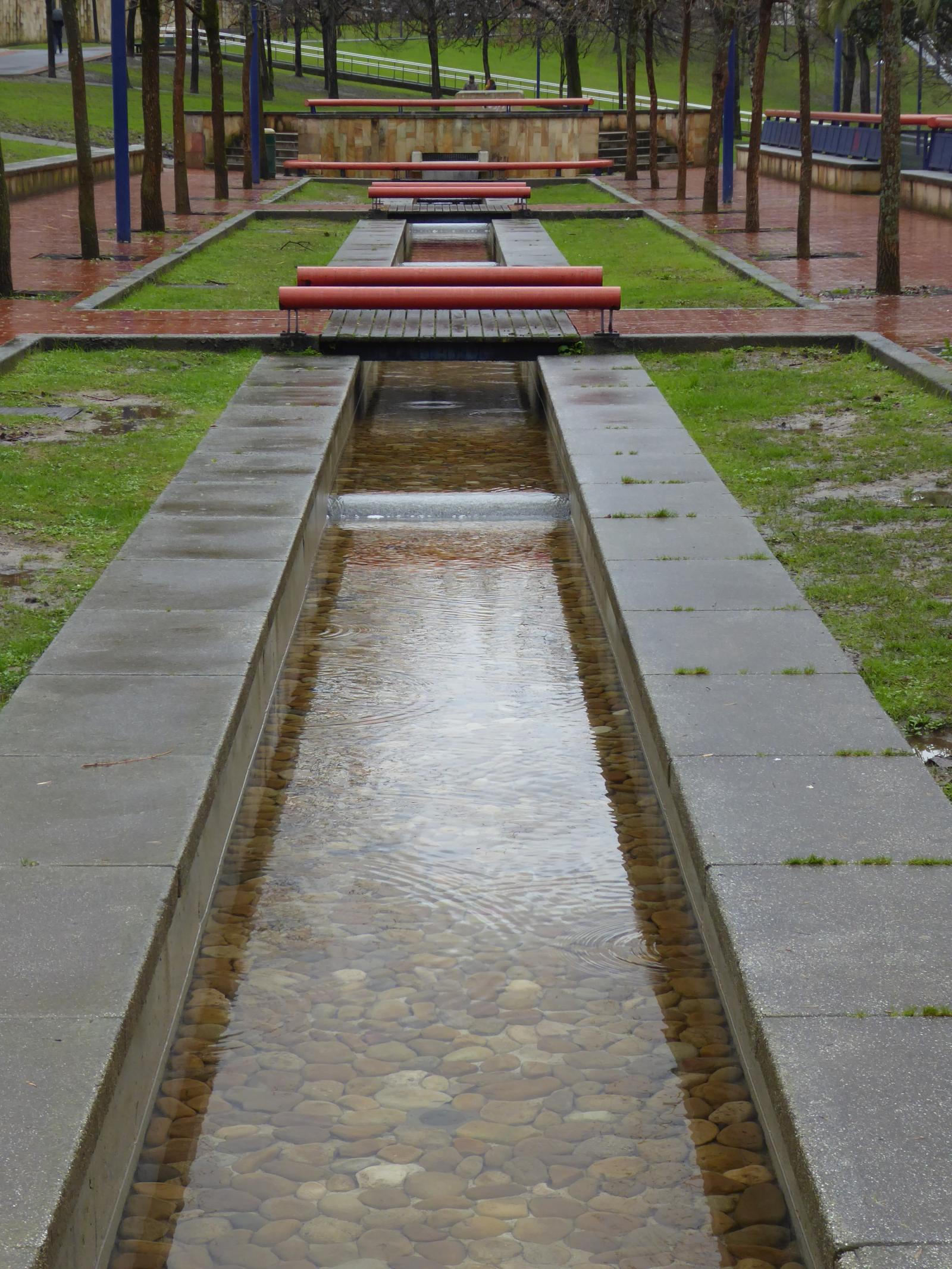
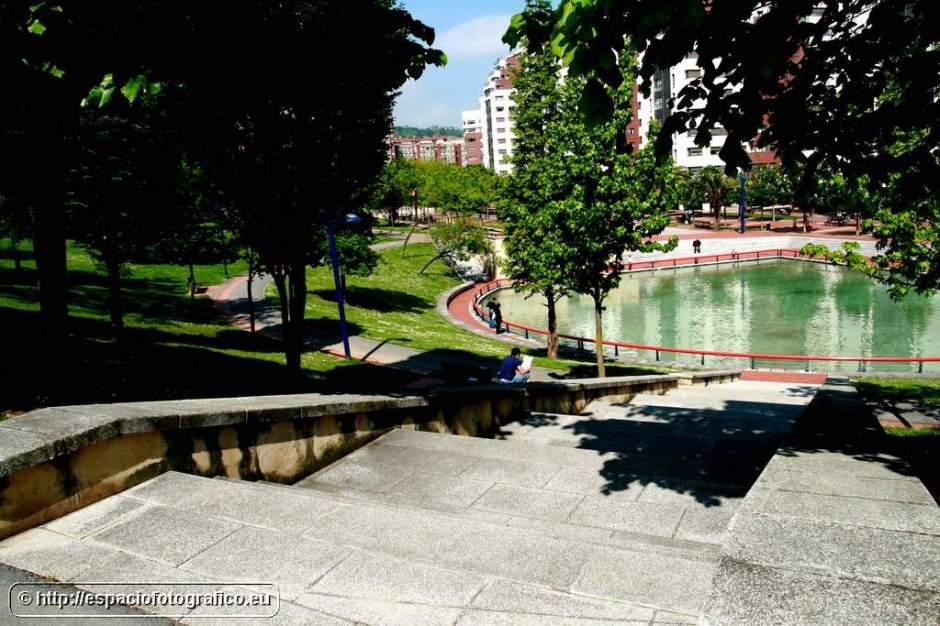
The Ametzola Park
BILBAO Ría 2000, retrieved 09/11/2018 from Susana de la Madrid
Overview
Nature-based solution
- Parks and urban forests
- Pocket parks/neighbourhood green spaces
Key challenges
- Climate action for adaptation, resilience and mitigation (SDG 13)
- Climate change adaptation
- Green space, habitats and biodiversity (SDG 15)
- Green space creation and/or management
- Regeneration, land-use and urban development
- Conversion of former industrial areas
- Social justice, cohesion and equity (SDG 10)
- Social cohesion
- Social interaction
- Health and well-being (SDG 3)
- Creation of opportunities for recreation
Focus
Creation of new green areas
Project objectives
This intervention aimed to do the following:
1. To urbanize the neighborhood of Ametzola
2. To increase access to green spaces
3. To eliminate the heat island effect in a former industrial neighborhood
4. To increase social cohesion for the residents
5. To increase the quality of living and health benefits
(Ref 1)
Implementation activities
The park was expanded by 36,000 m2 with areas of trees and understory shrub. Connecting the park to the Amezola neighborhood was a placement of a set of flower beds, which linked the sidewalk and the park canopy. The gardening work of the area gave continuity to the vegetation that surrounded the building skylights near the train station (Ref 4)
For the first time in an urban public space of Bilbao an optical lighting system was installed. The park was also equipped with slopes adapted for disabled people and people with mobility difficulties (Ref 4)
Climate-focused activities
Climate change adaptation:
- Increase or improve urban vegetation cover to help reduce outdoor temperature
Main beneficiaries
- Local government/Municipality
- Citizens or community groups
- Marginalized groups: People with functional diversities
- Other
Governance
Management set-up
- Led by non-government actors
Type of initiating organisation
- Other
Participatory approaches/ community involvement
- Unknown
Details on the roles of the organisations involved in the project
The Bilbao Ria 2000 was the initiators of this intervention. (Ref 1,2) It is a non-profit limited liability company, established as a "private firm of public shareholders". The company is owned by the central Spanish Government via the Ministry of Economic Promotion and the local and regional public authorities (Basque Government, Bizkaia Provincial Council, and Bilbao City Council) (Ref 7). The Bilbao Ria 2000 was responsible for directing the recovery of the old industrial spaces of the metropolis, and for coordinating and implementing various actions that integrate urban planning, transport and the environment. (Ref 1)
Co-Financed by European Regional Development Fund (Ref 5)
The construction company for the works of the Ametzola neighborhood was the UTE Ametzola (private companies), made up of Dragados and Balzola. (Ref 2)
The project and construction management were carried out by Idom (private company). (Ref 2)
The landscaping was done by Local 4 (private company) and the plantings by Cespa (private company). (Ref 2)
The park architect was Javier Lopez Chollet (Ref 4)
Project implemented in response to ...
... an EU policy or strategy?
Unknown
... a national policy or strategy?
Unknown
... a local policy or strategy?
Yes
(This project is part of a larger plan called Proyecto Amezola, which aims to revitalize an adjacent area of Bilbao. Alongside the park, houses were erected as well as office buildings and the former train station (for which the neighborhood was known) was rehabilitated (Ref 1) )
Financing
Total cost
More than €4,000,000
Source(s) of funding
- EU funds
- Public national budget
- Public regional budget
- Public local authority budget
Type of funding
- Earmarked public budget
- Direct funding (grants, subsidies, or self-financed projects by private entities)
Non-financial contribution
Unknown
Impacts and Monitoring
Environmental impacts
- Green space and habitat
- Increased green space area
Economic impacts
- Unknown
Socio-cultural impacts
- Social justice and cohesion
- Improved social cohesion
- Improved access to urban green space
- Increased visibility and opportunity for marginalised groups or indigenous peoples
- Increased opportunities for social interaction
- Health and wellbeing
- Gain in activities for recreation and exercise
Type of reported impacts
Achieved impacts
Presence of formal monitoring system
Unknown
Presence of indicators used in reporting
No evidence in public records
Presence of monitoring/ evaluation reports
No evidence in public records
Availability of a web-based monitoring tool
No evidence in public records
References
1. Bilbao Ria 2000. (2014). Ametzola Park. Available at: Source link [Accessed: 14 October 2020].
2. Bilbao Ria 2000. (2007). BILBAO Ría 2000 INAUGURA LA ULTIMA FASE DE AMETZOLA. Available at: Source link [Accessed: 14 October 2020].
3. Reskyt. (n.d.). Amézola Park. [Not available in 2020].
4. Bilbao Ria 2000. (n.d.). LUGARES DE INTERVENCIÓN Y ADAPTACIÓN URBANÍSTICA EN BILBAO. Available at: Source link [Accessed: 14 October 2020].
5. Bilbao Ria 2000. (n.d.). Un espacio para los ciudadanos: Parque Amézola. [Document provided].
6. AdemA. (2002). [Bilbao] Proyecto Amézola-Avenida del Ferrocarril. Forum discussions. Available at: Source link [Accessed: 14 October 2020].
7. Legislative Council Secretariat (2005). Information Note, Management, Operation and Financing of a Cultural District: The Case of Abandoibarra in Spain. [Document provided].
8. El Correo. (2020). Baño prohibido en el estanque de Amezola. El Correo. Available at: Source link [Accessed: 14 October 2020].
9. BARÓN DE LA BIRRA. (2009). El parque de Amézola. Available at: Source link [Accessed: 14 October 2020].
2. Bilbao Ria 2000. (2007). BILBAO Ría 2000 INAUGURA LA ULTIMA FASE DE AMETZOLA. Available at: Source link [Accessed: 14 October 2020].
3. Reskyt. (n.d.). Amézola Park. [Not available in 2020].
4. Bilbao Ria 2000. (n.d.). LUGARES DE INTERVENCIÓN Y ADAPTACIÓN URBANÍSTICA EN BILBAO. Available at: Source link [Accessed: 14 October 2020].
5. Bilbao Ria 2000. (n.d.). Un espacio para los ciudadanos: Parque Amézola. [Document provided].
6. AdemA. (2002). [Bilbao] Proyecto Amézola-Avenida del Ferrocarril. Forum discussions. Available at: Source link [Accessed: 14 October 2020].
7. Legislative Council Secretariat (2005). Information Note, Management, Operation and Financing of a Cultural District: The Case of Abandoibarra in Spain. [Document provided].
8. El Correo. (2020). Baño prohibido en el estanque de Amezola. El Correo. Available at: Source link [Accessed: 14 October 2020].
9. BARÓN DE LA BIRRA. (2009). El parque de Amézola. Available at: Source link [Accessed: 14 October 2020].

Source: https://commons.wikimedia.org/wiki/File:Bilbao_-_Parque_de_Ametzola_07.JPG
Source: https://bilbaoysusfuentes.home.blog/2019/04/27/fuente-del-parque-de-amezola/
Source: Ref. 9