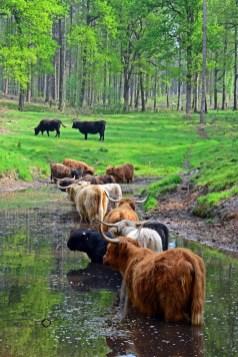
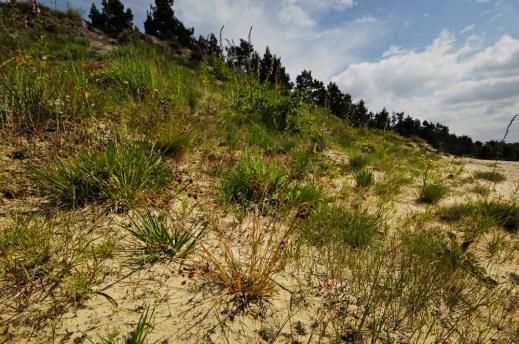
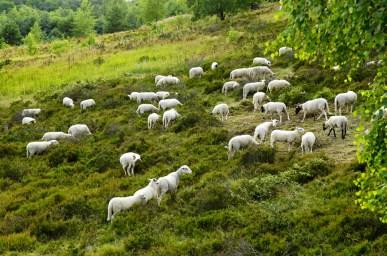
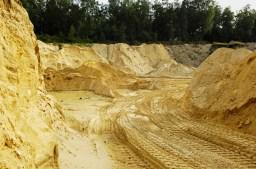
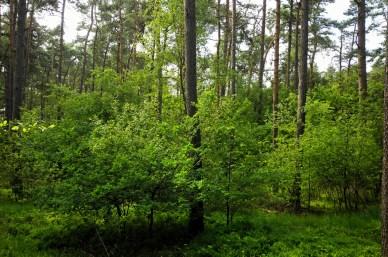
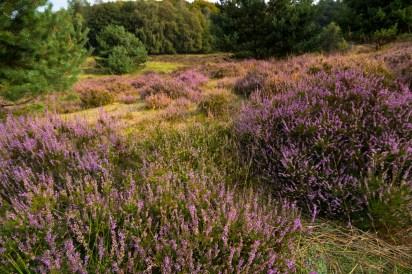
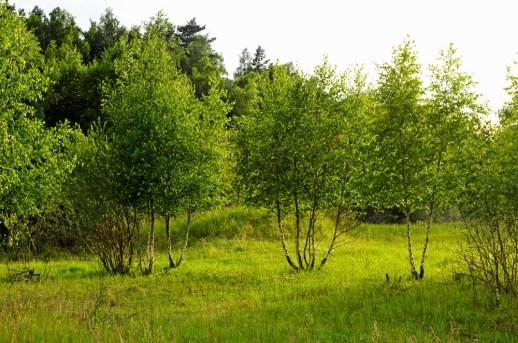
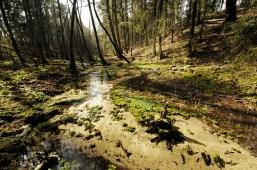
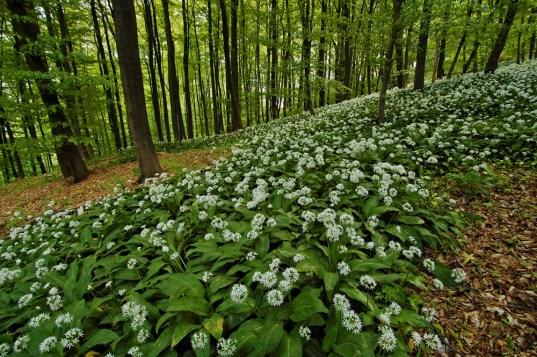
The landscape in the Bielefeld agglomeration is exposed to stress from high settlement pressure and expansion of the infrastructure as well as in parts of intensive agricultural use (2). Since 2003, the Senne and neighbouring areas of the Teutoburg Forest which is protected under the Europe-wide protected area system, Natura 2000, become part of the funding program of the Federal Agency for Nature Conservation (BfN) and become one of Agency's Large-scale nature conservation projects (NGP) (2, 5,13). The project area lies in the transition area between two major German landscapes: the Senne as part of the north-west German lowlands and the Teutoburg Forest as part of the Central European low mountain range. The juxtaposition and close interlocking of numerous habitats such as species-rich beech forests, remains of acidic deciduous mixed forests, dry and humid heathland or natural sandy streams form the basis for diverse flora and fauna. Many of the numerous rare plant and animal species are rarely found in North Rhine-Westphalia outside of the NGP area (13). The natural area complex Senne and Teutoburg Forest was declared by the Federal Agency for Nature Conservation (BfN) to be one of the 30 hotspots of biological diversity in Germany due to its nationwide uniqueness ( overview map ). These “Treasure Chests of Nature” (BfN 2015) distinguish regions in Germany that have a particularly high density and diversity of characteristic habitats, species and populations.(13) The NGP was funded by the Federal Republic of Germany, the State of North Rhine-Westphalia with contribution of participating municipalities and the North Rhine-Westphalia Foundation (13). The Teutoburg Forest / Eggegebirge Nature Park is also sponsoring the project (12).
Overview
Nature-based solution
- Parks and urban forests
- Large urban parks or forests
- Blue infrastructure
- Lakes/ponds
- Rivers/streams/canals/estuaries
Key challenges
- Green space, habitats and biodiversity (SDG 15)
- Habitat and biodiversity restoration
- Habitat and biodiversity conservation
- Green space creation and/or management
- Environmental quality
- Soil quality improvement
- Inclusive and effective governance (SDG 16)
- Effective management
- Health and well-being (SDG 3)
- Creation of opportunities for recreation
- Economic development and employment (SDG 8)
- Economic development: agriculture
- Cultural heritage and cultural diversity
- Preservation of natural heritage
- Protection of historic and cultural landscape/infrastructure
Focus
Project objectives
Implementation activities
Biodiversity conservation or restoration-focused activities
Biodiversity conservation:
- Protect and enhance urban habitats
- Preserve and strengthen existing habitats and ecosystems
- Promote environmentally-sound development in and around protected areas
- Preserve and strengthen habitat connectivity
- Reduce negative impacts and avoid the alteration/damage of ecosystem
- Protect species
- Undertake specific measures to protect species
- Undertake specific measures to protect native species
- Control and clean invasive alien species
- Means for conservation governance
- Manage biological resources for conservation and sustainable use
- Public engagement
Biodiversity restoration:
- Restore species (native, endangered, or unspecified)
- Restore native species
- Clear and control invasive alien species
- Public engagement
Main beneficiaries
- National-level government
- Local government/Municipality
- Public sector institution (e.g. school or hospital)
- Citizens or community groups
- Food producers and cultivators (i.e. farmers, gardeners)
Governance
Management set-up
- Government-led
Type of initiating organisation
- National government
Participatory approaches/ community involvement
- Co-planning (e.g. stakeholder workshops, focus groups, participatory mapping)
- Dissemination of information and education
- Consultation (e.g. workshop, surveys, community meetings, town halls)
Details on the roles of the organisations involved in the project
Project implemented in response to ...
Financing
Total cost
Source(s) of funding
- Public national budget
- Public regional budget
- Public local authority budget
Type of funding
- Earmarked public budget
- Direct funding (grants, subsidies, or self-financed projects by private entities)
- Asset-backed funding (e.g., leasing)
Non-financial contribution
Impacts and Monitoring
Environmental impacts
- Water management and blue areas
- Enhanced protection and restoration of freshwater ecosystems
- Green space and habitat
- Increased number of protection areas
- Increased green space area
- Increased conservation or restoration of ecosystems
- Increase in protected green space areas
- Increased conversion of degraded land or soil
- Reduced biodiversity loss
- Increased number of species present
- Improved prevention or control of invasive alien species
- Increased spread of native/heirloom/open-pollinated seed
- Increased ecological connectivity across regeneration sites and scales
Economic impacts
- Unknown
Socio-cultural impacts
- Cultural heritage and sense of place
- Protection of natural heritage
- Increased awareness of flora and fauna as culturally and historically meaningful
- Education
- Increased knowledge of locals about local nature
Type of reported impacts
Presence of formal monitoring system
Presence of indicators used in reporting
Presence of monitoring/ evaluation reports
Availability of a web-based monitoring tool
References
2. Bielefeld - Natur/Landschaft. (2017). Accessed August 26, 2020, Source link
3. Teutoburg Forest / Egge Hills Nature Park – Where Nature and Culture Come Together. (2016). Accessed August 26, 2020, Source link
4. Startseite WALK. (2017). Accessed August 26, 2020, Source link
5. Naturschutzgroßprojekt Senne und Teutoburger Wald Brochure. (2009). Accessed August 26, 2020, Source link
6. Office for Official Publications of the European Communities. (2015). Natura 2000 and Forests. (2015). Source link
7. Häusler, A., Scherer-Lorenzen, M. (2002). Sustainable Forest Management in Germany: The Ecosystem Approach of the
Biodiversity Convention reconsidered, German Federal Agency for Nature Conservation, Accessed August 26, 2020, Source link
8. Haaren, C., Galler, C., Ott, S. (2008). Landscape planning. The basis of sustainable landscape development, German Federal Agency for Nature Conservation, Accessed August 26, 2020, Source link
9. Ig Teuto. (2017). Interessengemeinschaft Teutoburger Wald e.V.,Accessed August 26, 2020, Source link
10. State of North-Rhine Westphalia. (2013). FFH report 2013 of the state of North Rhine-Westphalia - Report on the state of species and habitats according to the EU Nature Conservation Directive (Habitats Directive), Accessed August 26, 2020, Source link
11. European Union. (2015). Natura 2000 and Forests: Part I-II. Accessed August 26, 2020, Source link
12. Naturpark Teutoburger Wald/Eggegebirge. (2020). Naturschutzgroßprojekt Senne und Teutoburger Wald, Accessed August 26, 2020, Source link
13. Naturschutzgroßprojekt Senne und Teutoburger Wald. (2020). Accessed August 26, 2020, Source link
14. Rüther, P. (2010). Das Naturschutzgroßprojekt ''Senne und Teutoburger Wald''. LWL. Accessed August 26, 2020, Source link
15. Biologische Station Kreis Paderborn, Senne. (n/a). Naturschutzgroßprojekt Senne und Teutoburger Wald. Accessed August 26, 2020, Source link
16. Kreis Lippe. (2020). Naturschutzgroßprojekt Senne und Teutoburger Wald geht an den Kreis Lippe über. Kreis Lippe. Accessed August 26, 2020, Source link