

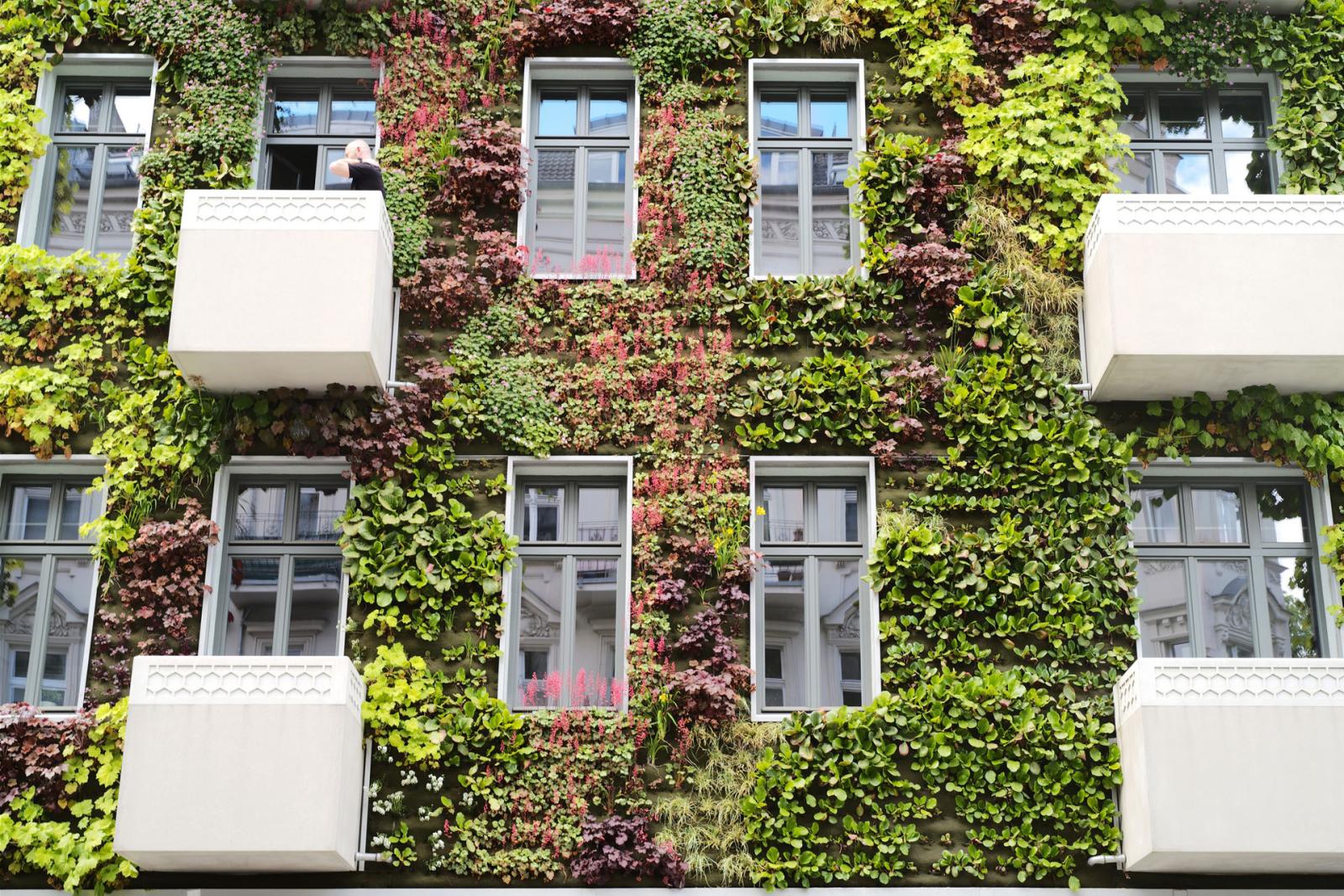
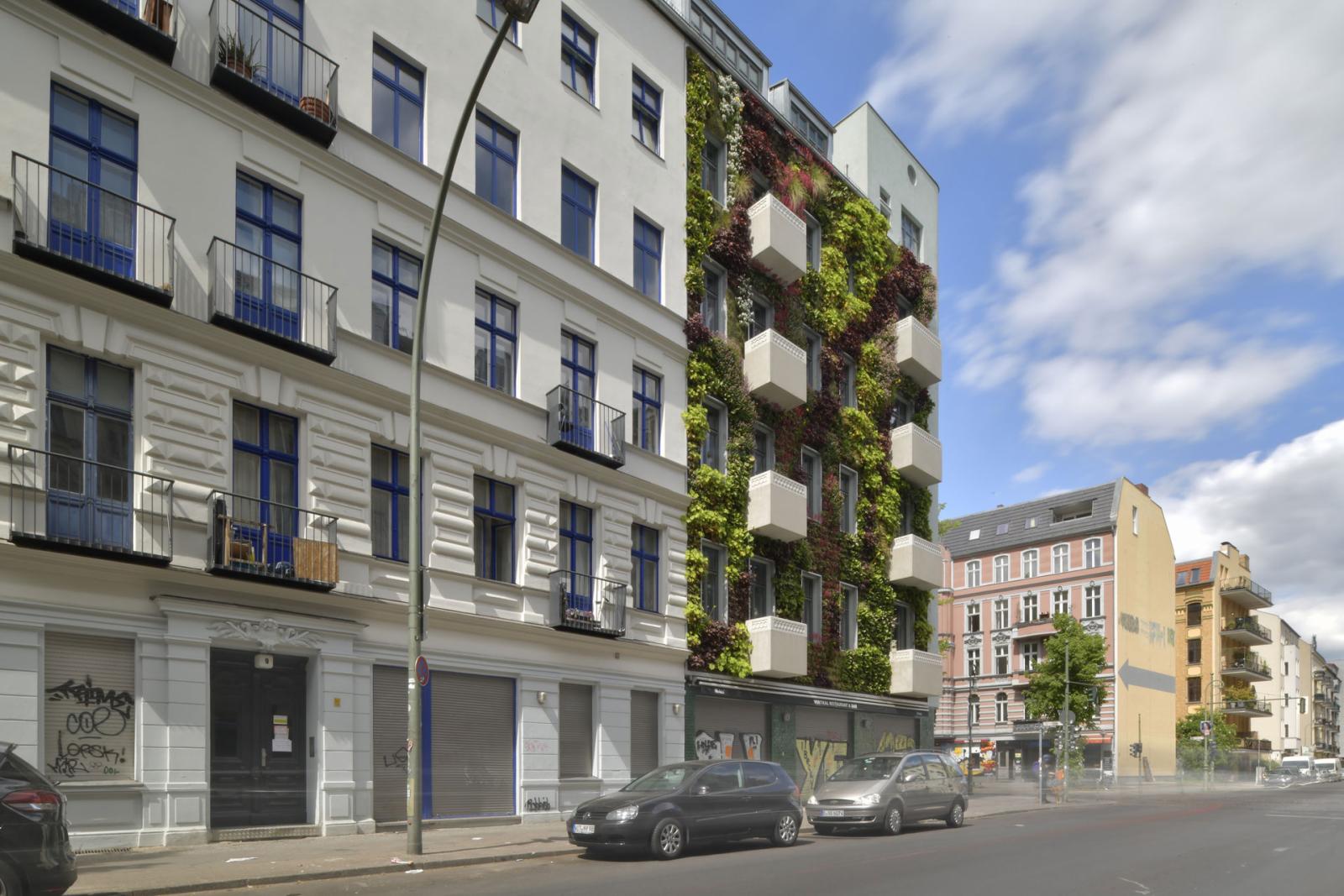
The project features a vertical garden, or "living wall," on the facade of a residential building in Berlin’s Kreuzberg district. Constructed in 2016, the building replaced a WWII-damaged plot situated between two existing structures. With a strong emphasis on sustainability, the project minimizes its ecological footprint in various ways. The 660-square-meter plot retained original elements of the location’s history: the two surviving sections along Glogauer and Reichenberger Strasse were restored after the war, while the rubble from the destroyed corner was used to fill in the basement. This approach allowed the new construction to be built over the original foundations, preserving historical integrity while reducing construction costs and material use. At the core of the building’s design is a green agenda, embodied in the vertical garden that helps absorb noise and pollution from the bustling street below, improving air quality for residents and passersby. The selection of winter-hardy plants ensures that the facade remains green year-round, while also cooling the surrounding area and mitigating the urban heat effect, which is especially valuable in densely populated neighborhoods. The greenery contributes to the local microclimate, providing both environmental and aesthetic benefits. For residents, the garden is made accessible through rectangular box balconies that project from the green wall, allowing them to engage closely with the plants and enjoy the immersive garden atmosphere. The plants grow on a support structure that is securely anchored in the brickwork, receiving water and nutrients through an integrated, precision-controlled irrigation and fertilization system. Maintenance of the plants occurs twice a year, with new additions planted each spring to maintain the garden’s health and visual appeal. The building itself, privately owned, contains a mix of holiday rentals and residential apartments. Architect Sarah Revière designed the project. (1-6)
Overview
Nature-based solution
- Nature on buildings (external)
- Green walls or facades
Key challenges
- Climate action for adaptation, resilience and mitigation (SDG 13)
- Climate change adaptation
- Environmental quality
- Air quality improvement
- Noise reduction
- Green space, habitats and biodiversity (SDG 15)
- Green space creation and/or management
- Regeneration, land-use and urban development
- Promote natural styles of landscape design for urban development
- Social justice, cohesion and equity (SDG 10)
- Social justice and equity
Principal problems in Functional Urban Area (FUA)
- Climate-Related Hazards
- Heat stress & Extreme temperatures
- Environmental Degradation
- Air pollution
- Other
Key priorities
Focus
Project objectives
Implementation activities
Climate-focused activities
Climate change adaptation:
- Increase urban vegetation cover to reduce urban heat island effect
Biodiversity conservation or restoration-focused activities
Biodiversity conservation:
- Protect and enhance urban habitats
- Create new habitats
Main beneficiaries
- Citizens or community groups
- Other
Governance
Management set-up
- Led by non-government actors
Type of initiating organisation
- Citizens or community group
- Private sector/corporate actor/company
Participatory approaches/ community involvement
- Co-planning (e.g. stakeholder workshops, focus groups, participatory mapping)
- Joint implementation (e.g. tree planting)
Details on the roles of the organisations involved in the project
Project implemented in response to ...
Type of enablers
Financing
Total cost
Source(s) of funding
- Private funding by citizens
Type of funding
- Direct funding (grants, subsidies, or self-financed projects by private entities)
Non-financial contribution
- Provision of land
- Citizens (e.g. volunteering)
Impacts and Monitoring
Environmental impacts
- Climate change
- Lowered local temperature
- Expected lowered local temperature
- Environmental quality
- Improved air quality
- Expected improved air quality
- Reduced noise exposure
- Expected reduced noise exposure
- Green space and habitat
- Increased number of species present
- Expected increased number of species present
Economic impacts
- Unknown
Socio-cultural impacts
- Social justice and cohesion
- Improved liveability
- Expected improved liveability
- Improved access to urban green space
- Expected improved access to urban green space
Type of reported impacts
Presence of formal monitoring system
Presence of indicators used in reporting
Presence of monitoring/ evaluation reports
Availability of a web-based monitoring tool
Potential risks of implementation and trade-offs
References


 Information about this nature-based solution was collected as part of the Naturescapes project funded by the European Union under Grant Agreement No 101084341.