

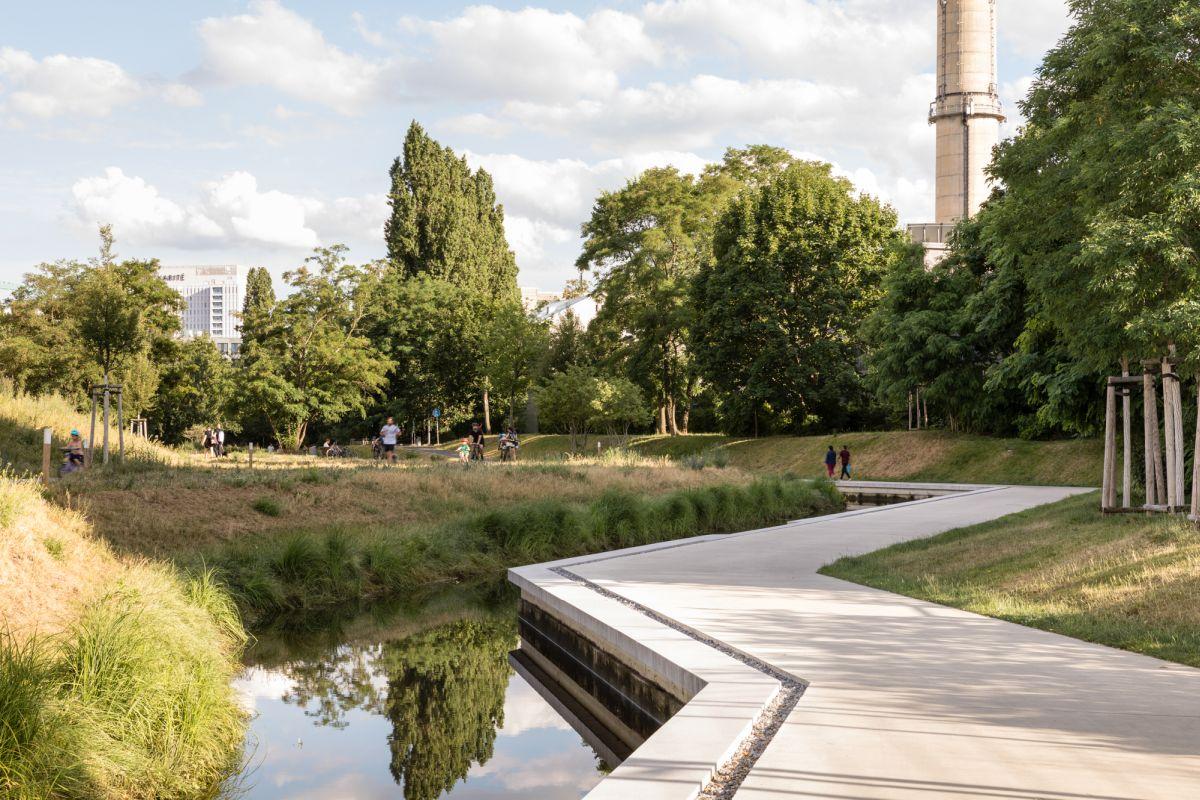
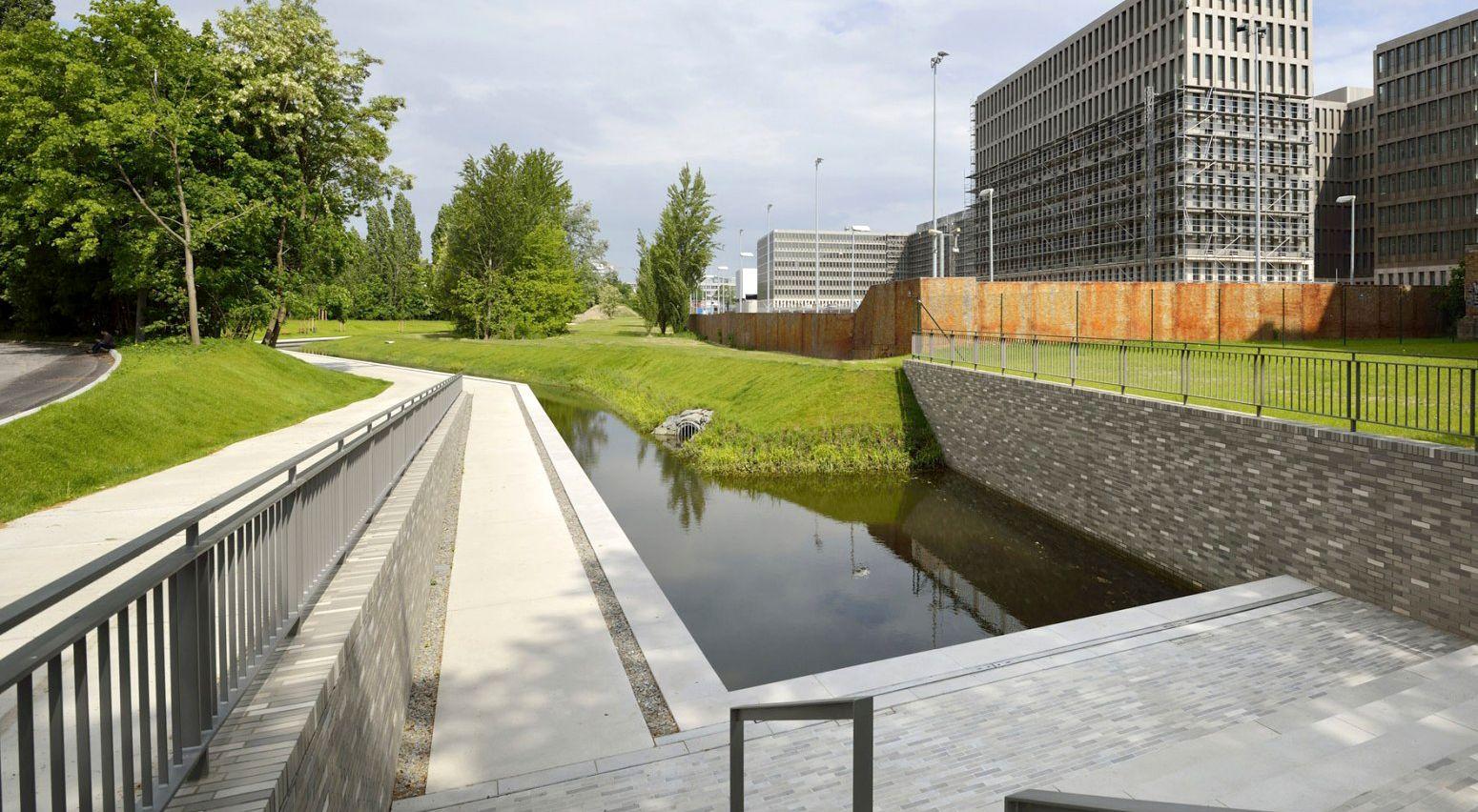
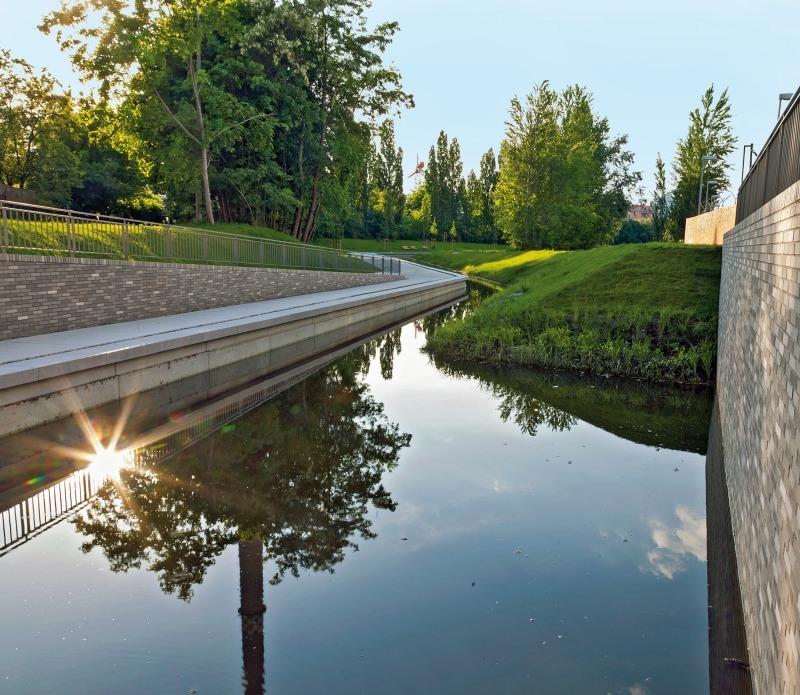
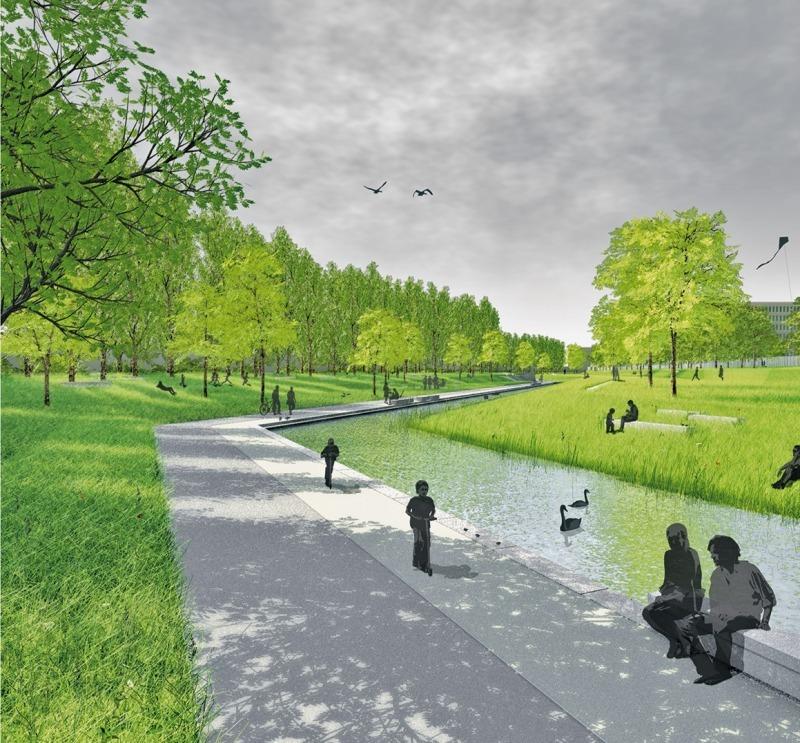
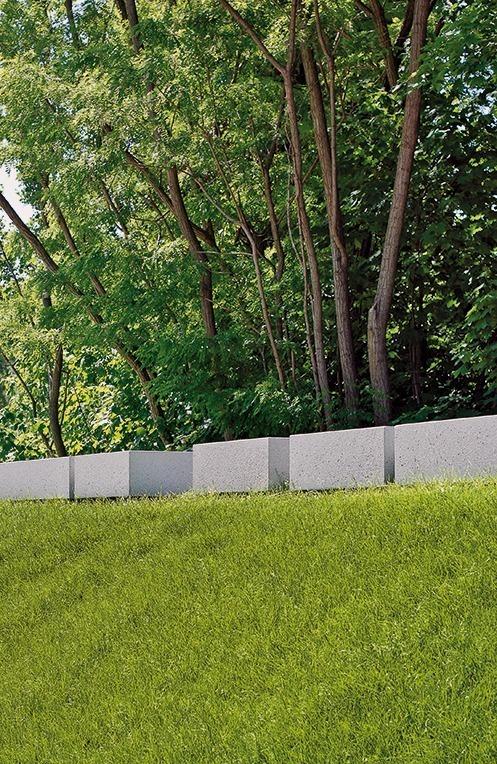
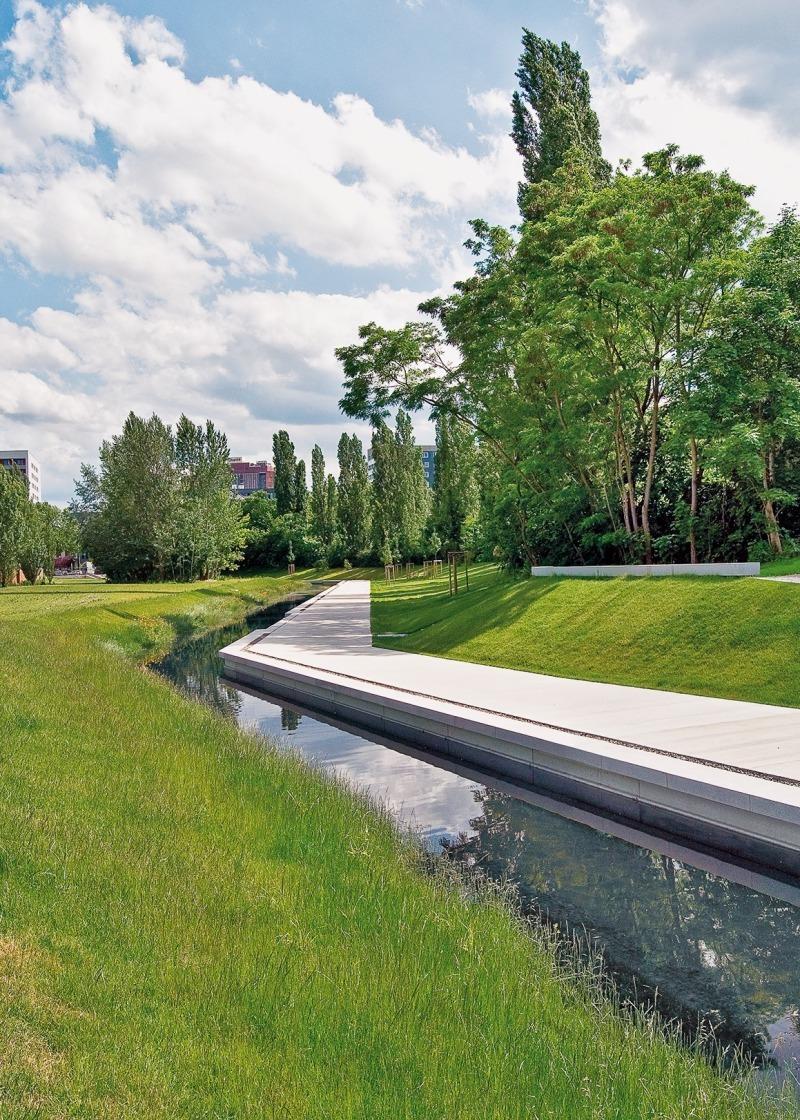
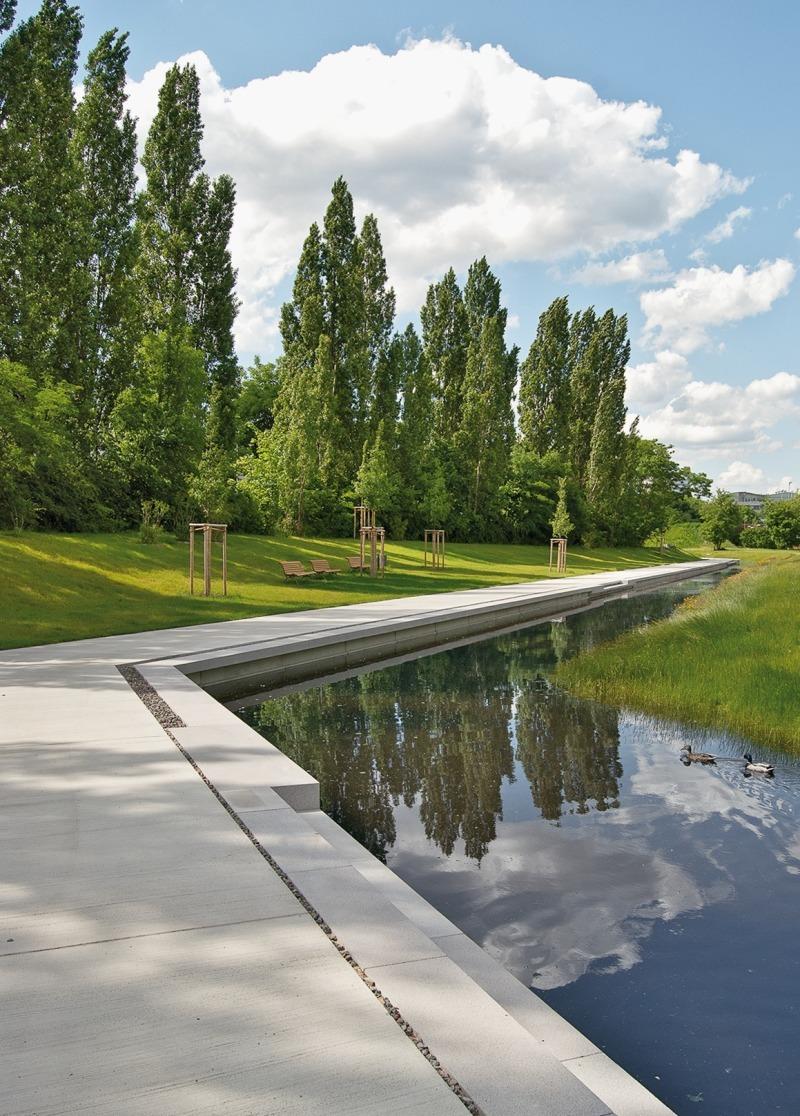
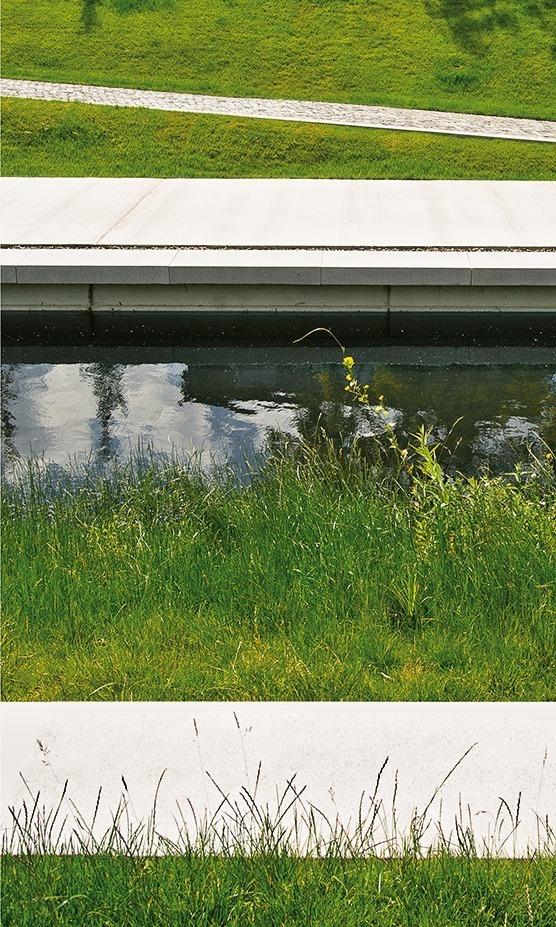
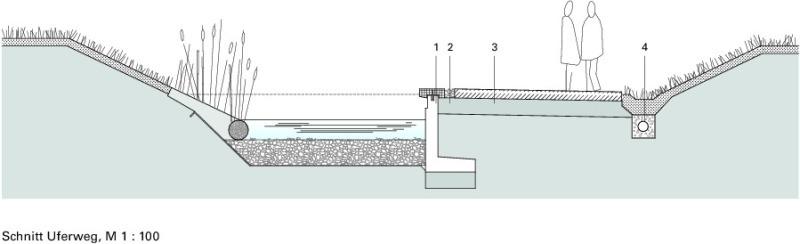
The Green Corridor Südpanke is a transformative restoration project that unveiled 700 meters of the river Südpanke, connecting Invalidenpark and Südpankepark in the heart of Berlin. This initiative, part of Berlin's broader mission to restore the Panke River, was spearheaded by the state of Berlin with a focus on ecological restoration, biodiversity enhancement, microclimate cooling, and creating recreational spaces to improve the quality of life for residents (Ref. 2; Ref. 3). Historically, the river in this area was channeled underground. The project brought the Südpanke back to the surface, integrating ecological principles and landscape planning into the design. The restored section of the river now flows openly in a natural watercourse bed, making it accessible to the public (Ref. 5). The restoration was completed in 2021, transforming the area with features such as playgrounds, lawns, benches, and a continuous biking and walking path that weaves through the green spaces. Work on the project began in 2010 but was interrupted by the construction of the neighboring headquarters of the Federal Intelligence Service. As a result, parts of the green corridor were opened to the public in 2012, with the full restoration completed nearly a decade later, in 2021 (Ref. 3; Ref. 6). The project established a seamless connection for cyclists and pedestrians from Invalidenpark in the south to Südpankepark in the north. The new open water section cools the microclimate in Berlin's densely built-up center while providing a critical habitat for plants and animals. Embankments and meadows near the Federal Intelligence Service's property support wild bees and other pollinators, fostering biodiversity. The Green Corridor Südpanke is a vibrant example of how urban ecological restoration can contribute to sustainability, quality of life, and resilience in a growing city. (Ref. 2)
Overview
Nature-based solution
- Blue infrastructure
- Rivers/streams/canals/estuaries
- Riverbank/Lakeside greens
- Parks and urban forests
- Green corridors and green belts
Key challenges
- Climate action for adaptation, resilience and mitigation (SDG 13)
- Climate change adaptation
- Green space, habitats and biodiversity (SDG 15)
- Green space creation and/or management
- Habitat and biodiversity restoration
- Regeneration, land-use and urban development
- Promote natural styles of landscape design for urban development
- Health and well-being (SDG 3)
- Creation of opportunities for recreation
- Enabling opportunities for physical activity
Principal problems in Functional Urban Area (FUA)
- Climate-Related Hazards
- Heat stress & Extreme temperatures
- Environmental Degradation
- Biodiversity loss
- Land use and Socio-economic change
- Rapid urbanization
- Health, Well-being and Social cohesion
- Inadequate access to recreational opportunities
Key priorities
Focus
Project objectives
Implementation activities
Climate-focused activities
Climate change adaptation:
- Increase urban vegetation cover to reduce urban heat island effect
Biodiversity conservation or restoration-focused activities
Biodiversity restoration:
- Rehabilitate and restore damaged or destroyed ecosystems
- Restore species (native, endangered, or unspecified)
- Restore native species
Main beneficiaries
- Citizens or community groups
Governance
Management set-up
- Co-governance with government and non-government actors
Type of initiating organisation
- Regional government
- Private sector/corporate actor/company
Participatory approaches/ community involvement
- Co-planning (e.g. stakeholder workshops, focus groups, participatory mapping)
- Taskforce groups
- Joint implementation (e.g. tree planting)
Details on the roles of the organisations involved in the project
Project implemented in response to ...
Type of enablers
Financing
Total cost
Source(s) of funding
- Public national budget
- Public regional budget
Type of funding
- Earmarked public budget
Non-financial contribution
- Provision of land
- Public authorities (e.g. land, utility services)
Impacts and Monitoring
Environmental impacts
- Climate change
- Lowered local temperature
- Achieved lowered local temperature
- Green space and habitat
- Increased green space area
- Achieved increased green space area
- Increase in protected green space areas
- Achieved increase in protected green space areas
- Increased conservation or restoration of ecosystems
- Achieved increased conservation or restoration of ecosystems
- Increased number of species present
- Achieved increased number of species present
Economic impacts
- Unknown
Socio-cultural impacts
- Social justice and cohesion
- Improved liveability
- Achieved improved liveability
- Improved access to urban green space
- Achieved improved access to urban green space
- Health and wellbeing
- Gain in activities for recreation and exercise
- Achieved gain in activities for recreation and exercise
- Enhanced cognitive restoration, relaxation and stress relief
- Achieved enhanced cognitive restoration, relaxation and stress relief
Type of reported impacts
Presence of formal monitoring system
Presence of indicators used in reporting
Presence of monitoring/ evaluation reports
Availability of a web-based monitoring tool
Potential risks of implementation and trade-offs
References
 Information about this nature-based solution was collected as part of the Naturescapes project funded by the European Union under Grant Agreement No 101084341.