

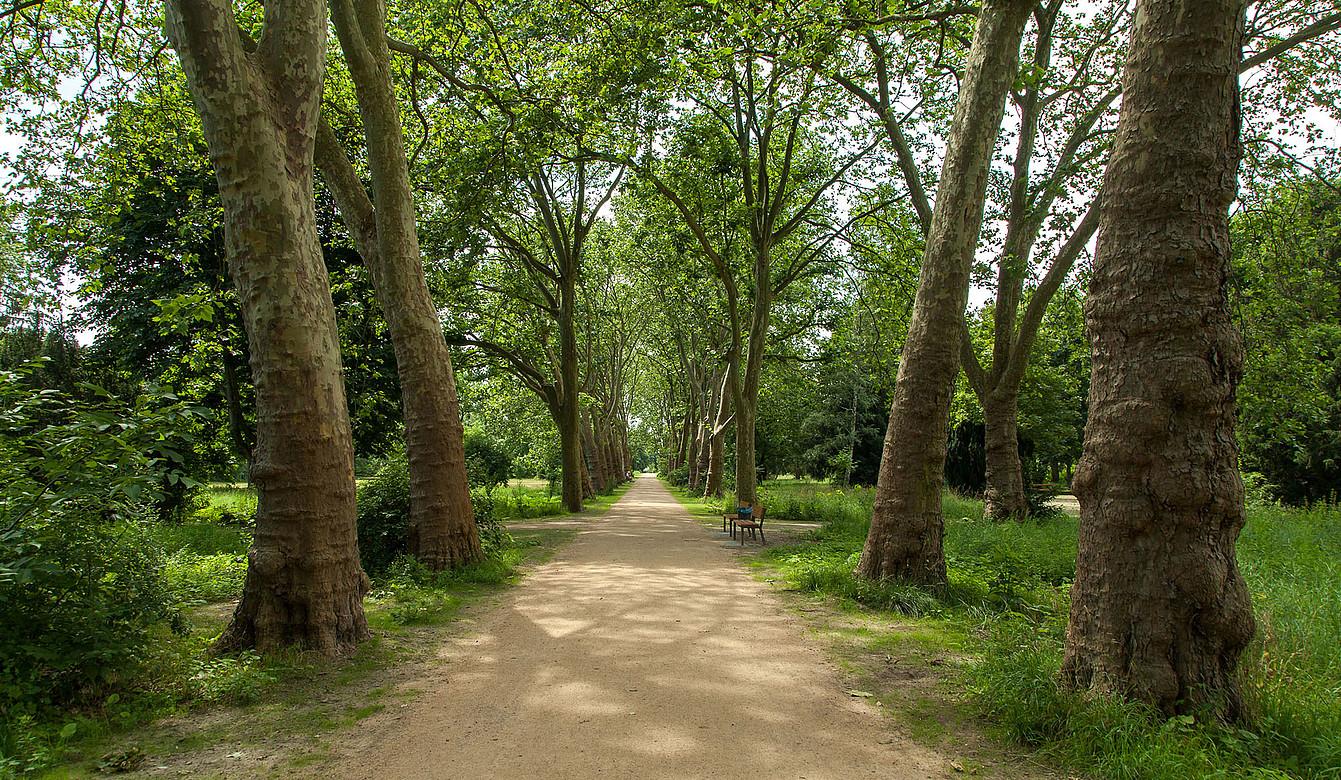
The new 6.5-hectare Anita Berber Park has been created on the site of the former St Thomas cemetery, between Tempelhofer Feld and Hermannstraße. It is named after the dancer Anita Berber, who herself was buried there in 1928. The cemetery was unused and out of use for several years and became accessible to the public through the intervention. (Ref. 3; Ref. 6) The construction period was preceded by a public participation process in which the facilities and design were developed together with the users. The redesign of the space was conducted by a landscape architecture office (Henningsen Landschaftsarchitekten PartG mbB) and financed by the German Federal Government (Ref. 1). The new park, which was planned and financed as a compensatory measure for the construction of the A100 urban highway, increases the quality of local recreation in the densely populated district of Neukölln. (Ref. 2; Ref. 6) An important goal was to achieve high species diversity in the park while preserving its valuable trees and shrubs. The park also offers multiple spots for rest and play as well as a zone for free running dogs. (Ref. 2; Ref. 6) The park features wooden climbing structures and an old collection of trees with hollows, along with bushes and shrubs. These areas often accumulate rubbish, highlighting the ongoing waste management issues the park has faced since its renovation (Ref. 4).

Overview
Nature-based solution
- Parks and urban forests
- Large urban parks or forests
Key challenges
- Green space, habitats and biodiversity (SDG 15)
- Green space creation and/or management
- Habitat and biodiversity conservation
- Regeneration, land-use and urban development
- Regulation of built environment
- Health and well-being (SDG 3)
- Creation of opportunities for recreation
- Social justice, cohesion and equity (SDG 10)
- Social justice and equity
Principal problems in Functional Urban Area (FUA)
- Environmental Degradation
- Biodiversity loss
- Land use and Socio-economic change
- Unequal availability and access to public green spaces
- Health, Well-being and Social cohesion
- Inadequate access to recreational opportunities
Key priorities
Focus
Project objectives
Implementation activities
Biodiversity conservation or restoration-focused activities
Biodiversity conservation:
- Protect and enhance urban habitats
- Preserve and strengthen existing habitats and ecosystems
- Create new habitats
- Reduce negative impacts and avoid the alteration/damage of ecosystem
- Means for conservation governance
- Manage biological resources for conservation and sustainable use
Main beneficiaries
- Citizens or community groups
- Young people and children
- Marginalized groups: Children, young people or youth groups , Elderly people, People with functional diversities, Socio-economically disadvantaged populations (e.g. low-income households, unemployed)
Governance
Management set-up
- Co-governance with government and non-government actors
Type of initiating organisation
- National government
- Local government/municipality
Participatory approaches/ community involvement
- Co-planning (e.g. stakeholder workshops, focus groups, participatory mapping)
- Consultation (e.g. workshop, surveys, community meetings, town halls)
Details on the roles of the organisations involved in the project
Project implemented in response to ...
Type of enablers
Financing
Total cost
Source(s) of funding
- Public local authority budget
- Public national budget
- Public regional budget
Type of funding
- Earmarked public budget
- Direct funding (grants, subsidies, or self-financed projects by private entities)
Non-financial contribution
- Provision of land
- Public authorities (e.g. land, utility services)
Impacts and Monitoring
Environmental impacts
- Green space and habitat
- Increased green space area
- Achieved increased green space area
- Increased conservation or restoration of ecosystems
- Achieved increased conservation or restoration of ecosystems
- Reduced biodiversity loss
- Expected reduced biodiversity loss
- Restoration of derelict areas
- Achieved restoration of derelict areas
Economic impacts
- Unknown
Socio-cultural impacts
- Social justice and cohesion
- Improved access to urban green space
- Achieved improved access to urban green space
- Increased visibility and opportunity for marginalised groups or indigenous peoples
- Achieved increased visibility and opportunity for marginalised groups or indigenous peoples
- Health and wellbeing
- Gain in activities for recreation and exercise
- Expected gain in activities for recreation and exercise
Type of reported impacts
Presence of formal monitoring system
Presence of indicators used in reporting
Presence of monitoring/ evaluation reports
Availability of a web-based monitoring tool
Potential risks of implementation and trade-offs
References
 Information about this nature-based solution was collected as part of the Naturescapes project funded by the European Union under Grant Agreement No 101084341.