

Last updated: April 2022
The urban development project between Little Lungegård Lake and Big Lungegård Lake (Store Lungegårdsvann) involves the creation of a canal between the two lakes as a means of runoff management, among other things. Water quality and flood protection are fundamental issues that are considered in this project as the city is expecting increased levels of precipitation due to climate change. The rest of the urban area will be transformed into an attractive modern city centre area with water as the most important element (Ref 1, 4).
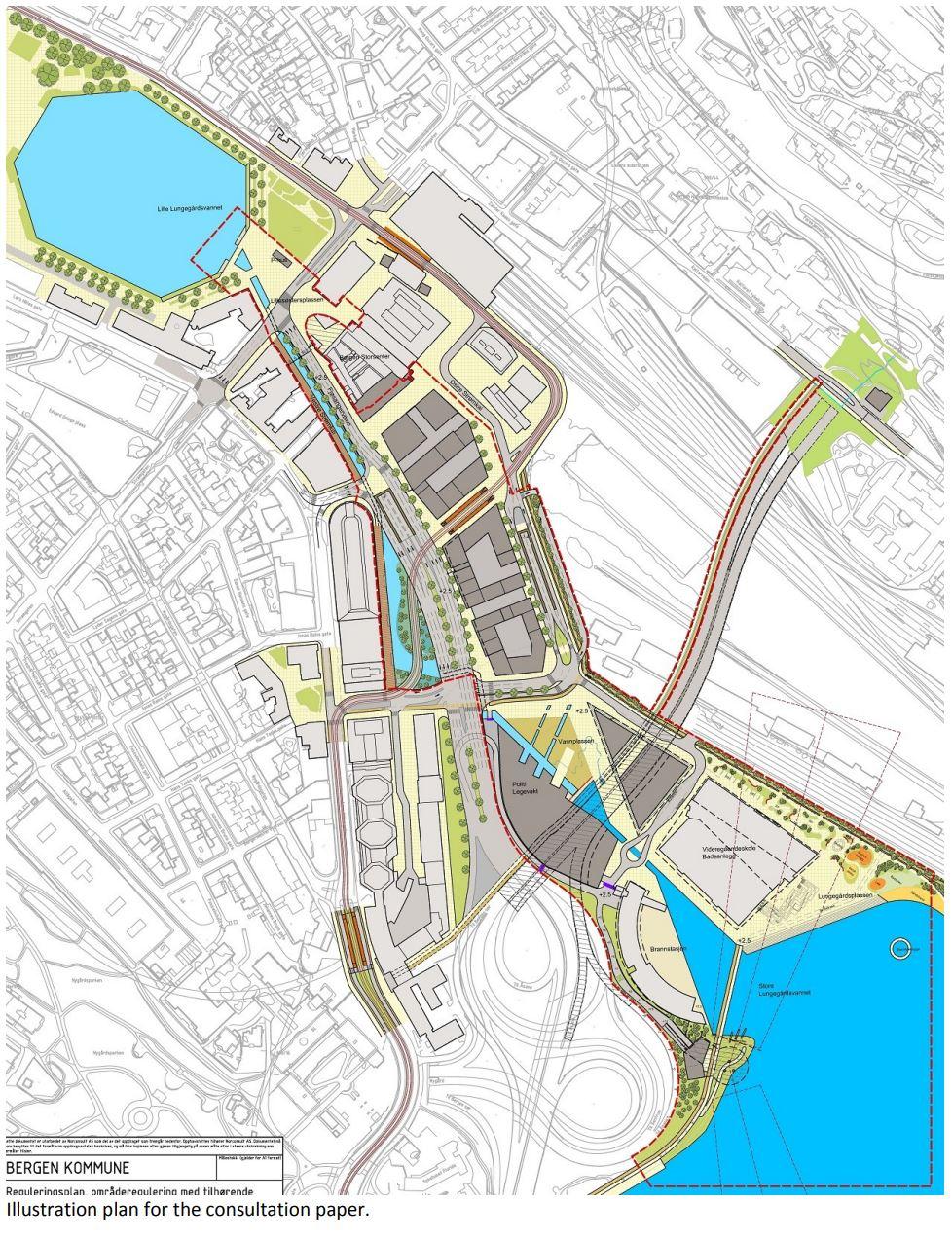
Source: Ref. 10
Overview
Nature-based solution
- Blue infrastructure
- Lakes/ponds
- Rivers/streams/canals/estuaries
Key challenges
- Climate action for adaptation, resilience and mitigation (SDG 13)
- Climate change adaptation
- Regeneration, land-use and urban development
- Regulation of built environment
- Water management (SDG 6)
- Flood protection
- Improvements to water quality
- Health and well-being (SDG 3)
- Creation of opportunities for recreation
Focus
Management and improved protection of rivers and other blue areas
Project objectives
This project is part of a broader urban development project that aims to:
- Provide security for the lives of citizens of Bergen (Ref. 3)
- Promote health and economy (Ref. 3)
- Ensure the best possible water quality of runoff water (Ref. 1,2,3)
- Ensure fresh urban waterways (Little Lungegårds Lake) are in biological balance (Ref. 3)
- Protect the city against climate change impacts including sea-level rise and increased flooding (Ref. 1,4,8,9)
Implementation activities
Open a channel between the Big and the Little Lungegård Lake (Ref. 2)
"Extensive cleaning of the bottom sediments and securing an adequate supply of surface water from the urban area through separation of the sewage system are important elements in a long-term waterway plan that aims to establish a fresh, urban waterway in biological balance. The reopening of the waterway from Lille Lungegårdsvann to the sea is the next stage of the plan. The remodelling of the rest of the urban area, from a strained heavily trafficked area into an attractive modern city centre area towards Store Lungegårdsvann, will be based on water as the most important element. The establishment of a climate-adapted flood route secured against rising sea levels constitutes the core of the environmental upgrading of the city’s access road and public transport hub" (Ref. 4,8)
Integration of surface water management into the design (Ref. 9)
Climate-focused activities
Climate change adaptation:
- Renaturalization of rivers and other water bodies
Main beneficiaries
- Local government/Municipality
- Citizens or community groups
Governance
Management set-up
- Government-led
Type of initiating organisation
- Local government/municipality
Participatory approaches/ community involvement
- Unknown
Details on the roles of the organisations involved in the project
Local government: initiator of project; strategic development & planning (Ref. 3)
National government: interest in cultural heritage (water heritage regulation) (Ref. 8)
Provincial Government (County Hordaland): interest in wildlife and water regulation; knowledge development (Ref. 8)
Property Owners: land development (Ref. 8)
Knowledge Institutions (Bjerknes Centre for Climate Reasearch/ The Norwegian Meteorological Institute): interest in regulation of environment, water quality, and water quantity; planning; knowledge maintenance (Ref. 8)
Citizens, organizations, and communities (Nordnes SKOLE adoptation of Smålungeren): interest in knowledge maintenance (Ref. 8)
Transnational/EU network: MARE (Managing Adaptive REsponses to changing flood risk), North Sea Region programme - of which the City of Bergen was a part (Ref. 8)
Project implemented in response to ...
... an EU policy or strategy?
Yes
(EU's Water Framework Directive (Ref. 8))
... a national policy or strategy?
Unknown
... a local policy or strategy?
Yes
(This NBS was affiliated with the Cities of the Future program (Ref. 1,2,9). The Cities of the Future program included 5 priorities: (1) Land Use and Transport, (2) Stationary Energy, (3) Consumption and Waste, (4) Adaptation to Climate Change, and (5) Better Urban Environment. This NBS was a part of the Adaptation to Climate Change priority, which included 16 projects that were processed and provided specific plans between 2009-2014 (Ref. 2,9). Among the objectives were laying the groundwork for community development that reduces vulnerability to climate change and integrating climate adaptation into land use management and infrastructures. (Ref. 9)
Other local policies affiliated with the NBS include various plans to address rainwater management, including (Ref. 3):
- Guidelines for stormwater management in Bergen municipality (Retningslinjer for overvannshåndtering i Bergen Kommune)
- Master Plan for sewage and water environment 2005-2015 (Hovedplan for avløp og vannmiljø 2005 - 2015)
- Management Plan for the waterways in Bergen (Forvaltningsplan Vassdragene i Bergen) )
Financing
Total cost
Unknown
Source(s) of funding
- Unknown
Type of funding
- Unknown
Non-financial contribution
Unknown
Impacts and Monitoring
Environmental impacts
- Climate change
- Strengthened capacity to address climate hazards/natural disasters
- Water management and blue areas
- Improved water quality
- Increased protection against flooding
- Enhanced protection and restoration of freshwater ecosystems
- Green space and habitat
- Promotion of naturalistic styles of landscape design for urban development
Economic impacts
- Unknown
Socio-cultural impacts
- Health and wellbeing
- Gain in activities for recreation and exercise
Type of reported impacts
Expected impacts
Presence of formal monitoring system
Unknown
Presence of indicators used in reporting
No evidence in public records
Presence of monitoring/ evaluation reports
No evidence in public records
Availability of a web-based monitoring tool
No evidence in public records
References
1. Vikse, P. (2014). Water between the Lungegård Lakes/Vann mellom Lungegårdsvannen. Norwegian Architects Association. Available at: Source link [Accessed: 17 October 2020].
2. City of Bergen (2009). Cities of the Future - Area and transport action plan/Framtidens byer - Areal og transport Handlingsplan. [Document provided].
3. City of Bergen (2008). Bergen City Centre - Strategy program for water between the Lungegårds lakes/Bergen Sentrum - Strategiprogram for vann mellom Lungegårdsvannene. Available at: Source link [Accessed: 17 October 2020].
4. City of Bergen (2010). Water and the life of the city. [Document provided].
5. City of Bergen (2016). Green Strategy. Climate and Energy Action plan for Bergen/Grønn strategi. Klima- og Energihandlingsplan for Bergen. Behandlet av Byråd 26. mai. 2016. Available at: Source link [Accessed: 17 October 2020].
6. City of Bergen (2005). Guidelines for stormwater management in Bergen municipality/Retningslinjer for overvannshåndtering i Bergen kommune. [Document provided].
7. Bergen Municipality's Council for Urban development. Water and Sewerage Agency/Bergen Kommunes Byrådsavdeling for byutvikling. Vann- og avløpsetaten. [Not available in 2020].
8. MARE - Managing Adaptive REsponses to changing flood risk (n.d.). The Lungegård lakes, transforming a fjord. The Interreg. IVB North Sea Region Programme. [Document provided].
9. Framtidens Byer. (2013). Cities of the Future -Bergen -Status of the Programme of Action November 2013. [Document provided].
10. City of Bergen. (2017). Climate adaptation in Bergen municipality / Klimatilpasning i Bergen commune. Available at: Source link [Accessed: 24 October 2020].
11. City of Bergen. (2019). Has processed plans for Store Lungegårdsvann/ Har behandlet planer for Store Lungegårdsvann. Available at: Source link [Accessed: 24 October 2020].
2. City of Bergen (2009). Cities of the Future - Area and transport action plan/Framtidens byer - Areal og transport Handlingsplan. [Document provided].
3. City of Bergen (2008). Bergen City Centre - Strategy program for water between the Lungegårds lakes/Bergen Sentrum - Strategiprogram for vann mellom Lungegårdsvannene. Available at: Source link [Accessed: 17 October 2020].
4. City of Bergen (2010). Water and the life of the city. [Document provided].
5. City of Bergen (2016). Green Strategy. Climate and Energy Action plan for Bergen/Grønn strategi. Klima- og Energihandlingsplan for Bergen. Behandlet av Byråd 26. mai. 2016. Available at: Source link [Accessed: 17 October 2020].
6. City of Bergen (2005). Guidelines for stormwater management in Bergen municipality/Retningslinjer for overvannshåndtering i Bergen kommune. [Document provided].
7. Bergen Municipality's Council for Urban development. Water and Sewerage Agency/Bergen Kommunes Byrådsavdeling for byutvikling. Vann- og avløpsetaten. [Not available in 2020].
8. MARE - Managing Adaptive REsponses to changing flood risk (n.d.). The Lungegård lakes, transforming a fjord. The Interreg. IVB North Sea Region Programme. [Document provided].
9. Framtidens Byer. (2013). Cities of the Future -Bergen -Status of the Programme of Action November 2013. [Document provided].
10. City of Bergen. (2017). Climate adaptation in Bergen municipality / Klimatilpasning i Bergen commune. Available at: Source link [Accessed: 24 October 2020].
11. City of Bergen. (2019). Has processed plans for Store Lungegårdsvann/ Har behandlet planer for Store Lungegårdsvann. Available at: Source link [Accessed: 24 October 2020].
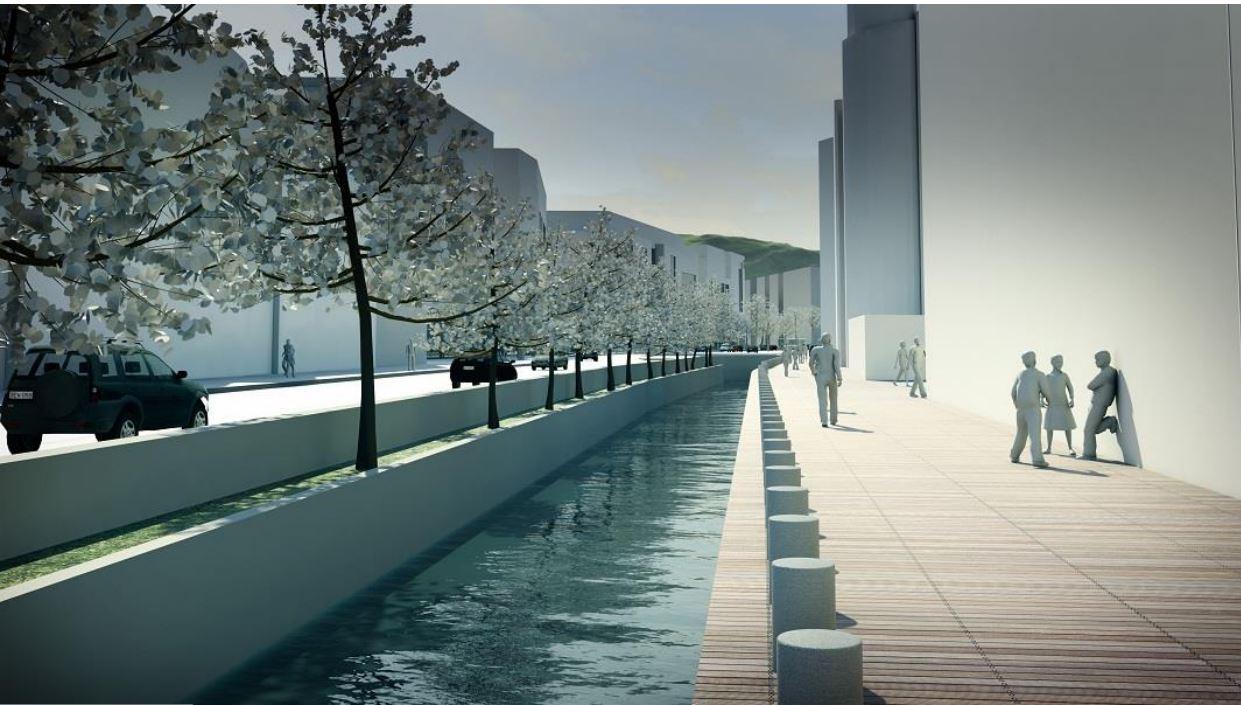
Source: Ref. 10
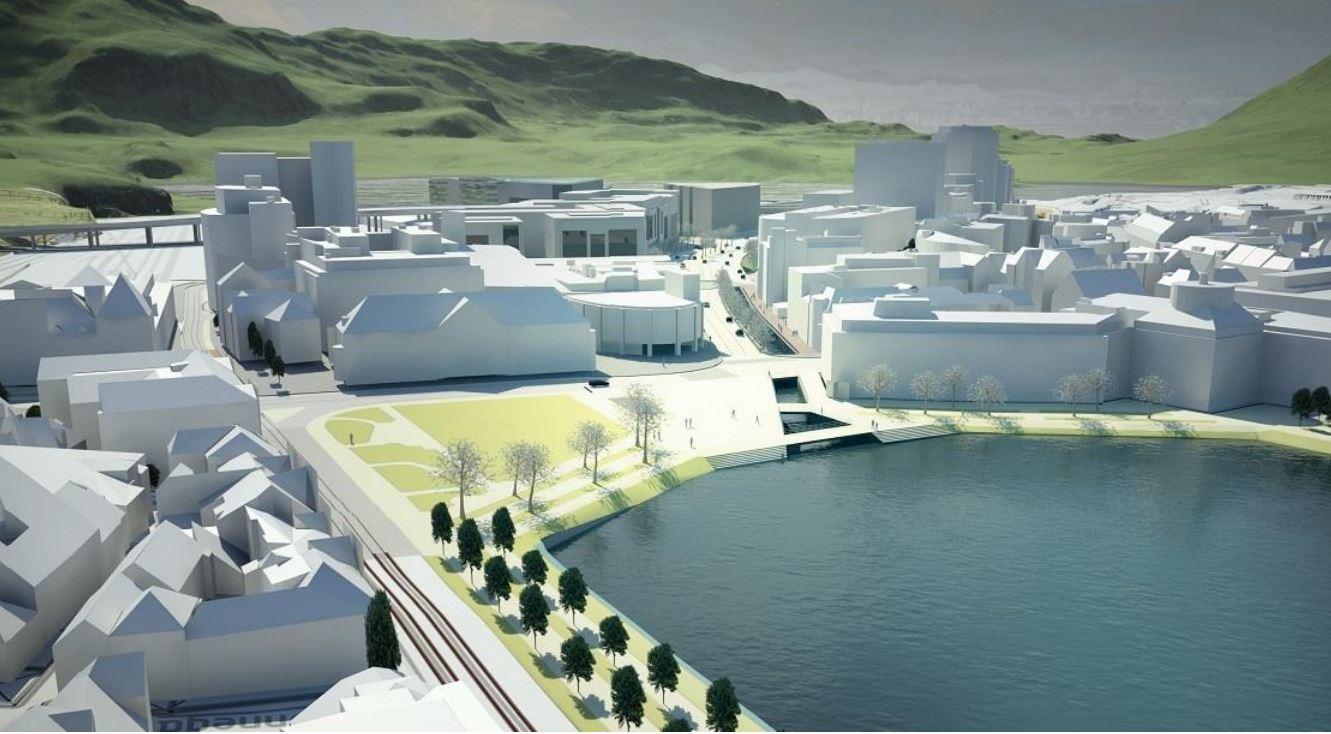
Source: Ref. 10