

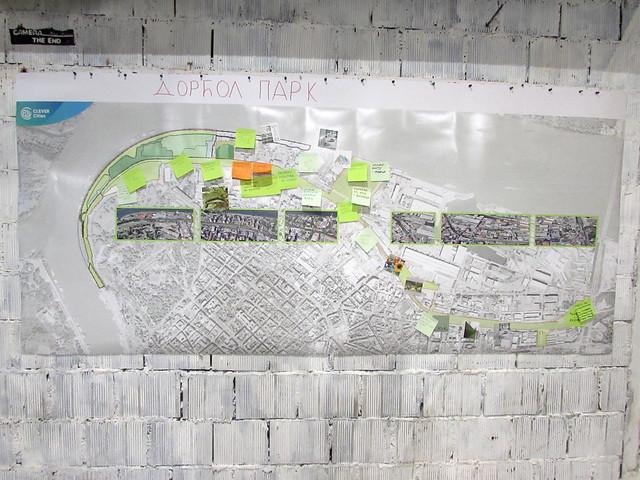
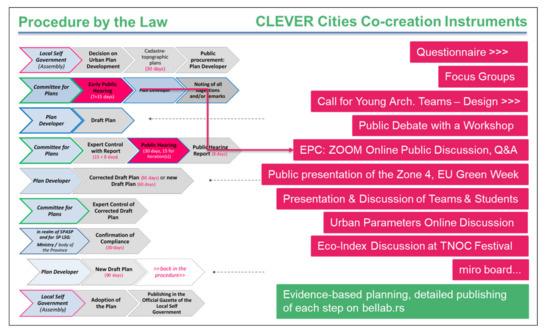
The "Line Park" project in Belgrade aims to create a continuous green belt spanning 4.6 kilometres and covering over 48 hectares. As such, the project will revitalize the former railway corridor from "Beton Hala", just below the Belgrade Fortress, to the Pancevac Bridge. Inspired by notable urban parks like New York's "High Line", Moscow's "Zagrađe," and Toronto's "Rail Corridor," it will become a major recreational destination and also help to alleviate the pressures from the city's heavy air pollution and summer heat (Ref. 5, 6). The park will be divided into ten thematic sections dedicated to aromatic plant and flower gardens, urban gardening and beekeeping, sports facilities, a newly built university campus and more. Additionally, there will be an amphitheatre and facilities for outdoor education. To further integrate green infrastructure, new buildings will have green roofs and walls (Ref. 2,5). Ultimately, the park integrates a number of amenities into the entire city. The development of the park also introduced innovative co-creation mechanisms in terms of governance and planning. Since Belgrade is part of the multinational CLEVER Cities Initiative, the city's Secretariat for Environmental Protection suggested the use of the site as a pilot test for introducing nature-based solutions in urban planning and with diverse stakeholders' input. Several workshops, focus groups, and consultations took place between 2019 and 2021, which facilitated the diversity of ideas that have been adopted into the official construction plan (Ref. 1, 2). Despite these successes, civil society groups raise concerns over the extraordinary cost of 70 million euros, displacement of Roma communities and the interest of real estate developers that may undermine the project's original cause (Ref. 3, 8).
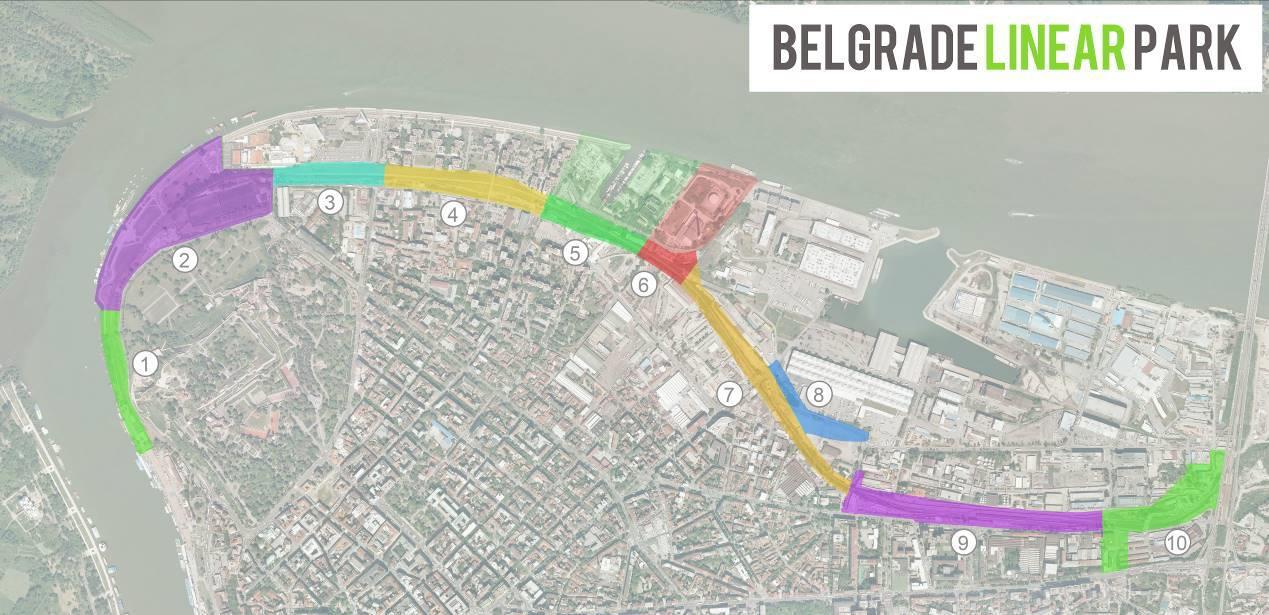
Overview
Nature-based solution
- Grey infrastructure featuring greens
- Railroad bank and track greens
- Parks and urban forests
- Green corridors and green belts
Key challenges
- Climate action for adaptation, resilience and mitigation (SDG 13)
- Climate change adaptation
- Environmental quality
- Air quality improvement
- Soil quality improvement
- Green space, habitats and biodiversity (SDG 15)
- Green space creation and/or management
- Habitat and biodiversity restoration
- Cultural heritage and cultural diversity
- Protection of historic and cultural landscape/infrastructure
- Health and well-being (SDG 3)
- Creation of opportunities for recreation
- Enabling opportunities for physical activity
- Inclusive and effective governance (SDG 16)
- Inclusive governance
- Social justice, cohesion and equity (SDG 10)
- Social interaction
- Environmental education
- Sense of community and community engagement
- Economic development and employment (SDG 8)
- Economic development: service sectors
- Real estate development
- Sustainable consumption and production (SDG 12)
- Sustainable production
Principal problems in Functional Urban Area (FUA)
- Climate-Related Hazards
- Heat stress & Extreme temperatures
- Environmental Degradation
- Air pollution
- Health, Well-being and Social cohesion
- Inadequate access to recreational opportunities
- Poor community engagement
Key priorities
Focus
Project objectives
Implementation activities
Climate-focused activities
Climate change adaptation:
- Increase urban vegetation cover to reduce urban heat island effect
- Implement sustainable urban drainage schemes to manage stormwater
Biodiversity conservation or restoration-focused activities
Biodiversity restoration:
- Rehabilitate and restore damaged or destroyed ecosystems
- Restore ecological connectivity
- Public engagement
Main beneficiaries
- Public sector institution (e.g. school or hospital)
- Researchers/University
- Citizens or community groups
- Young people and children
- Other
Governance
Management set-up
- Government-led
Type of initiating organisation
- Local government/municipality
Participatory approaches/ community involvement
- Co-planning (e.g. stakeholder workshops, focus groups, participatory mapping)
- Deliberative decision-making processes (e.g., consensus building, deliberative polling)
- Dissemination of information and education
- Consultation (e.g. workshop, surveys, community meetings, town halls)
Details on the roles of the organisations involved in the project
Project implemented in response to ...
Type of enablers
Financing
Total cost
Source(s) of funding
- Public local authority budget
- Public national budget
- Corporate investment
- EU funds
- National or regional development bank
Type of funding
- Earmarked public budget
- Direct funding (grants, subsidies, or self-financed projects by private entities)
- Loan
- Donations
Non-financial contribution
Impacts and Monitoring
Environmental impacts
- Climate change
- Lowered local temperature
- Expected lowered local temperature
- Environmental quality
- Improved air quality
- Expected improved air quality
- Reduced noise exposure
- Expected reduced noise exposure
- Improved soil quality
- Expected improved soil quality
- Water management and blue areas
- Improved stormwater management
- Expected improved stormwater management
- Green space and habitat
- Increased green space area
- Expected increased green space area
- Increased ecological connectivity across regeneration sites and scales
- Expected increased ecological connectivity across regeneration sites and scales
- Increased conversion of degraded land or soil
- Expected increased conversion of degraded land or soil
- Increased number of species present
- Expected increased number of species present
- Enhanced support of pollination
- Expected enhanced support of pollination
- Restoration of derelict areas
- Expected restoration of derelict areas
Economic impacts
- Increased property prices
- Expected increased property prices
- Attraction of business and investment
- Expected attraction of business and investment
Socio-cultural impacts
- Social justice and cohesion
- Improved social cohesion
- Achieved improved social cohesion
- Improved liveability
- Expected improved liveability
- Improved access to urban green space
- Expected improved access to urban green space
- Increased opportunities for social interaction
- Expected increased opportunities for social interaction
- Increased involvement of locals in the management of green spaces
- Expected increased involvement of locals in the management of green spaces
- Health and wellbeing
- Gain in activities for recreation and exercise
- Expected gain in activities for recreation and exercise
- Enhanced cognitive restoration, relaxation and stress relief
- Expected enhanced cognitive restoration, relaxation and stress relief
- Cultural heritage and sense of place
- Improvement in people’s connection to nature
- Expected improvement in people’s connection to nature
- Protection of historic and cultural landscape / infrastructure
- Expected protection of historic and cultural landscape / infrastructure
- Education
- Increased awareness of NBS and their benefits
- Expected increased awareness of NBS and their benefits
Type of reported impacts
Presence of formal monitoring system
Presence of indicators used in reporting
Presence of monitoring/ evaluation reports
Availability of a web-based monitoring tool
Potential risks of implementation and trade-offs
References


 Information about this nature-based solution was collected as part of the Naturescapes project funded by the European Union under Grant Agreement No 101084341.