

Last updated: November 2021
The Tree Master Plan of Barcelona is a long-term (20-year) plan, running from 2017 to 2037. The ultimate goal of the Tree Master Plan is to ensure the presence of dynamic, healthy and diverse urban trees in Barcelona. According to the Plan, urban trees are essential for green infrastructure and for creating quality public space in the city. An innovative feature of this intervention is the use of biological approaches to the tree maintenance (no pesticides or chemicals) (Ref 1, 2 and 3).
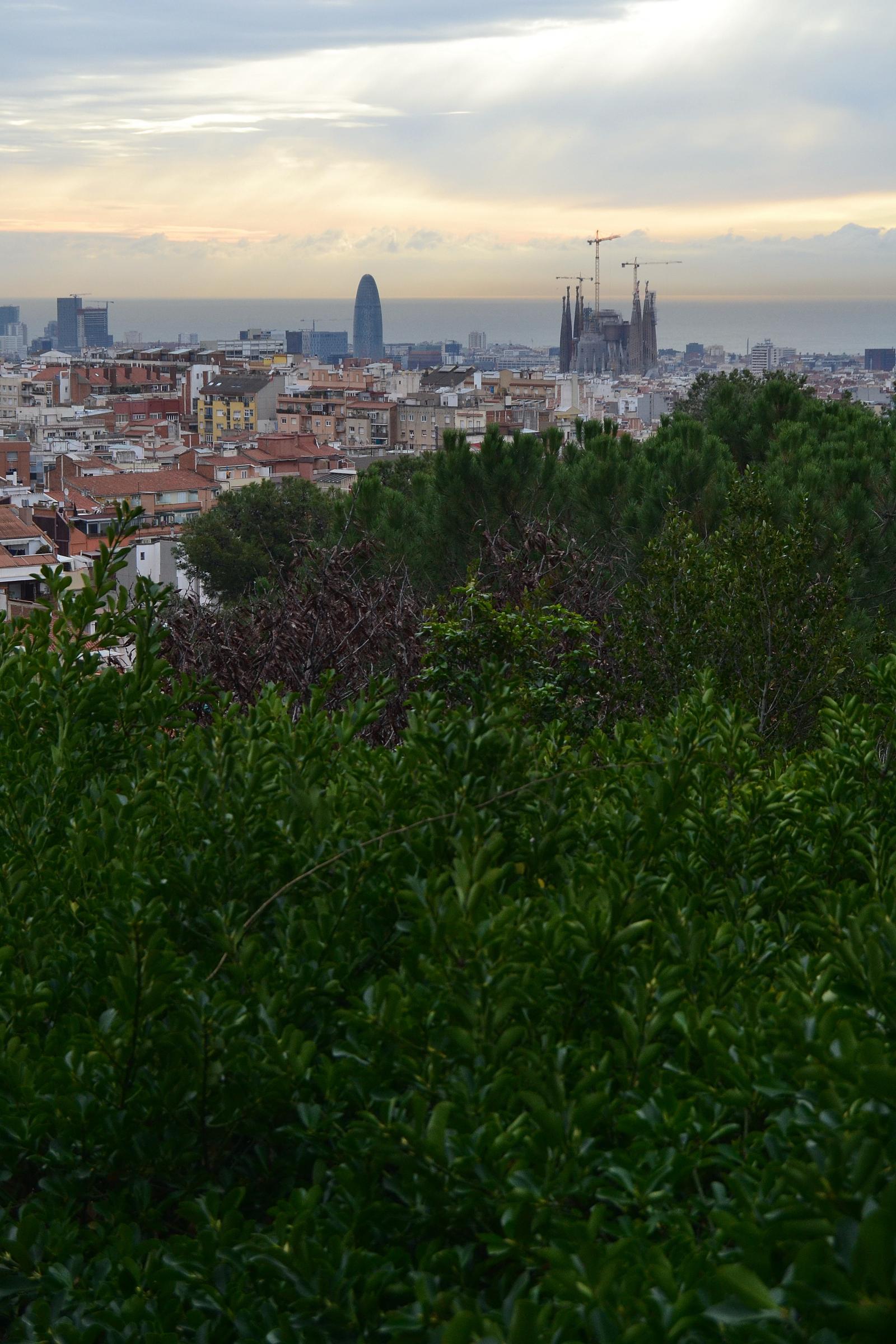
Tree Master Plan of Barcelona
Ajuntament de Barcelona, retrieved 09/20/2018
Overview
Nature-based solution
- Grey infrastructure featuring greens
- Alley or street trees and other street vegetation
- Institutional green space
- Other
- Parks and urban forests
- Large urban parks or forests
- Pocket parks/neighbourhood green spaces
- Green corridors and green belts
- Green areas for water management
- Other
Key challenges
- Climate action for adaptation, resilience and mitigation (SDG 13)
- Climate change adaptation
- Climate change mitigation
- Water management (SDG 6)
- Stormwater and rainfall management and storage
- Green space, habitats and biodiversity (SDG 15)
- Habitat and biodiversity restoration
- Habitat and biodiversity conservation
- Green space creation and/or management
- Environmental quality
- Soil quality improvement
- Air quality improvement
- Noise reduction
- Regeneration, land-use and urban development
- Regulation of built environment
- Social justice, cohesion and equity (SDG 10)
- Social interaction
- Environmental education
- Health and well-being (SDG 3)
- Enabling opportunities for physical activity
- Improving mental health
- Improving physical health
- Creation of opportunities for recreation
- Cultural heritage and cultural diversity
- Preservation of natural heritage
- Protection of historic and cultural landscape/infrastructure
Focus
Creation of new green areas, Maintenance and management of urban nature, Knowledge creation and awareness raising, Strategy, plan or policy development
Project objectives
The ultimate goal of the Tree Master Plan is for the city to enjoy a dynamic, healthy, biodiverse organism that is in abundant supply. A resource with lots of native species, a distinguishing feature that is mature, safe and sustainable, and which requires the best conditions for its development, adapted to the urban ecosystem.
1) To have a veritable green infrastructure with the maximum possible number of trees, connected to the environment (urban and natural);
2) To get the maximum environmental, social and economic use out of the city’s trees;
3) To have a biodiverse range of trees in good condition, that are protected, safe and stand out, thanks to highly efficient and sustainable management;
4) To have trees that are adapted to the climate and resilient in the face of global change;
5) To achieve harmony between people and trees, and increase the value that society attaches to trees (Ref 1).
The City of Barcelona, with its Green Infrastructure and Biodiversity Plan up to 2020 (City of Barcelona, 2013) is implementing a range of actions to bring nature into the city. The main objectives are to preserve and improve the natural heritage of the city and to conserve its biodiversity. This would ultimately bring environmental and social benefits for local people. With a similar vision, but with different solutions, the Trees Master Plan 2016-2035 (included among the several actions launched by the Green Infrastructure and Biodiversity Plan up to 2020) has the overall aim of maintaining a well-managed, healthy and biodiverse woodland to improve green corridors and tackle the urban heat island effect (Ref 6). - Trees help to purify the air by eliminating atmospheric pollutants, mainly caused by motor-vehicle traffic and industry. These include ozone, sulphur dioxide, nitrogen dioxide, carbon monoxide and suspended particles (Ref. 2). - Trees help to minimise the acoustic pollution reaching people’s homes, in both real and perceived terms, because their crowns act as a barrier (Ref. 2). - The shade offered by trees and the humidity that vegetation gives off help to cool the atmosphere and lower temperatures during the hotter months. In winter, they also help to reduce wind speeds, which attenuates the drop in temperature and reduces the need for using energy to heat homes (Ref. 2)
Implementation activities
The inclusion of technology as a support tool for the public planning and management of trees, and the entire green infrastructure, has become an essential municipal strategy for building up a more functional, smart network of urban infrastructures. Examples of actions related to the management of the tree population which can be included in this context are: smart irrigation, with a more efficient consumption of hydrological resources for maintaining plants and structured soils, and high-tech tree wells, which improve the living conditions for root systems. The proposals of the Master Plan for Barcelona’s Trees 2017-2037 are divided into ten strategic lines, which are put into practice through a range of specific actions (2). These 10 lines will be displayed by 46 actions and a range of associated tasks that have been prioritised considering mandates and the timing of actions for the coming years (Ref 3).
There are 10 strategic action lines:
1. The arboreal heritage and biodiversity: Conserve the woodland making it more sustainable so that it forms a habitat for biodiversity.
2. Knowledge: Advance knowledge of the tree and of its values and services.
3. Communication and participation: Disseminate the services of trees among the citizens, making them a participant in its conservation.
4. Planning and connectivity: Plan trees as a more powerful, connected, and green infrastructure to give more services.
5. Preservation and protection: Preserve the woodland and its heritage and identity value and ensure its protection.
6. Trees' health: To take care of the health of trees by ensuring biodiversity and citizenship.
7. Vegetable material and plantation: to work for a good supply and good woodland planting.
8. Prunning and safety: Prune as little as necessary to ensure the safety of people and the proper development of the tree.
9. Soil: Provide trees with more volume of soil and of higher quality, developing strategies that make urban soil more permeable.
10. Water: sustainable management of the irrigation water to get maximum services. (Ref. 7)
Climate-focused activities
Climate change adaptation:
- Increase or improve urban vegetation cover to help reduce outdoor temperature
- Increase the use of climate-resilient plant species (resistant to drought, fire, and pests)
Climate change mitigation:
- Increase green urban nature for carbon storage (wetlands, tree cover)
Biodiversity conservation or restoration-focused activities
Biodiversity conservation:
- Protect and enhance urban habitats
- Preserve and strengthen existing habitats and ecosystems
- Reduce negative impacts and avoid the alteration/damage of ecosystem
- Means for conservation governance
- Raise public awareness
Biodiversity restoration:
- Restore species (native, endangered, or unspecified)
- Restore ecological connectivity
- Other
Main beneficiaries
- Local government/Municipality
- Citizens or community groups
Governance
Management set-up
- Co-governance with government and non-government actors
Type of initiating organisation
- Local government/municipality
Participatory approaches/ community involvement
- Co-planning (e.g. stakeholder workshops, focus groups, participatory mapping)
- Dissemination of information and education
- Joint implementation (e.g. tree planting)
Details on the roles of the organisations involved in the project
Conservation of this heritage is driven by Barcelona City Council by involving everyone, both the public and private sectors, as well as organisations and the general public (Ref 1).
At present, Barcelona City Council is responsible for approximately 310,800 individual trees. Not all the city’s public trees are managed by the City Council. Other governmental bodies, such as the Generalitat of Catalonia and Barcelona Provincial Council, also have a number of trees in their facilities in the city. There are also privately-owned trees in Barcelona, i.e. individual trees that are located in private estates, plots of land or areas, which may be for public or private use. The first draft of the Master Plan for Trees was drawn up by a cross-departmental team made up of specialists from the Department of Green Areas and Biodiversity (DEVB), together with professionals from Urban Planning (Ref 2).
Project implemented in response to ...
... an EU policy or strategy?
Unknown
... a national policy or strategy?
Unknown
... a local policy or strategy?
Yes
(The Barcelona Green Area and Biodiversity Plan 2020 proposes various lines of action, aimed at:
1. Conserving and improving the city’s natural heritage
2. Avoiding any loss of species or habitats
3. Achieving the maximum possible amount of green surface area and its connectivity.
4. Obtaining the maximum possible environmental and social services for green areas and biodiversity.
5. Raising the value that society assigns to green areas and biodiversity
6. Making the city more resilient to emerging challenges, such as climate change.
Barcelona’s environmental regulations, approved by Barcelona City Council in 2011, establish that the owners of private green areas and trees, whether they be for public or private use, are responsible for the proper maintenance and conservation of those areas and the trees located within them (Article 7.3:-2) (Ref 2 and 3).)
Financing
Total cost
More than €4,000,000
Source(s) of funding
- Public regional budget
- Public local authority budget
Type of funding
- Unknown
Non-financial contribution
Type of non-financial contribution
- Other
Who provided the non-financial contribution?
- Citizens (e.g. volunteering)
- Private sector (businesses, financial institution)
Impacts and Monitoring
Environmental impacts
- Climate change
- Lowered local temperature
- Environmental quality
- Improved air quality
- Reduced noise exposure
- Improved protection against strong wind
- Water management and blue areas
- Improved stormwater management
- Green space and habitat
- Promotion of naturalistic styles of landscape design for urban development
- Increased green space area
- Reduced biodiversity loss
- Increased number of species present
- Increased ecological connectivity across regeneration sites and scales
- Other
Economic impacts
- Stimulate development in deprived areas
Socio-cultural impacts
- Social justice and cohesion
- Improved social cohesion
- Fair distribution of social, environmental and economic benefits of the NBS project
- Improved liveability
- Improved access to urban green space
- Increased opportunities for social interaction
- Increased involvement of locals in the management of green spaces
- Health and wellbeing
- Improved physical health
- Improved mental health
- Gain in activities for recreation and exercise
- Cultural heritage and sense of place
- Promotion of cultural diversity
- Improvement in people’s connection to nature
- Preserved spiritual and religious values
- Increased sense of place identity, memory and belonging
- Increased awareness of flora and fauna as culturally and historically meaningful
- Increased appreciation for natural spaces
- Education
- Increased support for education and scientific research
- Increased knowledge of locals about local nature
Type of reported impacts
Expected impacts, Achieved impacts
Presence of formal monitoring system
Yes
Presence of indicators used in reporting
Yes
Presence of monitoring/ evaluation reports
No evidence in public records
Availability of a web-based monitoring tool
No evidence in public records
References
1. Ajuntament de Barcelona (2017). Ecology. Urban Planning, Infrastructures and Mobility: Tree Master Plan. Available at: Source link (Accessed: 23 July, 2020)
2. Ajuntament de Barcelona (2017). Tree Master Plan: Trees for Life. Available at: Source link (Accessed: 23 July, 2020)
3. Climate Adapt (2016). Barcelona trees tempering the Mediterranean city climate. Available at: Source link (Accessed: 23 July, 2020)
4. Ajuntament de Barcelona (2012). Greenery and Biodiversity Plan for 2012-2020. Available at: Source link (Accessed: 23 July, 2020)
5. Ajuntament de Barcelona (no date). Greenery and biodiversity management. Available at: Source link (Accessed: 23 July, 2020)
6. Oppla (no date). Barcelona: Nature-based Solutions (NBS) Enhancing Resilience to Climate Change. Available at: Source link (Accessed: 23 July, 2020)
7. Martí Carral, I. (2017). Plan director de arbolado de Barcelona 2017-2037. PARJAT Magazine. Available at: Source link (Accessed: 23 July, 2020)
8. Bonells, J. E. (2019). Ecología, Urbanismo y Movilidad en Barcelona. Jardines sin Fronteras. Available at: Source link (Accessed: 23 July, 2020)
2. Ajuntament de Barcelona (2017). Tree Master Plan: Trees for Life. Available at: Source link (Accessed: 23 July, 2020)
3. Climate Adapt (2016). Barcelona trees tempering the Mediterranean city climate. Available at: Source link (Accessed: 23 July, 2020)
4. Ajuntament de Barcelona (2012). Greenery and Biodiversity Plan for 2012-2020. Available at: Source link (Accessed: 23 July, 2020)
5. Ajuntament de Barcelona (no date). Greenery and biodiversity management. Available at: Source link (Accessed: 23 July, 2020)
6. Oppla (no date). Barcelona: Nature-based Solutions (NBS) Enhancing Resilience to Climate Change. Available at: Source link (Accessed: 23 July, 2020)
7. Martí Carral, I. (2017). Plan director de arbolado de Barcelona 2017-2037. PARJAT Magazine. Available at: Source link (Accessed: 23 July, 2020)
8. Bonells, J. E. (2019). Ecología, Urbanismo y Movilidad en Barcelona. Jardines sin Fronteras. Available at: Source link (Accessed: 23 July, 2020)

Tree Master Plan of Barcelona
Ajuntament de Barcelona, retrieved 09/20/2018