Bangkok, Thailand
City population: 10539000
Duration: 2022 – 2022
Implementation status: Completed
Scale: Sub-microscale: Street scale (including buildings)
Project area: 1305 m2
Type of area: Residential, Building
Last updated: April 2023

The new office building of the Council of Engineers is located on one of the busiest streets of Bangkok, Thailand. The building aims to combine new engineering technology with aesthetic and function, while maximizing green area and promoting sustainability. The building's terraced green area lead the people up to the entrance on second floor and continue up to the sky garden on the forth floor. The main features of the garden are lush fauna with tree and shrub species, planters, multi-purpose open spaces and bio-filtration system that use plants to filter and divert rainwater. The project aims to acquire the platinum TREES building rating (a green building certificate in Thailand) and it is in the process of applying for the certificate. (Ref. 1,2,3,5)
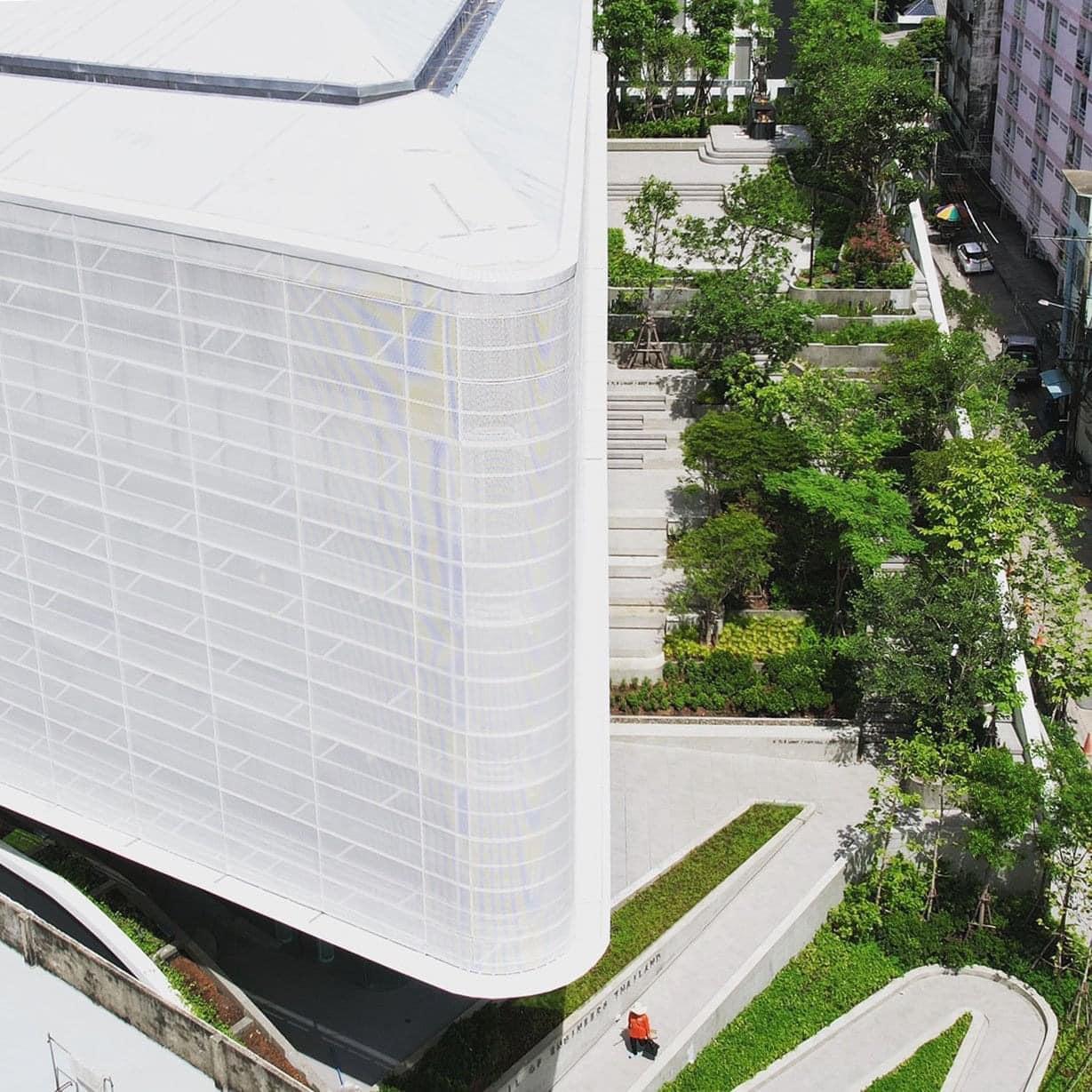
Council of Engineers Thailand - Overall Sky garden
Source: Ref.8

Overview

Nature-based solution

  • Green areas for water management
  • Sustainable urban drainage systems
  • Nature on buildings (external)
  • Green roofs
  • Parks and urban forests
  • Pocket parks/neighbourhood green spaces

Key challenges

  • Climate action for adaptation, resilience and mitigation (SDG 13)
  • Climate change adaptation
  • Green space, habitats and biodiversity (SDG 15)
  • Green space creation and/or management
  • Regeneration, land-use and urban development
  • Regulation of built environment
  • Water management (SDG 6)
  • Stormwater and rainfall management and storage
  • Improvements to water quality
  • Health and well-being (SDG 3)
  • Enabling opportunities for physical activity
  • Creation of opportunities for recreation

Focus

Creation of new green areas

Project objectives

One of the three main development focuses of the projects was the creation of a Grand Park, the green area of the building along the following objectives: 1. Contribution to the improvement of the urban environment by planting trees and creating a green area with low maintenance costs and efforts. 2. Addressing the heat island effect impacting the district due to high building density. 3. Creation of a public garden that is available for workers of the building and any locals, thus improving visitors' quality of life with the help of nature. 4. The reduction and filtration of the run-off water though a Water treatment garden. The overarching goal for this new Council of Engineers office building is to achieve gold or higher for TREES-NC certificate. (Ref. 1,2,3,5)

Implementation activities

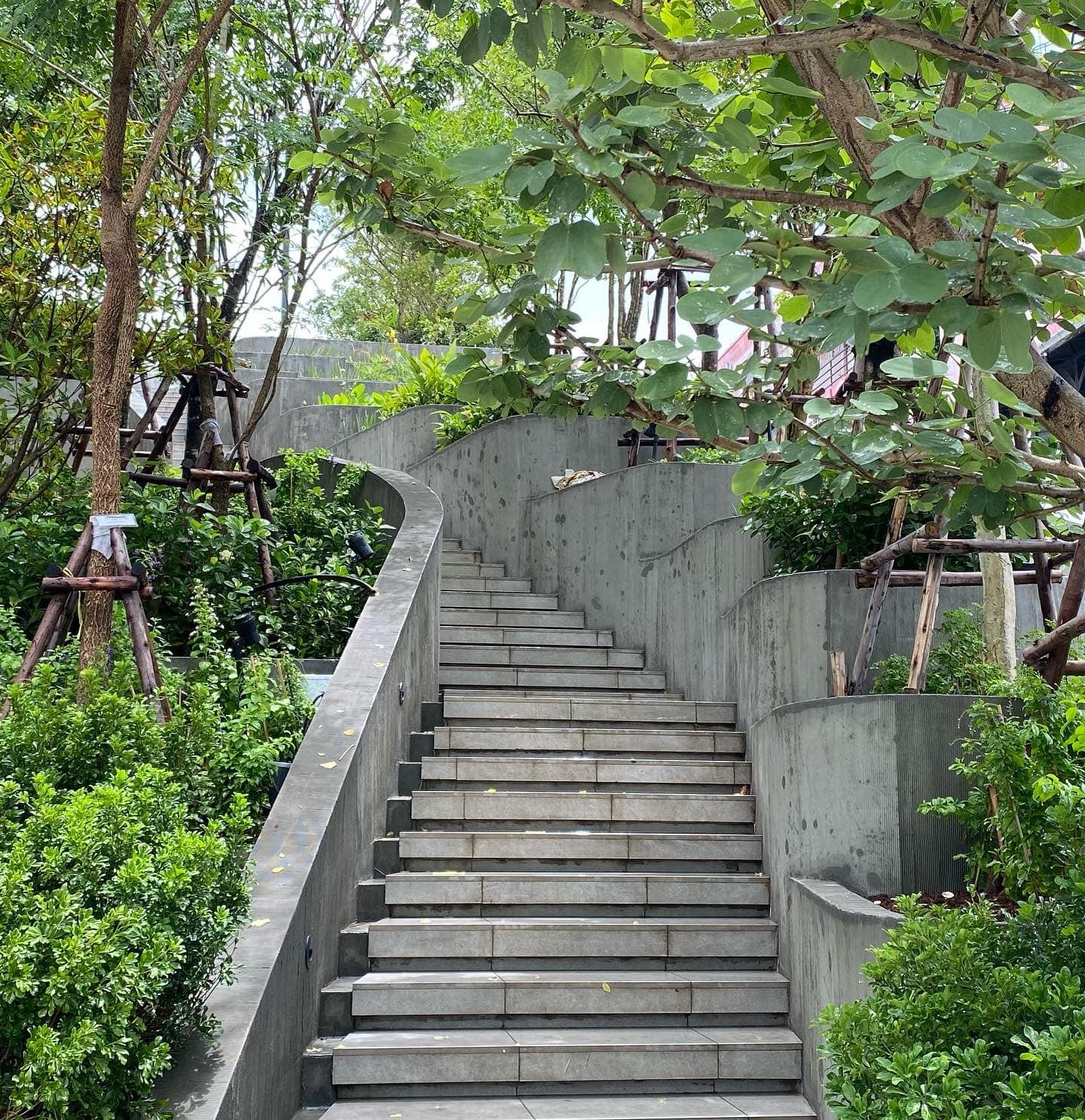
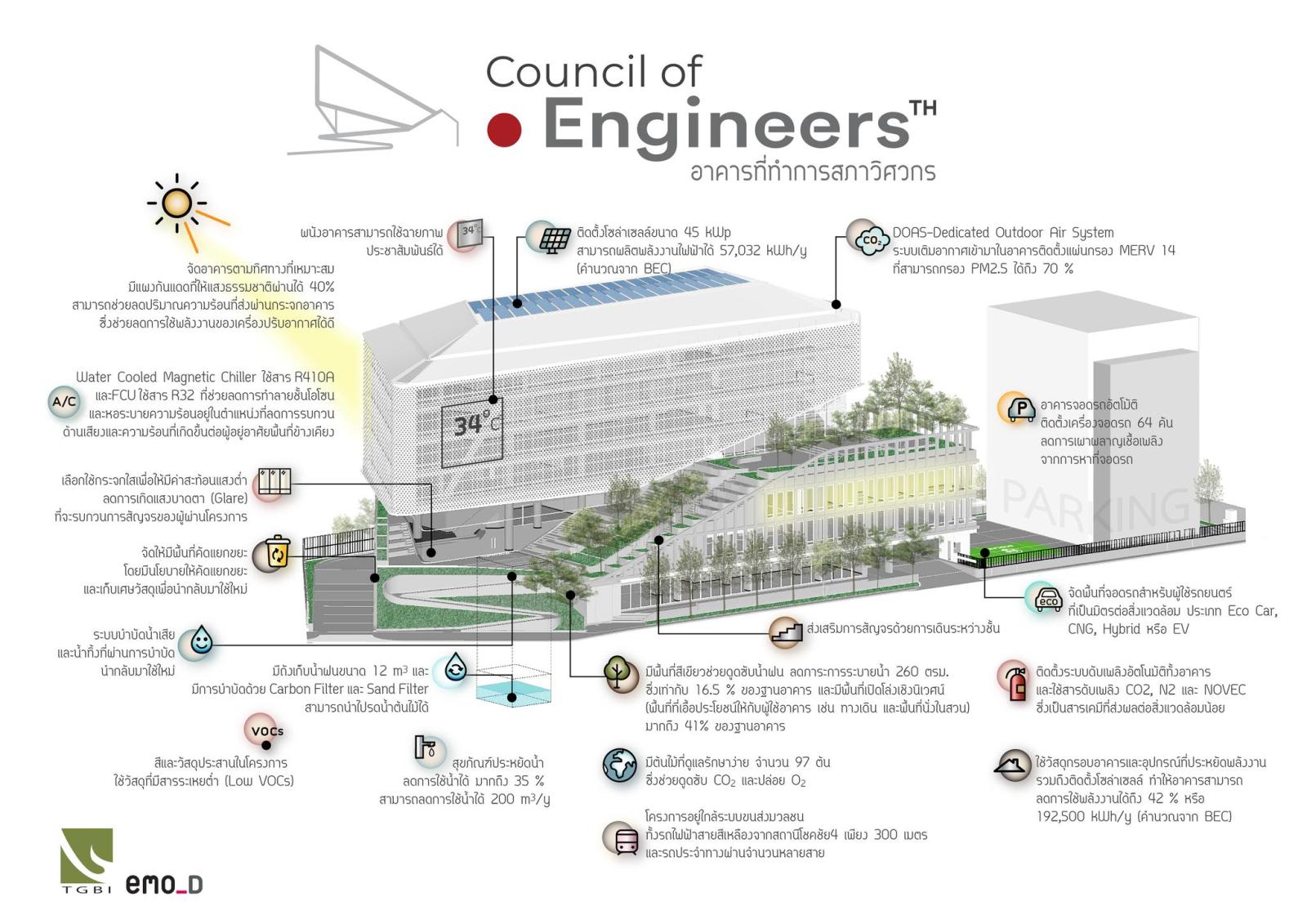
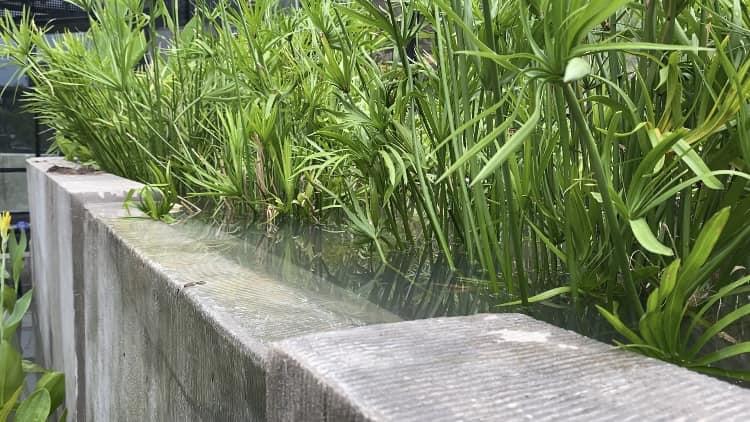
Green area and sky garden 41% of the site is green area which can be divided into 4 main parts: 1. Entrance garden consist of sloped pathway that lead to the main office entrance on the second floor and planting areas that mainly covered by small shrubs. The slope pathway allows people with wheelchair to access the building more easily while the selected vegetation helps invite people to go up to the garden. 2. The stepped garden includes normal planting beds with trees and shrubs, and overflow ponds with aquatic plants that act as bio-filter. The water that passes through the bio-filter system in this area is grey water from the building such as water from hand washing. The grey water first passes through the main water treatment system in the building before being pumped into the upper pond for second filtration. The water flows down to lower ponds while being filtered by aquatic plants and is collected in the water tank underground. The flowing of water also help lower the local outdoor temperature and the building’s temperature. Along the stepped garden is seating which integrated with planting beds. Planting create shades for the seating area and the seating arrangement form a small amphitheater. People can sit and relax here and also hold event or seminar. 3. The main sky garden consists of planting beds with trees, seating area, main open space and a sculpture of Vishnu God which is worshiped by the engineers. The open space is a multi-function area where people can hold event or gathering. 4. Planting area on the ground level that surrounded the building. All green areas are connected with either slope or stairs. The designer intentionally use steps and provide maximum shades to encourage people to move outside which is good for their health. Planting selection for low maintenance and require less water. 1. Only trees and shrubs, no grass, 2. All plantings are native to Thailand. 3. Consider plantings that require less water 4. Select trees with large leaves so if they fall, they can be collected easily and won’t clogged the drainage system. 5. Mix variety of planting, both size and species, to promote biodiversity Materials selection 1. Outdoor permeable pavement which help mitigate heat and allow infiltration. 2. Select materials with module that match with the landscape design. This can help reduce material waste. 3. Choose material with light colour to reduce heat absorbtion. Water system that associated with the sky garden 1. Install underground detention tank 2. Install water treatment system for reusing grey water from the building 3. Double slabs floor system allow surface water to run through and being collected in the tank more easily. 4. Separate piping system for rainwater that fall on hardscape area and water from planters. Apart from clean tap water, there are two additional sources of water being used in the project including: 1. Rainwater has been collected from outdoor surface and stored in the tank underground. This rainwater is mainly use for the cooling system of the building and part of it is for watering planting areas. 2. Grey water from the building go through treatment system to filtered out dangerous substances before being diverted to bio-filtration system outdoor and stored in reuse water tank. This safe grey water is mainly use for watering plants. Other building components and construction methods that enhance building system’s function, support sustainability and fulfill the requirement for TREES certificate 1. Automated car parking system which help minimized time on car and reduced carbon released 2. Install solar cell panels on the roof 3. Outer Facade that can filter and reduce sunlight in the building by 40% 4. Inner facade use glass that can reduce light reflection 5. Provide space for trash separation, promote recycling 6. Install water filtration system, all grey water or used water from the building will pass through the system. After the filtration, part of the water will be kept in water tank for further use and excess water will be released to the main city’s drainage system. 7. Use colour and materials with low VOCs released. 8. Use water saving toilet fixtures The project is in the process of platinum TREES-NC certificate application. (Ref. 1,2,3,4,5)

Climate-focused activities

Climate change adaptation:

  • Increase or improve urban vegetation cover to help reduce outdoor temperature
  • Implement green walls or roofs to lower indoor temperature and provide insulation
  • Implement sustainable urban drainage infrastructure (e.g. to make space for water)

Main beneficiaries

  • Citizens or community groups
  • Other

Governance

Management set-up

  • Led by non-government actors

Type of initiating organisation

  • Public sector institution

Participatory approaches/ community involvement

  • Unknown

Details on the roles of the organisations involved in the project

The land owner, project initiator and the project owner is the Council of Engineers of Thailand which is a statutory body. The designer team that won the design competition includes Ativich, Atelier of Architects, TeamSQ, TeamG, Next2nd, 8.18, Africvs. (Ref. 3,5)

Project implemented in response to ...

... an EU policy or strategy? No
... a national policy or strategy? No
... a local policy or strategy? No

Financing

Total cost

Unknown

Source(s) of funding

  • Unknown

Type of funding

  • Unknown

Non-financial contribution

Unknown

Impacts and Monitoring

Environmental impacts

  • Climate change
  • Lowered local temperature
  • Water management and blue areas
  • Improved water quality
  • Improved stormwater management
  • Green space and habitat
  • Promotion of naturalistic styles of landscape design for urban development
  • Increased green space area
  • Increased number of species present

Economic impacts

  • Unknown

Socio-cultural impacts

  • Social justice and cohesion
  • Improved liveability
  • Improved access to urban green space
  • Increased opportunities for social interaction
  • Health and wellbeing
  • Improved physical health
  • Gain in activities for recreation and exercise

Type of reported impacts

Expected impacts, Achieved impacts

Presence of formal monitoring system

Unknown

Presence of indicators used in reporting

No evidence in public records

Presence of monitoring/ evaluation reports

No evidence in public records

Availability of a web-based monitoring tool

No evidence in public records

References

Council of Engineers Thailand - Stepped garden
Source: Ref.8
New Council of Engineers Thailand Building
Source: Ref. 3
Council of Engineers Thailand - Bio-filtration in the sky garden
Source: Ref.8
Information about this nature-based solution was collected as part of the "NBS 2022" UNA Asian extension project funded by the Asia-Europe Foundation.