

Last updated: October 2021
Interkultural Garten was founded in 2009 as an initiative of the Society for the Promotion of Occupational and Social Integration. The aims of the project are social integration between migrants and locals from the same neighborhood, healthy and free-off-charge food supply for those who are in need, as well as the improvement of the natural environment in the neighborhood. The garden plot is located on the former Reese barracks ground (Ref. 1).
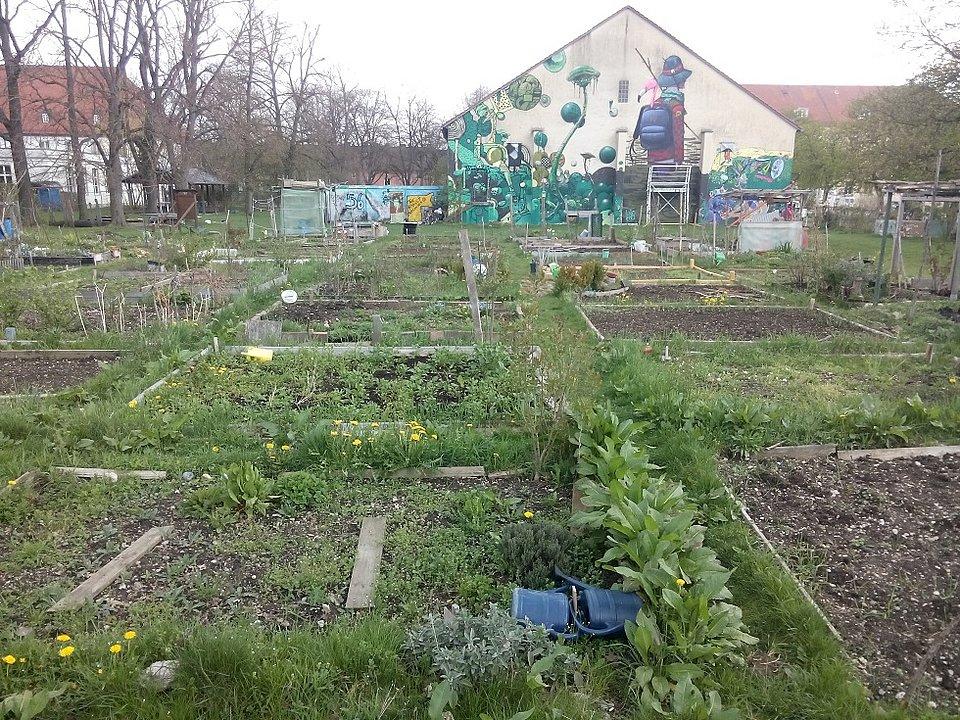
https://www.nachhaltigkeit.augsburg.de/zukunftspreis/projektdetails/grow-up-interkultureller-garten-augsburg-ev
Overview
Nature-based solution
- Community gardens and allotments
- Community gardens
Key challenges
- Green space, habitats and biodiversity (SDG 15)
- Habitat and biodiversity conservation
- Green space creation and/or management
- Inclusive and effective governance (SDG 16)
- Inclusive governance
- Social justice, cohesion and equity (SDG 10)
- Environmental education
- Social justice and equity
- Social cohesion
- Social interaction
- Health and well-being (SDG 3)
- Creation of opportunities for recreation
- Sustainable consumption and production (SDG 12)
- Sustainable consumption
- Sustainable production
Focus
Creation of new green areas
Project objectives
1. To create a space for dialogue and common activity for different social groups (Ref. 1)
2. To produce free food for poor (Ref. 1)
3. To provide space for integration of migrants and creation of social support networks (Ref. 1)
4. To increase the amount of green space in the city and preserve biological diversity (Ref. 1)
Implementation activities
1. A land plot on the place of the former Reese barracks allocated by the city of Augsburg (Ref. 1)
2. Trees planted (Ref. 1)
3. Garden beds installed (Ref. 1)
4. Free gardening workshops organized (Ref. 1)
5. Insect hotels and beehives installed (Ref. 6)
Biodiversity conservation or restoration-focused activities
Biodiversity conservation:
- Protect and enhance urban habitats
- Create new habitats
- Protect species
- Undertake specific measures to protect valued species
- Means for conservation governance
- Raise public awareness
- Public engagement
Main beneficiaries
- Local government/Municipality
- Citizens or community groups
- Marginalized groups: Refugees, asylum seekers, and migrants
Governance
Management set-up
- Co-governance with government and non-government actors
Type of initiating organisation
- Non-government organisation/civil society
Participatory approaches/ community involvement
- Co-planning (e.g. stakeholder workshops, focus groups, participatory mapping)
- Joint implementation (e.g. tree planting)
- Co-management/Joint management
- Citizen oversight (e.g. boards, advisory)
Details on the roles of the organisations involved in the project
The project was initiated by an NGO "Society for the Promotion of Occupational and Social Integration" ("Gesellschaft für Förderung Beru flincher und Soziale Integration"). The project was developed in cooperation with Kulturpark West, a creative cluster in place of the old factory building (Ref. 1, 2). In 2020, the garden was brought under city management (Ref. 6).
Project implemented in response to ...
... an EU policy or strategy?
No
... a national policy or strategy?
Unknown
... a local policy or strategy?
Yes
(The social program "Living Together (C6)" of the city of Augsburg. Objective 1: Improve the integration of migrants and stimulate intercultural exchange (Ref. 3).
)
Financing
Total cost
Unknown
Source(s) of funding
- Public local authority budget
Type of funding
- Direct funding (grants, subsidies, or self-financed projects by private entities)
Non-financial contribution
Type of non-financial contribution
- Provision of land
- Provision of goods
Who provided the non-financial contribution?
- Public authorities (e.g. land, utility services)
- Citizens (e.g. volunteering)
Impacts and Monitoring
Environmental impacts
- Climate change
- Lowered local temperature
- Environmental quality
- Improved waste management
- Green space and habitat
- Increased green space area
- Increased conservation or restoration of ecosystems
- Enhanced support of pollination
Economic impacts
- Increase in agricultural production (for profit or not)
Socio-cultural impacts
- Social justice and cohesion
- Improved social cohesion
- Fair distribution of social, environmental and economic benefits of the NBS project
- Increased visibility and opportunity for marginalised groups or indigenous peoples
- Increased opportunities for social interaction
- Increased involvement of locals in the management of green spaces
- Increased access to healthy/affordable food
- Increased sustainability of agriculture practices
- Health and wellbeing
- Gain in activities for recreation and exercise
- Cultural heritage and sense of place
- Promotion of cultural diversity
- Improvement in people’s connection to nature
- Education
- Increased support for education and scientific research
- Increased knowledge of locals about local nature
Type of reported impacts
Achieved impacts
Presence of formal monitoring system
Unknown
Presence of indicators used in reporting
No evidence in public records
Presence of monitoring/ evaluation reports
No evidence in public records
Availability of a web-based monitoring tool
No evidence in public records
References
1. Nachhaltigkeit (n.d.). Grow up - Interkultureller Garten in Kriegshaber. Available at: Source link (Accessed: October 30, 2020).
2. Kulturparkwest (n.d.). Kulturparkwest website. Available at: Source link (Accessed: October 30, 2020).
3. Nachhaltigkeit (2017). Zusammen leben. Available at: Source link (Website not available in 2020).
4. Nachhaltigkeit (2017). Einfluss fur Kinder und Jugendliche. Available at: Source link (Website not available in 2020).
5. Anstiftung (n.d.). Interkurtureller Garten. Available at: Source link (Accessed: October 30, 2020).
6. Grow up (2020). Warum und wie?. Available at: Source link (Accessed: October 30, 2020).
2. Kulturparkwest (n.d.). Kulturparkwest website. Available at: Source link (Accessed: October 30, 2020).
3. Nachhaltigkeit (2017). Zusammen leben. Available at: Source link (Website not available in 2020).
4. Nachhaltigkeit (2017). Einfluss fur Kinder und Jugendliche. Available at: Source link (Website not available in 2020).
5. Anstiftung (n.d.). Interkurtureller Garten. Available at: Source link (Accessed: October 30, 2020).
6. Grow up (2020). Warum und wie?. Available at: Source link (Accessed: October 30, 2020).