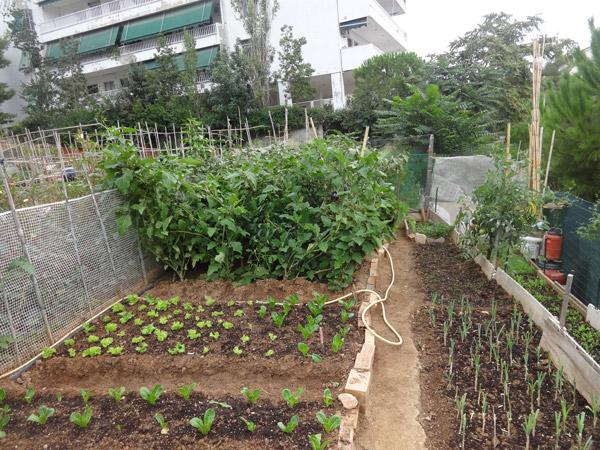
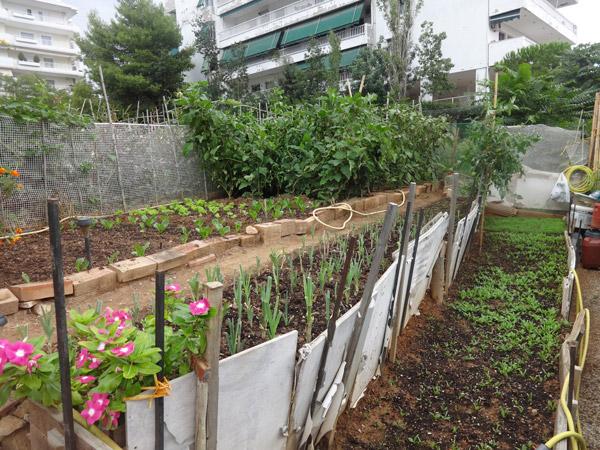
Restructuring a public derelict land into few private vegetable and fruit gardens. The gardeners practice organic gardening making it more sustainable. This provides foods as well as increasing the soil fertility, and reduction of the soil erosion. This also creates some extra vegetable and fruit market in the city. 20 % of the food produced is donated to the food bank. The project is a community project which also helps to bring people together. Started in April 2012 (Ref 1,4). The project is one of the initiatives by the Greek municipalities allotting land to local citizens with the purpose of increasing food security for the underprivileged, educating the younger generation, and providing their citizens with a retreat from city life (Ref 3).
Overview
Nature-based solution
- Parks and urban forests
- Pocket parks/neighbourhood green spaces
- Community gardens and allotments
- Allotments
- Community gardens
Key challenges
- Green space, habitats and biodiversity (SDG 15)
- Habitat and biodiversity restoration
- Green space creation and/or management
- Regeneration, land-use and urban development
- Health and well-being (SDG 3)
- Improving physical health
- Economic development and employment (SDG 8)
- Economic development: agriculture
- Sustainable consumption and production (SDG 12)
- Sustainable consumption
- Sustainable production
Focus
Project objectives
Implementation activities
Biodiversity conservation or restoration-focused activities
Biodiversity restoration:
- Restore valued species
- Public engagement
Main beneficiaries
- Local government/Municipality
- Citizens or community groups
- Marginalized groups: Elderly people, Socio-economically disadvantaged populations (e.g. low-income households, unemployed), People with functional diversities
Governance
Management set-up
- Co-governance with government and non-government actors
Type of initiating organisation
- Local government/municipality
- Citizens or community group
Participatory approaches/ community involvement
- Co-planning (e.g. stakeholder workshops, focus groups, participatory mapping)
- Consultation (e.g. workshop, surveys, community meetings, town halls)
- Joint implementation (e.g. tree planting)
- Co-management/Joint management
- Citizen science
- Citizen monitoring and review
Details on the roles of the organisations involved in the project
Project implemented in response to ...
Financing
Total cost
Source(s) of funding
- Public local authority budget
- Crowdfunding
Type of funding
- Direct funding (grants, subsidies, or self-financed projects by private entities)
- Other
Non-financial contribution
- Provision of land
- Provision of goods
- Provision of labour
- Public authorities (e.g. land, utility services)
- Citizens (e.g. volunteering)
Impacts and Monitoring
Environmental impacts
- Green space and habitat
- Increased green space area
- Increased conversion of degraded land or soil
- Restoration of derelict areas
Economic impacts
- Increase in agricultural production (for profit or not)
- Generation of income from NBS
Socio-cultural impacts
- Social justice and cohesion
- Improved social cohesion
- Fair distribution of social, environmental and economic benefits of the NBS project
- Improved liveability
- Improved access to urban green space
- Increased visibility and opportunity for marginalised groups or indigenous peoples
- Increased opportunities for social interaction
- Increased access to healthy/affordable food
- Health and wellbeing
- Improved mental health
Type of reported impacts
Presence of formal monitoring system
Presence of indicators used in reporting
Presence of monitoring/ evaluation reports
Availability of a web-based monitoring tool
References
2. Touliatos Dennis (2015) Urban Agriculture. The Lancaster University Blog. Available at: Source link. Accessed on 14th July, 2020.
3. The garden movement grows in Greece (2013) The Greek Reporter News Article. Available at: Source link. Accessed on 14th July, 2020.
4. Anthopoulou Theodosia (2016) Edited by Simon Bell, Runrid Fox-Kämper, Nazila Keshavarz, Mary Benson, Silvio Caputo, Susan Noori, Annette Voigt. Chapter 4. Urban Allotment Gardens in Europe.