

Last updated: October 2021
The botanical garden of Athens was reconstructed in 2004 to protect and maintain the biodiversity of the area. Covering a land of 1,860 sq.m., this Botanical Garden hosts over 2,500 different kinds of plants from all over the world and a rich variety of flora. All the plants and trees are protected in the park. The community also sends seeds all over the country to spread and maintain biodiversity throughout the region and hold agroecological events to increase the concern and educate the locals (Ref 1,3). The park also has a lake and a library inside it. (Ref 2)
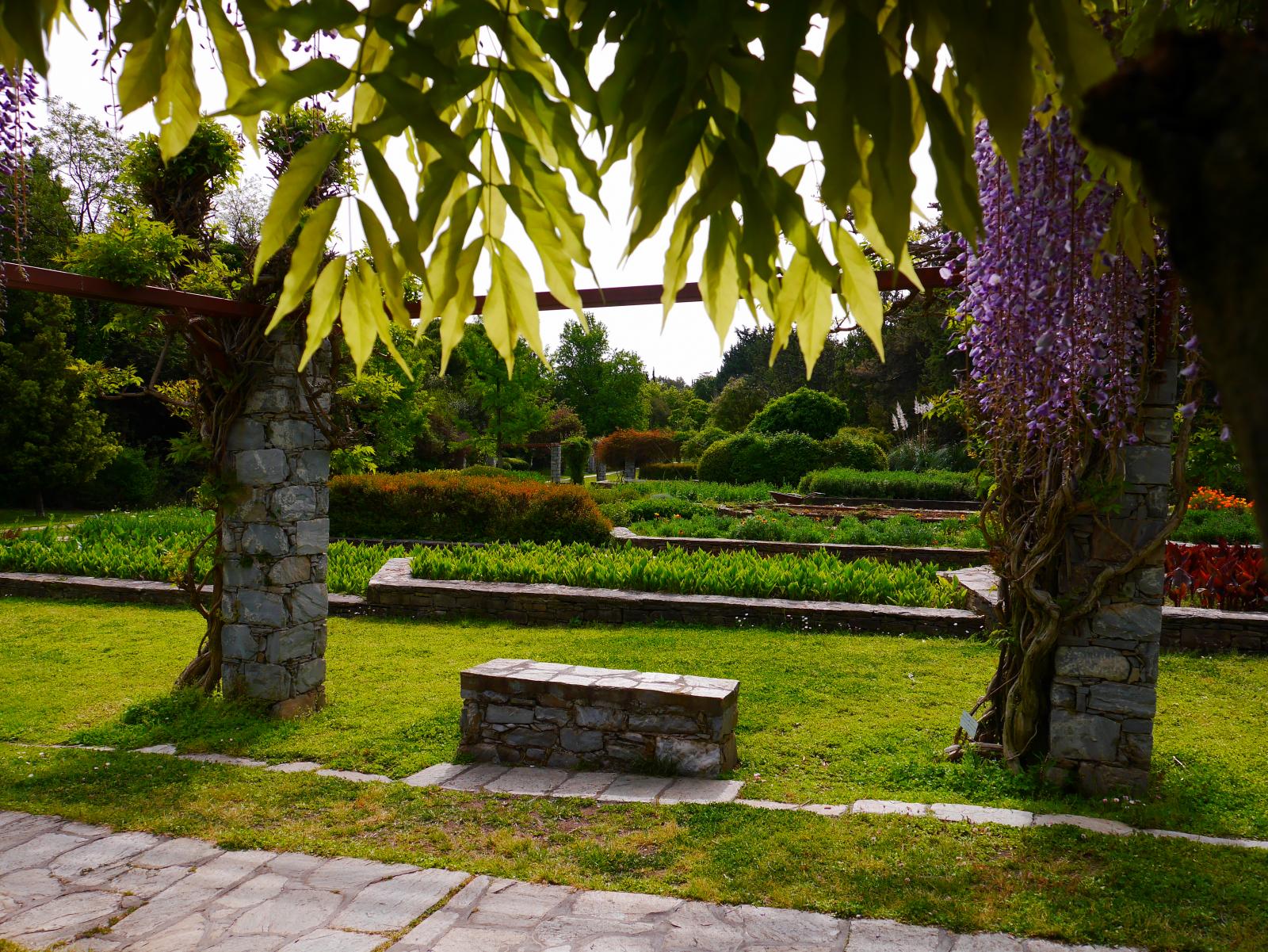
Diomidous Botanical Garden (2015)
Sotiris Porevis, retrieved 08/15/2018
Overview
Nature-based solution
- Parks and urban forests
- Large urban parks or forests
- Botanical gardens
- Blue infrastructure
- Lakes/ponds
Key challenges
- Climate action for adaptation, resilience and mitigation (SDG 13)
- Climate change mitigation
- Green space, habitats and biodiversity (SDG 15)
- Habitat and biodiversity restoration
- Habitat and biodiversity conservation
- Green space creation and/or management
- Environmental quality
- Air quality improvement
- Regeneration, land-use and urban development
- Promote natural styles of landscape design for urban development
- Health and well-being (SDG 3)
- Improving mental health
- Creation of opportunities for recreation
- Economic development and employment (SDG 8)
- Tourism support
- Cultural heritage and cultural diversity
- Preservation of natural heritage
- Protection of historic and cultural landscape/infrastructure
Focus
Creation of new green areas, Maintenance and management of urban nature, Ecological restoration of ecosystems, Protection of natural ecosystems, Monitoring and maintenance of habitats and/or biodiversity
Project objectives
The goals of the project include:
o The goal of the intervention is to maintain biodiversity by conserving and preserving some plant species. The Botanical Garden hosts over 2,500 different kinds of plants from all over the world and a rich variety of flora.
o To act as a local carbon storage and air pollution controlling.
o Educational activities among children and local citizens.
o To preserve plant seeds and distribute them locally and to other places to contributing and maintaining the biodiversity of the country.
o To maintain the habitat of different species and to provide a strong food chain among them. The plants are from areas protected by NATURA 2000 projects are preserved as a specimen.
o The main goal is to establish a section to hold all the endemic, rare, endangered plant species of the Hellenic flora (Ref 1,3).
Implementation activities
Endemic flora and fauna are being preserved, opened for public for educational activities, distributing seeds to other places to maintain biodiversity (Ref 1).
Climate-focused activities
Climate change mitigation:
- Improve carbon sequestration through selection of more adaptable species
- Implement sustainable forest management measures to increase carbon sinks/ improve carbon storage
Biodiversity conservation or restoration-focused activities
Biodiversity conservation:
- Protect and enhance urban habitats
- Preserve and strengthen existing habitats and ecosystems
- Reduce negative impacts and avoid the alteration/damage of ecosystem
- Protect species
- Undertake specific measures to protect species
- Undertake specific measures to protect native species
- Undertake specific measures to protect valued species
- Means for conservation governance
- Biodiversity offsets
- Create and use scientific knowledge for conservation
Biodiversity restoration:
- Rehabilitate and restore damaged or destroyed ecosystems
- Restore species (native, endangered, or unspecified)
- Restore native species
- Restore valued species
Main beneficiaries
- Local government/Municipality
- Public sector institution (e.g. school or hospital)
- Researchers/University
- Citizens or community groups
Governance
Management set-up
- Co-governance with government and non-government actors
Type of initiating organisation
- National government
- Local government/municipality
- Private foundation/trust
- Researchers/university
Participatory approaches/ community involvement
- Co-planning (e.g. stakeholder workshops, focus groups, participatory mapping)
- Dissemination of information and education
- Joint implementation (e.g. tree planting)
- Co-management/Joint management
- Citizen oversight (e.g. boards, advisory)
Details on the roles of the organisations involved in the project
"The Botanic Garden is an Institute of public benefit administered by a five-member board in which - according to Diomedes’ testament - the Rector of the University of Athens presides. The secretary of the board is the current professor of Botany at the University of Athens while the members are the President of the board of the National Bank of Greece, the President of the Supreme Court and the Director of the Management of National Legacies at the Hellenic Treasury. The current restructuring has been jointly implemented and managed by this board (Ref 1).
Project implemented in response to ...
... an EU policy or strategy?
Unknown
... a national policy or strategy?
Yes
(National Policy on biodiversity conservation: in conserving and preserving the genetic diversity. (Ref 1))
... a local policy or strategy?
Unknown
Financing
Total cost
€50,000 - €100,000
Source(s) of funding
- Corporate investment
- Funds provided by non-governmental organization (NGO)
- Private Foundation/Trust
Type of funding
- Direct funding (grants, subsidies, or self-financed projects by private entities)
- Equity funding (investment in shares)
- Donations
- Membership or entrance fees
Non-financial contribution
Type of non-financial contribution
- Provision of goods
- Provision of labour
Who provided the non-financial contribution?
- Public authorities (e.g. land, utility services)
- Private sector (businesses, financial institution)
Impacts and Monitoring
Environmental impacts
- Climate change
- Lowered local temperature
- Enhanced carbon sequestration
- Environmental quality
- Improved air quality
- Green space and habitat
- Increased number of protection areas
- Increased green space area
- Increased conservation or restoration of ecosystems
- Reduced biodiversity loss
- Increased number of species present
- Enhanced support of pollination
Economic impacts
- More sustainable tourism
Socio-cultural impacts
- Social justice and cohesion
- Improved liveability
- Improved access to urban green space
- Health and wellbeing
- Improved mental health
- Cultural heritage and sense of place
- Improvement in people’s connection to nature
- Protection of historic and cultural landscape / infrastructure
- Increased awareness of flora and fauna as culturally and historically meaningful
- Increased appreciation for natural spaces
- Education
- Increased support for education and scientific research
- Increased awareness of NBS and their benefits
Type of reported impacts
Achieved impacts
Presence of formal monitoring system
Yes
Presence of indicators used in reporting
No evidence in public records
Presence of monitoring/ evaluation reports
No evidence in public records
Availability of a web-based monitoring tool
No evidence in public records
References
1. The Botanical garden. Joulia and Alexander Diomidous. Available at: Source link. Accessed on 9th July, 2020.
2. The National Network of Greek Botanic Gardens. Botanic Gardens Consortium. Available at: Source link. Accessed on 9th July, 2020.
3. The Diomidous Botanical Garden in Athens. Botanical Garen. The Source link. Available at: Source link. Accessed on 9th July, 2020.
4. Picture courtesy: Source link. Accessed on 9th July, 2020.
2. The National Network of Greek Botanic Gardens. Botanic Gardens Consortium. Available at: Source link. Accessed on 9th July, 2020.
3. The Diomidous Botanical Garden in Athens. Botanical Garen. The Source link. Available at: Source link. Accessed on 9th July, 2020.
4. Picture courtesy: Source link. Accessed on 9th July, 2020.