

Last updated: June 2024
The area of the Port of Antwerp is one of the most important habitats for threatened species, even at the European level (Ref. 1). Therefore, a species protection programme was launched in 2014 for the conservation of 90 protected species by means of creating an ecological infrastructure of green areas, green corridors and small green spaces that include spawning grounds, ecological river banks, and road verges (Ref. 1, 2, 3).

A Habitat for Orchids at the Ecological Infrastructure at the Port of Antwerp (2014)
Photographer: Sven Heyndrickx, retrieved 08/24/2018
Overview
Nature-based solution
- Blue infrastructure
- Coastal wetland, mangroves and salt marshes
- In-land wetlands, peatlands, swamps, and moors
- Grey infrastructure featuring greens
- Alley or street trees and other street vegetation
- Riverbank/Lakeside greens
- Parks and urban forests
- Large urban parks or forests
- Green corridors and green belts
Key challenges
- Green space, habitats and biodiversity (SDG 15)
- Habitat and biodiversity conservation
- Water management (SDG 6)
- Improvements to water quality
- Cultural heritage and cultural diversity
- Preservation of natural heritage
Focus
Creation of new green areas, Management and improved protection of rivers and other blue areas
Project objectives
The goal of the intervention is the conservation of protected species by means of creating habitat, creating breeding spots and supporting migration by creating an ecological infrastructure consisting of green spaces and green corridors (Ref. 1).
Implementation activities
Creating an ecological infrastructure consisting of 'core areas' (large green spaces with a high ecological value), green corridors (long connecting zones, sometimes in the form of road verges) and 'stepping stones' (small green spaces that create connections between large green spaces and that provide suitable habitat and breeding possibilities (Ref. 7). Additional measures: creating spawning grounds, ecological constructions in the water and quay walls that provide habitat, ecological river banks, temporary sand walls, creating pools and guide walls for toads and an ecological mowing programme for foad verges and pipe/cable routes (Ref. 3).
The economic activity in the port will expand, but always with attention to the preservation, enhancement and further development of the nature in and around the port" (Ref. 13).
Biodiversity conservation or restoration-focused activities
Biodiversity conservation:
- Protect and enhance urban habitats
- Preserve and strengthen existing habitats and ecosystems
- Promote environmentally-sound development in and around protected areas
- Preserve and strengthen habitat connectivity
- Reduce negative impacts and avoid the alteration/damage of ecosystem
- Protect species
- Undertake specific measures to protect species
- Undertake specific measures to protect valued species
Main beneficiaries
- Citizens or community groups
Governance
Management set-up
- Co-governance with government and non-government actors
Type of initiating organisation
- Local government/municipality
- Non-government organisation/civil society
- Private sector/corporate actor/company
Participatory approaches/ community involvement
- Citizen science
Details on the roles of the organisations involved in the project
The 'Port of Antwerp More Naturally' is a partnership between the Port of Antwerp, the Maatschappij Linkerscheldoever (governmental organization that is responsible for the land of the port) and Natuurpunt (NGO) in which the strategy regarding the ecological development of the port area is specified an agreed upon (Ref. 1). In the Species Protection Programme (SPP) the Maatschappij Linkerscheldoever, Natuurpunt, VOKA (Chamber of Commerce Antwerpen-Waasland, public sector institution) and Alfaport (business association of port businesses) committed themselves to the conservation of 90 species, which was approved by the national Minister of Environment (Ref. 1, 2). The SPP is implemented by the Maatschappij Linderscheldoever, the Nature and Forest Agency, Natuurpunt, the Port of Antwerp and VOKA (Ref. 2, 3). The Port of Antwerp is the coordinator and finances the project (Ref. 3). Citizens volunteer with the monitoring of the SPP on www.waarnemingen.be. (Ref. 10).
Project implemented in response to ...
... an EU policy or strategy?
Yes
(The EU Habitats Directive and the EU Birds Directive (Natura 2000) (Ref. 1).)
... a national policy or strategy?
Yes
('Soortenbesluit 2009' (Flemish Species Decree) which is a national policy that specifies species that should be protected in the area and which law enforcement applies (Ref. 8). 'Ruimtelijk Structuurplan Vlaanderen' (Flemish Spatial Structure Plan) of 2011: in this plan the development of the port of Antwerp is specified. This plan also includes that 5% of the port area of Antwerp should be reserved for the ecological infrastructure in a way that it does not hamper the port activities and specifies what the ecological infrastructure should entail (Ref. 12, section 2, page 341).)
... a local policy or strategy?
Yes
(The 'Port of Antwerp More Naturally' is a partnership between the Port of Antwerp, the Maatschappij Linkerscheldoever (governmental organization that is responsible for the land of the port) and Natuurpunt (NGO) in which the strategy regarding the ecological development of the port area is specified an agreed upon (Ref. 1). In the Species Protection Programme (SPP) the Maatschappij Linkerscheldoever, Natuurpunt, VOKA (Chamber of Commerce Antwerpen-Waasland, public sector institution) and Alfaport (business association of port businesses) committed themselves to the conservation of 90 species, which was approved by the national Minister of Environment (Ref. 1, 2).)
Financing
Total cost
€500,000 - €2,000,000
Source(s) of funding
- Corporate investment
Type of funding
- Direct funding (grants, subsidies, or self-financed projects by private entities)
Non-financial contribution
Unknown
Impacts and Monitoring
Environmental impacts
- Water management and blue areas
- Improved water quality
- Enhanced protection and restoration of freshwater ecosystems
- Green space and habitat
- Increased number of protection areas
- Increased conservation or restoration of ecosystems
- Reduced biodiversity loss
- Increased protection of threatened species
Economic impacts
- Unknown
Socio-cultural impacts
- Health and wellbeing
- Gain in activities for recreation and exercise
- Education
- Increased support for education and scientific research
- Increased knowledge of locals about local nature
Type of reported impacts
Expected impacts, Achieved impacts
Presence of formal monitoring system
Yes
Presence of indicators used in reporting
Yes
Presence of monitoring/ evaluation reports
Yes
Availability of a web-based monitoring tool
Yes
References
1. Port of Antwerp (2013). Port of Antwerp: Nature and Port. [online] Available at: Source link (Website not available in 2020).
2. Port of Antwerp (n.d.). Nature in and around the Port. [online] Available at: Source link (Website not available in 2020).
3. Port of Antwerp (n.d.). Ecological infrastructure. [online] Available at: Source link (Website not available in 2020).
4. Port of Antwerp (2014). Soortenbeschermingsprogramma Antwerpse haven. Antwerp: Port of Antwerp. [pdf] Available at: Source link (Accessed: October 8, 2020).
5. Port of Antwerp (2015). Nature and port in balance. Antwerp: Port of Antwerp. [pdf] Available at: Source link (Accessed: October 8, 2020).
6. Natuurpunt (n.d.) De Antwerpse Haven natuurlijker. [online] Available at: Source link (Accessed: October 8, 2020).
7. Vlaamse Overheid (2009). Ministerieel besluit tot vaststelling van zes rode lijsten in uitvoering van artikel 5 van het soortenbesluit [policy document] Available at: Source link (Accessed: October 8, 2020).
8. Agentschap Natuur en Bos (n.d.). Wetgeving. [online] Available at: Source link (Accessed: October 8, 2020).
9. Natuurpunt (n.d.). In de haven leren industrie en natuur steeds beter samenleven. [pdf] Available at: Source link (Website not available in 2020).
10. Baetens, D., Martens, D.A.W., & Jacobs, I. (2015). Soortenbeschermingsprogramma Antwerpse Haven Referentierapport Monitoring 2012-2014. [pdf] Available at: Source link (Website not available in 2020).
11. Vochten, T., Martens, D.A.W., Baetens, J., & Dillen, J. (2017). Soortenbeschermingsprogramma Antwerpse Haven Monitoringsrapport 2016. [pdf] Available at: Source link (Accessed: October 8, 2020).
12. Vlaamse Overheid (2011). Ruimtelijk Structuurplan Vlaanderen. [pdf] Available at: Source link (Accessed: October 8, 2020).
13. Port of Antwerp (2020). "Environment and Nature". [Online] Available at: Source link (Accessed: October 8, 2020).
2. Port of Antwerp (n.d.). Nature in and around the Port. [online] Available at: Source link (Website not available in 2020).
3. Port of Antwerp (n.d.). Ecological infrastructure. [online] Available at: Source link (Website not available in 2020).
4. Port of Antwerp (2014). Soortenbeschermingsprogramma Antwerpse haven. Antwerp: Port of Antwerp. [pdf] Available at: Source link (Accessed: October 8, 2020).
5. Port of Antwerp (2015). Nature and port in balance. Antwerp: Port of Antwerp. [pdf] Available at: Source link (Accessed: October 8, 2020).
6. Natuurpunt (n.d.) De Antwerpse Haven natuurlijker. [online] Available at: Source link (Accessed: October 8, 2020).
7. Vlaamse Overheid (2009). Ministerieel besluit tot vaststelling van zes rode lijsten in uitvoering van artikel 5 van het soortenbesluit [policy document] Available at: Source link (Accessed: October 8, 2020).
8. Agentschap Natuur en Bos (n.d.). Wetgeving. [online] Available at: Source link (Accessed: October 8, 2020).
9. Natuurpunt (n.d.). In de haven leren industrie en natuur steeds beter samenleven. [pdf] Available at: Source link (Website not available in 2020).
10. Baetens, D., Martens, D.A.W., & Jacobs, I. (2015). Soortenbeschermingsprogramma Antwerpse Haven Referentierapport Monitoring 2012-2014. [pdf] Available at: Source link (Website not available in 2020).
11. Vochten, T., Martens, D.A.W., Baetens, J., & Dillen, J. (2017). Soortenbeschermingsprogramma Antwerpse Haven Monitoringsrapport 2016. [pdf] Available at: Source link (Accessed: October 8, 2020).
12. Vlaamse Overheid (2011). Ruimtelijk Structuurplan Vlaanderen. [pdf] Available at: Source link (Accessed: October 8, 2020).
13. Port of Antwerp (2020). "Environment and Nature". [Online] Available at: Source link (Accessed: October 8, 2020).
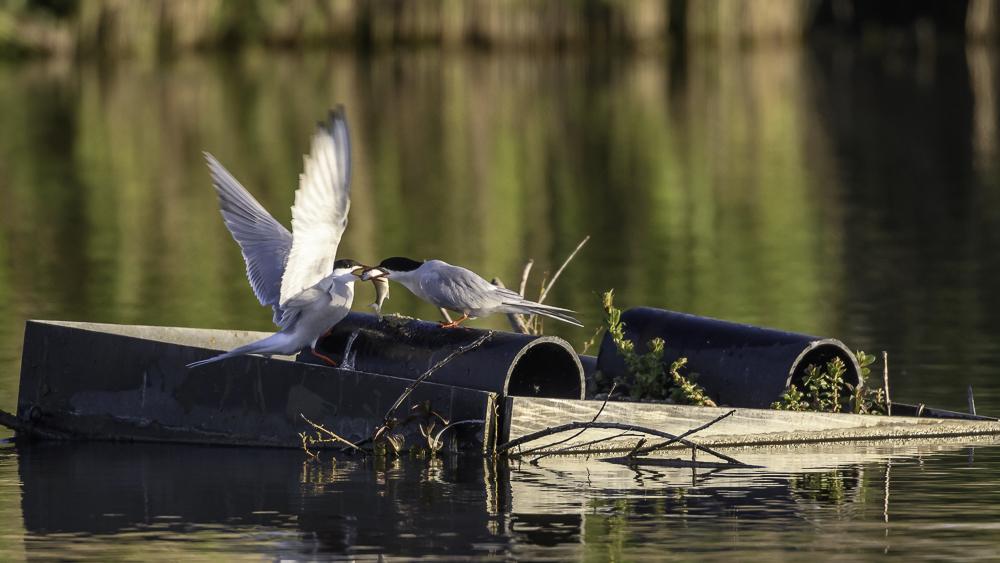
Birds at the Ecological Infrastructure at the Port of Antwerp
Photographer: Wim Dekelver, retrieved 08/24/2018 from Sven Heyndrickx

Birds Nests at the Ecological Infrastructure at the Port of Antwerp (2004)
Sven Heyndrickx, retrieved 08/24/2018

https://www.sustainableportofantwerp.com/en/content/environment-and-nature