Last updated: November 2024
In Egypt, knowledge about climate change remains limited, particularly among the younger generation. While all children globally face the challenges of a degrading natural environment and climate change, some are more vulnerable than others. This vulnerability is often influenced by the quality, availability, equity, and sustainability of essential services such as water, sanitation, healthcare, nutrition, and education. In response to these concerns, Egypt has taken steps to empower its youth to engage meaningfully in international efforts to combat climate change.
In 2022, with the support of UNICEF, the United Nations in Egypt, USAID, and the Embassy of Switzerland, Egypt's Ministry of Youth and Sports and Ministry of Environment launched the EGYouth4Climate Caravan. This initiative aims to raise awareness among children and young people about climate issues, encourage climate action, and provide a platform for youth to share their opinions and ideas. The caravan hosts a range of activities, including capacity-building sessions, youth dialogues, competitions, festivals, theatrical performances, bootcamps, and awareness campaigns.
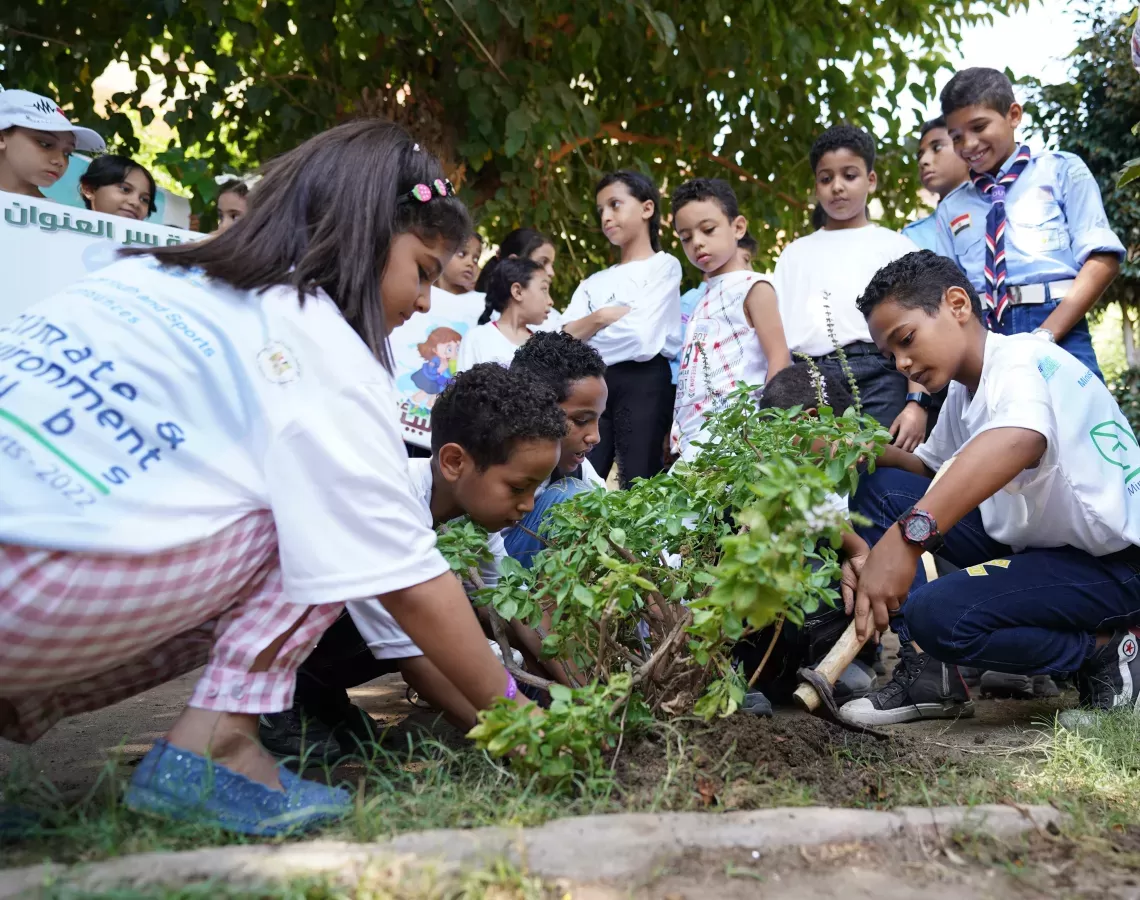
One of the caravan’s stops was at the Nasr Youth Center in Alexandria, where a seed-planting workshop was held as part of the caravan’s reforestation activities. This workshop offered children a hands-on learning experience, teaching them about the importance of trees and providing an opportunity to plant seeds and trees across the center’s grounds. Through such initiatives, the EGYouth4Climate Caravan fosters climate literacy and environmental stewardship among Egypt’s youth, empowering them to take active roles in shaping a sustainable future. (1, 2)
Group of children planting a new tree at the Al-Nasr youth center
Mohamed Ragaa
Overview
Nature-based solution
- Grey infrastructure featuring greens
- Institutional green space
Key challenges
- Green space, habitats and biodiversity (SDG 15)
- Green space creation and/or management
- Social justice, cohesion and equity (SDG 10)
- Social interaction
- Environmental education
- Environmental and climate justice
- Sense of community and community engagement
Principal problems in Functional Urban Area (FUA)
Key priorities
Social Justice and community
Focus
Creation of new green areas, Creation of any other green urban spaces, Knowledge creation and awareness raising, Educational and awareness raising programs
Project objectives
The Al-Nasr Youth Center Seed Planting project is part of the larger EGYouth4Climate Caravan Initiative in Egypt. The goals of the project were to:
1. To raise awareness of children and young people about climate change issues and the importance of climate action (1)
2. Provide children and young people with an opportunity to express their opinion and suggestions on that issue (1).
3. Educate children about the importance of trees and planting them (1).
4. Provide hands-on learning for children and young people through planting workshops (1).
Implementation activities
In Egypt, too little is known about climate change, especially among children and young people (1). To address this a variety of activities were implemented by Egypts' Ministry of Youth and Sports and Ministry of Environment:
In 2022, the EGYouth4Climate Caravan initiative was launched to engage young people in meaningful climate discussions and to build momentum toward COP27. With support from UNICEF, the United Nations in Egypt, USAID, and the Embassy of Switzerland, the initiative aims to empower youth by involving them directly in climate action and awareness activities.
One event, hosted at the Al-Nasr Youth Club, included various hands-on activities, such as planting seeds and trees, to offer educational opportunities for children and young people. This event enabled participants to deepen their understanding of environmental issues both within Egypt and globally, fostering a sense of responsibility and encouraging youth to be active stewards of the environment. Through initiatives like the EGYouth4Climate Caravan, young people are gaining the tools, knowledge, and support needed to contribute to a sustainable future. (1-2)
Communities vulnerable to environmental hazards or climate change impacts
Yes
Specification of climate or environmentally vulnerable communities
Coastal communities
Main beneficiaries
- Young people and children
Governance
Management set-up
- Co-governance with government and non-government actors
Type of initiating organisation
Participatory approaches/ community involvement
- Joint implementation (e.g. tree planting)
Details on the roles of the organisations involved in the project
-Government: Egypt's Ministry of Youth and Sports, Ministry of Environment launched the initiative (1-3).
-Multilateral organisation: UNICEF is a supporter of the initiative (1-3); The UN, United States Agency for International Development, and The Embassy of Switzerland in Egypt are all primary supporters of the initiative (1-3).
-Public sector institution: The Al-Nasr Youth Center hosted the event (1).
-Citizens or community groups: Children and young people express their concerns, ideas, and recommendations on what the country can do to adapt to, mitigate and slow down climate change (2). Additionally, youth are participating in providing interactive activities with all the young people across the Caravan journey to make sure that the voices of young people in Egypt are heard at the Climate Change Summit (2).
-Local government: The program worked in cooperation with Alexandria to organize the event (3).
Project implemented in response to ...
... an EU policy or strategy?
Unknown
... a national policy or strategy?
Yes
(The EGYouth4Climate Caravan is a part of a national strategy to encourage young people to be fully engaged in the climate discussion and to pave the way for COP27 (2). )
... a local policy or strategy?
Unknown
Type of enablers
Capacity-building projects, Support from transitional governance actors
Financing
Source(s) of funding
- Public national budget
- Multilateral funds/international funding
Type of funding
- Earmarked public budget
- Direct funding (grants, subsidies, or self-financed projects by private entities)
Non-financial contribution
Type of non-financial contribution
- Provision of land
- Provision of labour
- Provision of expertise
Who provided the non-financial contribution?
- Public authorities (e.g. land, utility services)
- Citizens (e.g. volunteering)
Impacts and Monitoring
Environmental impacts
- Green space and habitat
- Increased green space area
- Achieved increased green space area
- Unknown
Socio-cultural impacts
- Social justice and cohesion
- Increased opportunities for social interaction
- Achieved increased opportunities for social interaction
- Education
- Increased support for education and scientific research
- Achieved increased support for education and scientific research
- Increased knowledge of locals about local nature
- Achieved increased knowledge of locals about local nature
Presence of formal monitoring system
Unknown
Presence of indicators used in reporting
No evidence in public records
Presence of monitoring/ evaluation reports
No evidence in public records
Availability of a web-based monitoring tool
No evidence in public records
Potential risks of implementation and trade-offs
Unknown
References
1.
Younis, D. (2022). A friend of the trees from Alexandria. [
Source link];
2.
UNICEF (2022). “Youth For Climate” Caravan, a national initiative putting youth at the forefront of climate action. [
Source link];
3.
Public Authorities for Inquires (2024). Minister of Youth: Supporting and empowering youth is vital to achieving sustainable development. [
Source link];
4.
Mohammed, S., and El Raey M. (2018). Assesses the Resilience Index to Sea Level Rise Risk of Alexandria Governorate, Egypt. [
Source link];
5.
City Population (n.d.). Muḥarram Bik [Moharam Bek]. [
Source link];
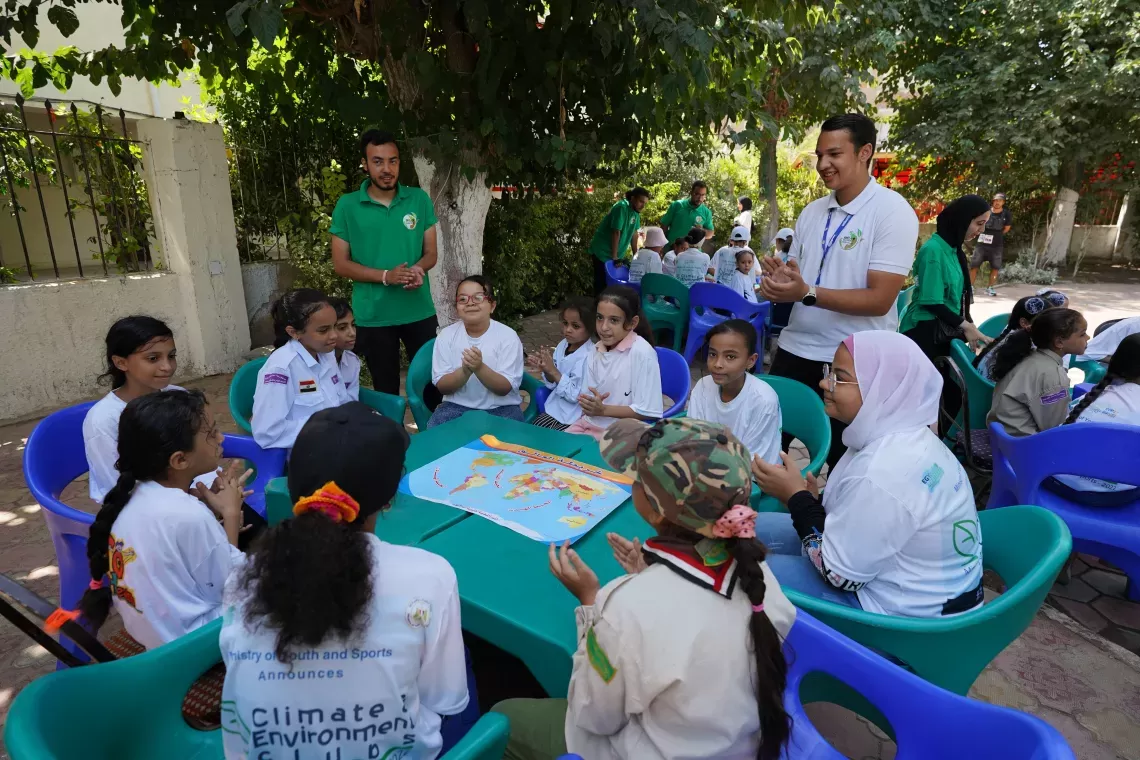
Throughout the day, Mohammed and his colleagues split into groups to do various activities and learn more about environmental and climate issues in Egypt and the world.
Mohamed Ragaa
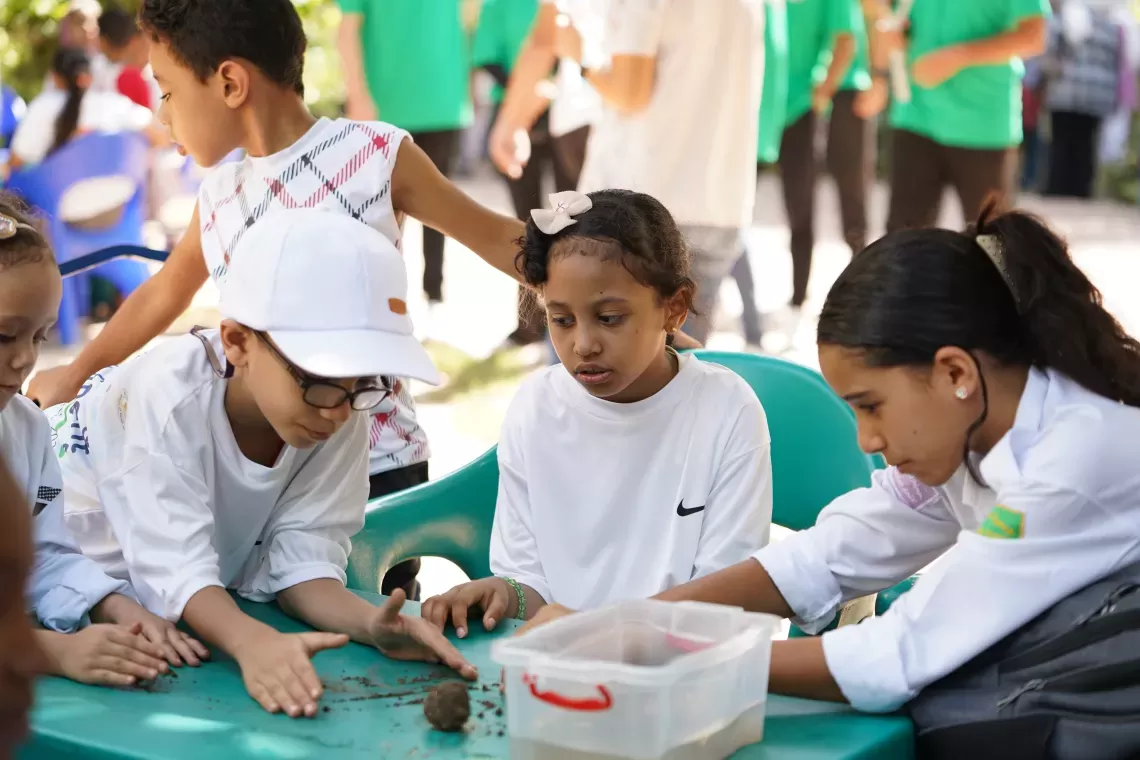
Among these activities was a scientific experiment carried out by the children themselves to simulate melting icebergs and its impact on soil and the environment in general.
Mohamed Ragaa

Information about this nature-based solution was collected as part of the
Naturescapes project funded by the European Union under Grant Agreement No 101084341.