

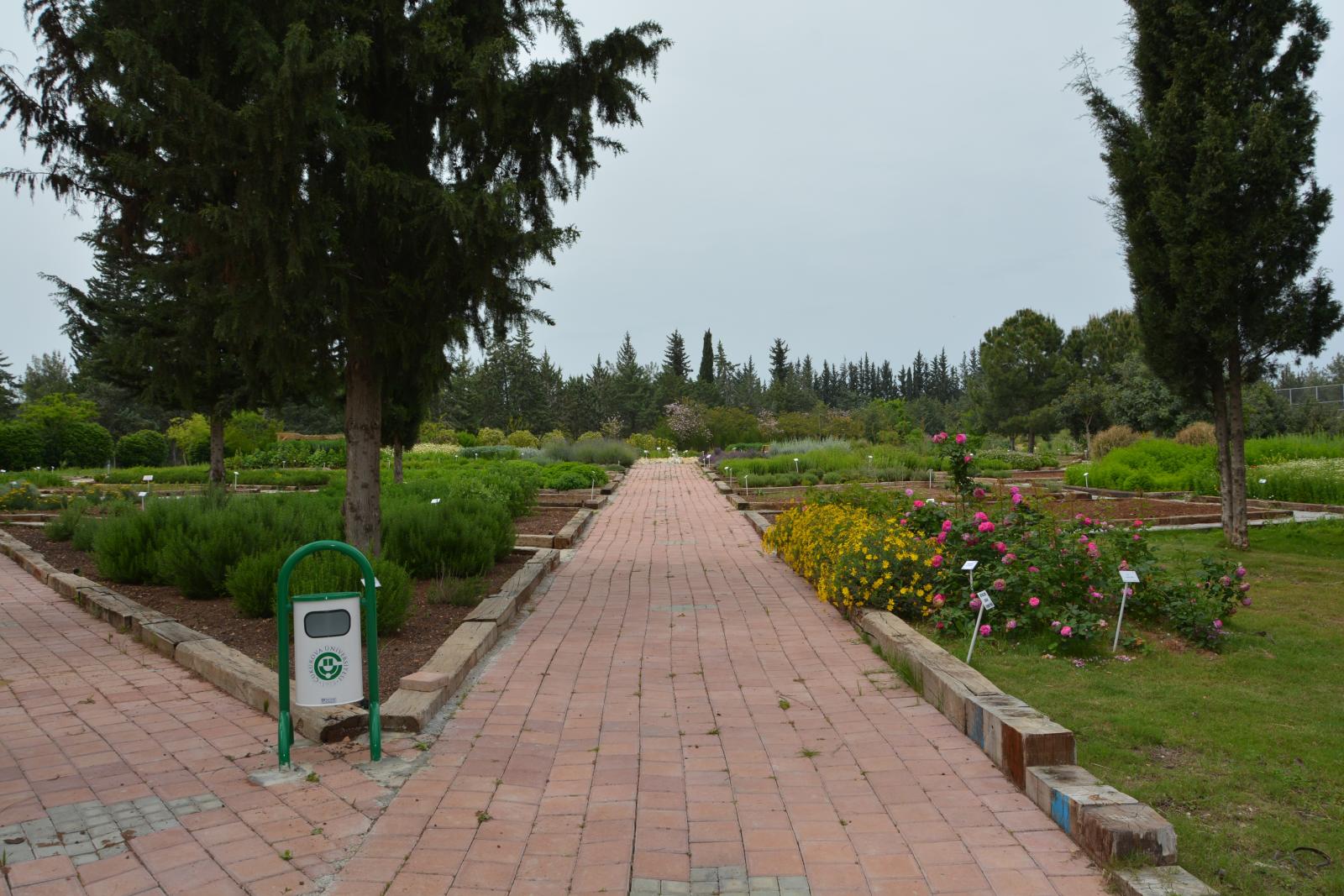
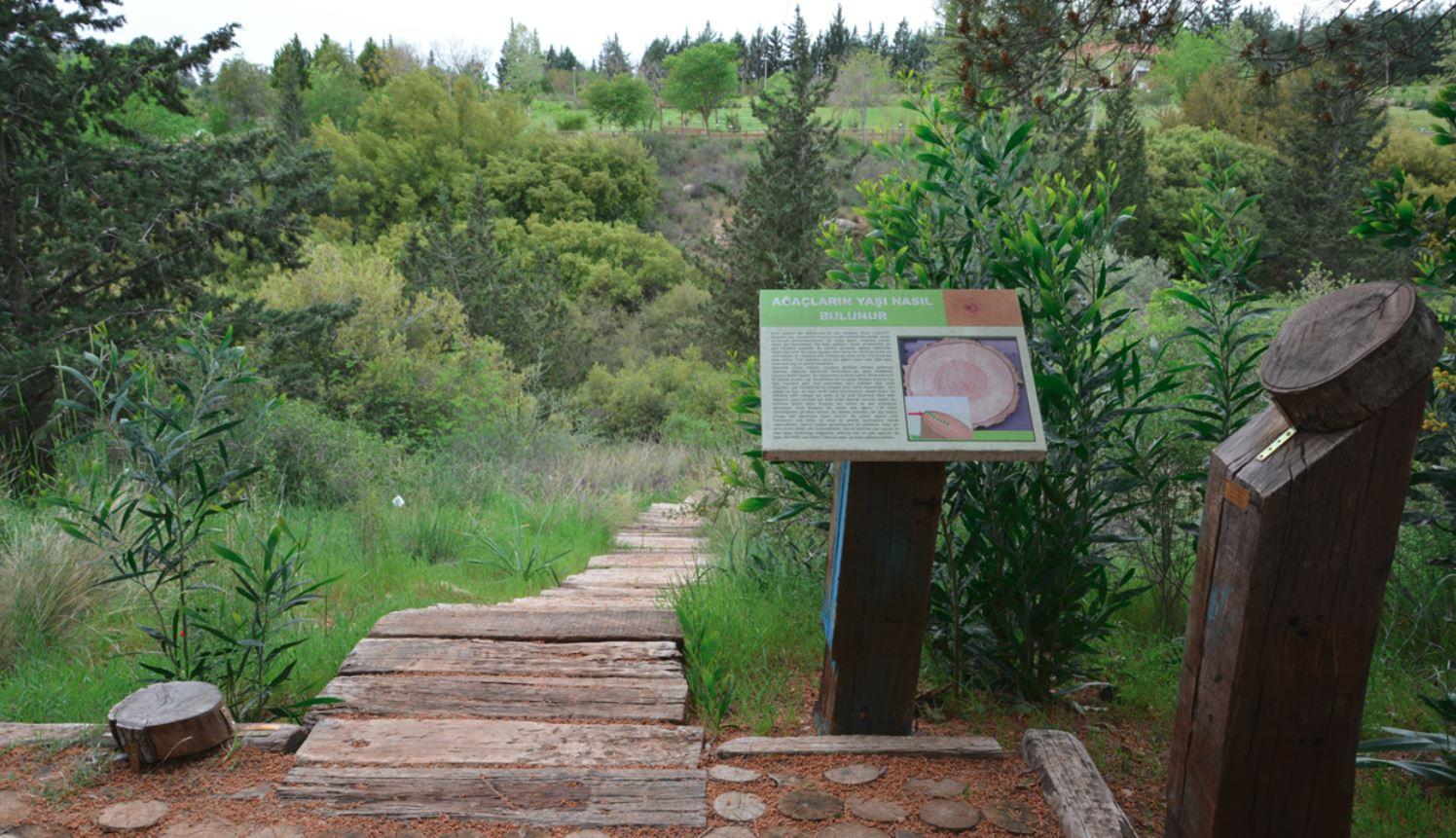
The Çukurova University Botanical Garden was initiated in 1972 by the Department for Landscape Architecture to protect and conserve the rich native and non-native biodiversity of the region for future generations (Ref. 5,9). Its establishment responds to the lack of Botanical Gardens in Türkiye despite the country's great diversity. The Garden also wants to offer protection for increasingly threatened species in the face of rapid and uncontrolled urbanization (Ref. 5,9). Being located close to two Deltas and an important agricultural region, the collection also aims to include a great number of wetland and agricultural species, drawing public attention to the importance of these ecosystems (Ref. 6). As such, the University invites every school in Adana to visit and participate in its ongoing educational activities and primary school children are offered hands-on gardening programmes (Ref. 1,2). Furthermore, visitors can immerse themselves and learn about various vegetation zones, including endemic maquis, where stairs, walking paths and information boards have been installed (Ref. 4). The University maintains research activities in the Botanical Garden and in on site laboratories, which regularly host interns (Ref. 4). To ensure the stready supply of plant material for landscaping and education, nurseries have been set up and in 2020 a 250 m² medicinal and aromatic plant greenhouse was added where students of the Faculty of Agriculture are trained and endemic species grown (Ref. 9,10).

Overview
Nature-based solution
- Blue infrastructure
- Coastal wetland, mangroves and salt marshes
- Parks and urban forests
- Botanical gardens
Key challenges
- Green space, habitats and biodiversity (SDG 15)
- Green space creation and/or management
- Habitat and biodiversity conservation
- Cultural heritage and cultural diversity
- Preservation of natural heritage
- Protection of historic and cultural landscape/infrastructure
- Social justice, cohesion and equity (SDG 10)
- Environmental education
- Economic development and employment (SDG 8)
- Economic development: agriculture
- Tourism support
- Sustainable consumption and production (SDG 12)
- Sustainable production
Principal problems in Functional Urban Area (FUA)
- Environmental Degradation
- Biodiversity loss
- Land use and Socio-economic change
- Rapid urbanization
- Health, Well-being and Social cohesion
- Disconnection from nature
Key priorities
Focus
Project objectives
Implementation activities
Biodiversity conservation or restoration-focused activities
Biodiversity conservation:
- Protect and enhance urban habitats
- Preserve and strengthen existing habitats and ecosystems
- Create new habitats
- Reduce negative impacts and avoid the alteration/damage of ecosystem
- Protect species
- Undertake specific measures to protect species
- Undertake specific measures to protect native species
- Undertake specific measures to protect endangered species
- Undertake specific measures to protect valued species
- Means for conservation governance
- Manage biological resources for conservation and sustainable use
- Raise public awareness
- Public engagement
- Create and use scientific knowledge for conservation
Main beneficiaries
- Public sector institution (e.g. school or hospital)
- Researchers/University
- Citizens or community groups
- Young people and children
Governance
Management set-up
- Co-governance with government and non-government actors
Type of initiating organisation
- Researchers/university
Participatory approaches/ community involvement
- Dissemination of information and education
- Joint implementation (e.g. tree planting)
Details on the roles of the organisations involved in the project
Project implemented in response to ...
Type of enablers
Financing
Total cost
Source(s) of funding
- Unknown
Type of funding
- Unknown
Non-financial contribution
- Provision of labour
- Provision of expertise
- Other
Impacts and Monitoring
Environmental impacts
- Water management and blue areas
- Enhanced protection and restoration of coastal and marine ecosystems
- Expected enhanced protection and restoration of coastal and marine ecosystems
- Green space and habitat
- Increased green space area
- Achieved increased green space area
- Increase in protected green space areas
- Achieved increase in protected green space areas
- Increased number of protection areas
- Achieved increased number of protection areas
- Increased conservation or restoration of ecosystems
- Achieved increased conservation or restoration of ecosystems
- Reduced biodiversity loss
- Achieved reduced biodiversity loss
- Increased number of species present
- Achieved increased number of species present
- Increased presence and recovery of wild species
- Achieved increased presence and recovery of wild species
- Increased protection of threatened species
- Achieved increased protection of threatened species
Economic impacts
- Generation of other type of work opportunities (e.g. voluntary, work for rehabilitation)
- Achieved generation of other type of work opportunities (e.g. voluntary, work for rehabilitation)
- Increase in agricultural production (for profit or not)
- Achieved increase in agricultural production (for profit or not)
Socio-cultural impacts
- Cultural heritage and sense of place
- Improvement in people’s connection to nature
- Achieved improvement in people’s connection to nature
- Protection of natural heritage
- Achieved protection of natural heritage
- Increased awareness of flora and fauna as culturally and historically meaningful
- Achieved increased awareness of flora and fauna as culturally and historically meaningful
- Expected increased awareness of flora and fauna as culturally and historically meaningful
- Education
- Increased support for education and scientific research
- Achieved increased support for education and scientific research
- Increased knowledge of locals about local nature
- Achieved increased knowledge of locals about local nature
Type of reported impacts
Presence of formal monitoring system
Presence of indicators used in reporting
Presence of monitoring/ evaluation reports
Availability of a web-based monitoring tool
Potential risks of implementation and trade-offs
References
 Information about this nature-based solution was collected as part of the Naturescapes project funded by the European Union under Grant Agreement No 101084341.