

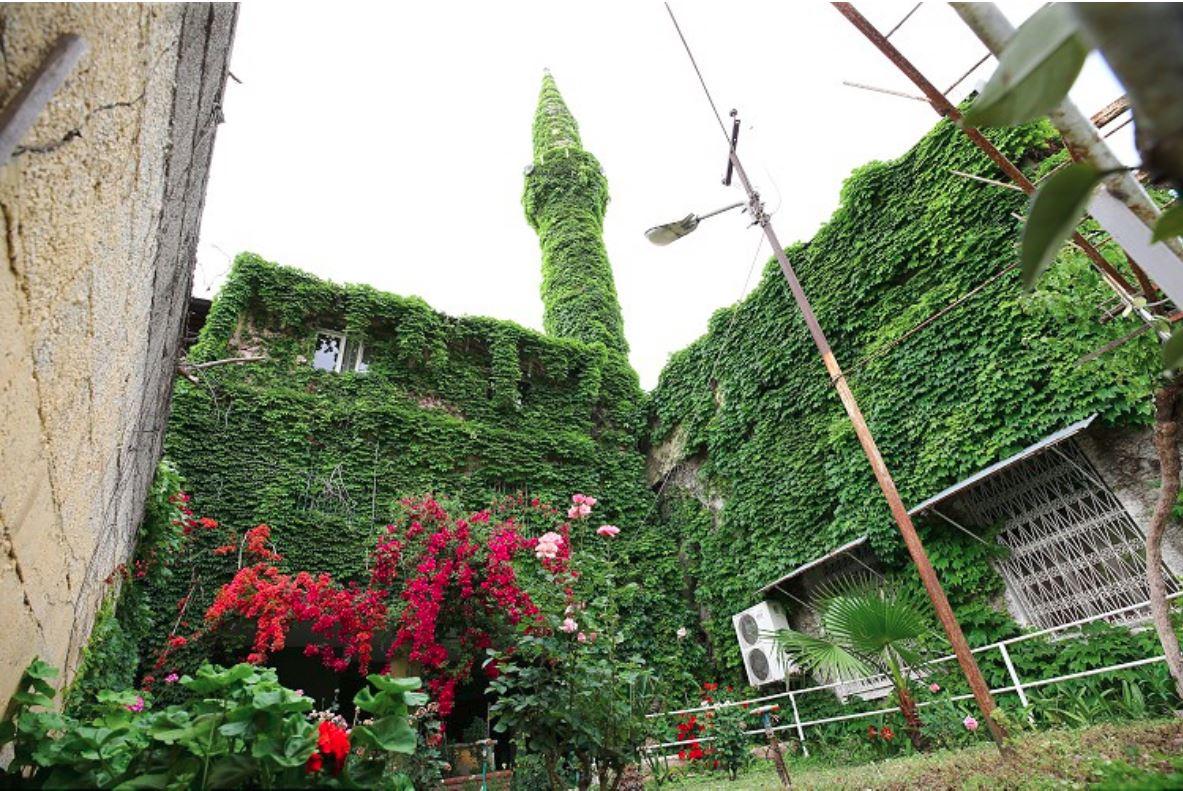
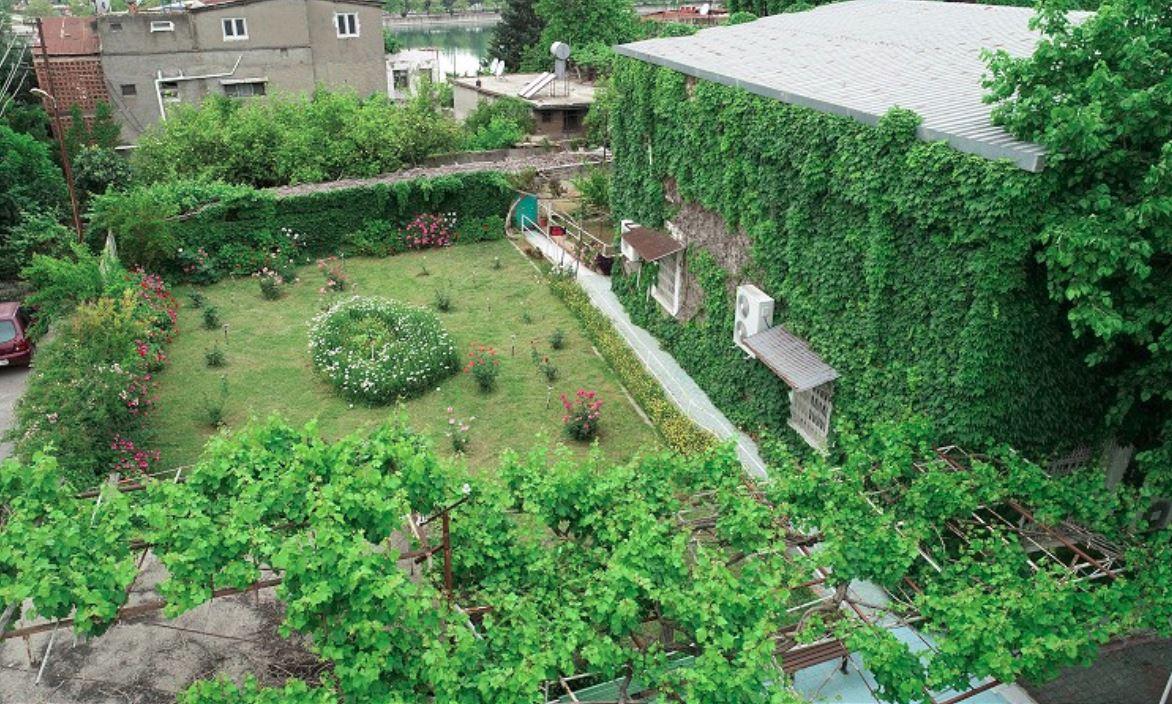
The Köprüköy Mosque in Adana, commonly named "green mosque", is one of a kind in Türkiye (Ref. 2,5). Its building and minaret are almost entirely covered by poison ivy and appear in vivid green colour from afar. Founded in 1929, it had to be remodelled in the early 60s as it couldn't sufficiently accommodate worshippers in the growing district. The mosque was then entirely built and rebuilt by the community, with its maintenance overseen by the mosque's protection association (Ref. 4). In the 70s, the ivy was planted and has since helped to protect the building from environmental stressors and keep visitors inside the garden and mosque cool during the summer heat (Ref. 4,5,6) Furthermore, the mosque’s well-maintained garden, home to around 280 species, is adored by local, national, and international visitors and tourists, as well as the media (Ref. 1,3,7). Frequent maintenance and rotation of the garden's flowers keep its appearance and function intact, one of which is the profound impact on visitors’ well-being, with many praising the unique atmosphere of the mosque that evokes peace, comfort, and spirituality (Ref. 1,3,4). During COVID-19, the mosque could only host worshippers during praying hours, after which it quickly continued to bring people back together to garden, rest and socialize throughout the day (Ref. 1).
Overview
Nature-based solution
- Grey infrastructure featuring greens
- Institutional green space
- Nature on buildings (external)
- Green walls or facades
Key challenges
- Climate action for adaptation, resilience and mitigation (SDG 13)
- Climate change adaptation
- Green space, habitats and biodiversity (SDG 15)
- Green space creation and/or management
- Habitat and biodiversity restoration
- Regeneration, land-use and urban development
- Regulation of built environment
- Promote natural styles of landscape design for urban development
- Cultural heritage and cultural diversity
- Protection of historic and cultural landscape/infrastructure
- Health and well-being (SDG 3)
- Creation of opportunities for recreation
- Improving mental health
- Social justice, cohesion and equity (SDG 10)
- Social cohesion
- Social interaction
- Sense of community and community engagement
- Economic development and employment (SDG 8)
- Tourism support
Principal problems in Functional Urban Area (FUA)
- Climate-Related Hazards
- Heat stress & Extreme temperatures
- Land use and Socio-economic change
- Rapid urbanization
Key priorities
Focus
Project objectives
Implementation activities
Climate-focused activities
Climate change adaptation:
- Implement green walls or roofs to lower indoor temperature and provide insulation
Biodiversity conservation or restoration-focused activities
Biodiversity restoration:
- Restore valued species
- Public engagement
Main beneficiaries
- Citizens or community groups
- Young people and children
- Other
Governance
Management set-up
- Led by non-government actors
Type of initiating organisation
- Citizens or community group
Participatory approaches/ community involvement
- Joint implementation (e.g. tree planting)
- Co-management/Joint management
Details on the roles of the organisations involved in the project
Project implemented in response to ...
Type of enablers
Financing
Total cost
Source(s) of funding
- Unknown
Type of funding
- Donations
- Other
Non-financial contribution
- Provision of labour
- Citizens (e.g. volunteering)
Impacts and Monitoring
Environmental impacts
- Climate change
- Lowered local temperature
- Achieved lowered local temperature
- Green space and habitat
- Increased green space area
- Achieved increased green space area
- Increased number of species present
- Achieved increased number of species present
Economic impacts
- More sustainable tourism
- Achieved more sustainable tourism
- Generation of income from NBS
- Achieved generation of income from NBS
Socio-cultural impacts
- Social justice and cohesion
- Improved social cohesion
- Achieved improved social cohesion
- Increased opportunities for social interaction
- Achieved increased opportunities for social interaction
- Increased involvement of locals in the management of green spaces
- Achieved increased involvement of locals in the management of green spaces
- Health and wellbeing
- Improved mental health
- Achieved improved mental health
- Enhanced cognitive restoration, relaxation and stress relief
- Achieved enhanced cognitive restoration, relaxation and stress relief
- Cultural heritage and sense of place
- Protection of historic and cultural landscape / infrastructure
- Achieved protection of historic and cultural landscape / infrastructure
- Preserved spiritual and religious values
- Achieved preserved spiritual and religious values
Type of reported impacts
Presence of formal monitoring system
Presence of indicators used in reporting
Presence of monitoring/ evaluation reports
Availability of a web-based monitoring tool
Potential risks of implementation and trade-offs
References

 Information about this nature-based solution was collected as part of the Naturescapes project funded by the European Union under Grant Agreement No 101084341.