

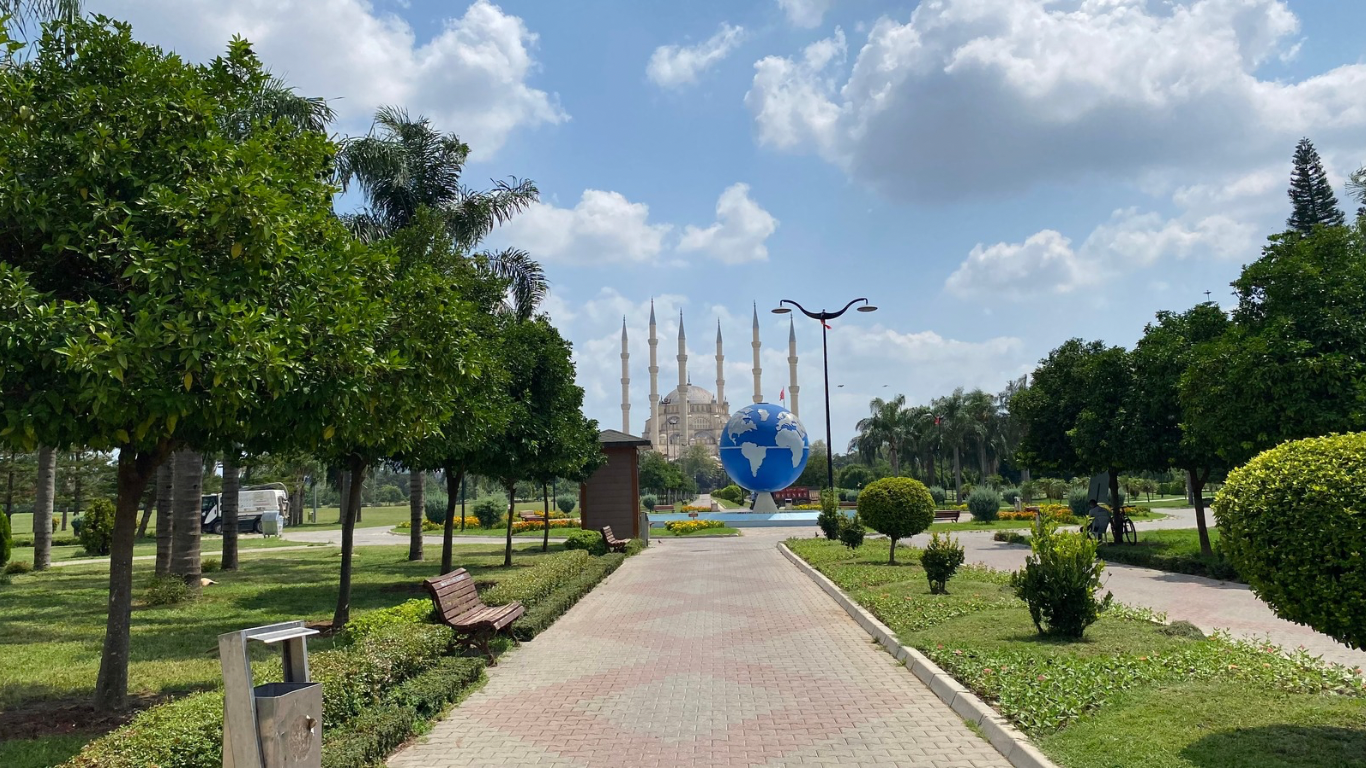
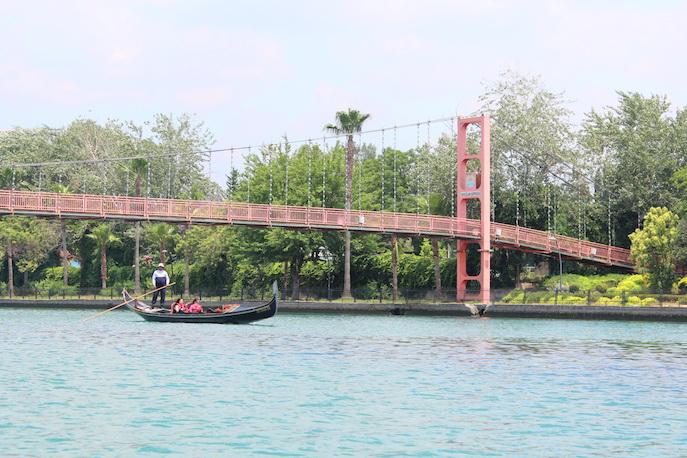
The Adana Central Park stretches along both riverbanks of the Seyhan River. The idea was first introduced by the former mayor of the city, Aytaç Durak, in the late 80s to address the need for accessible green spaces in the developing area (Ref, 2). Previously, citrus gardens and informal settlements were located on these riverbanks, which now host over 400.000 plants and 67 different tree species on an area of 33 ha (Ref. 2,5,6). In 1998 construction of the park began, which lasted until 2004 (Ref. 2,5). The park is appreciated by visitors for its aesthetically landscaped appearance and the many amenities for children, youth, relaxation and socializing (Ref. 7). The two sides of the river are connected via bridges or, alternatively, visitors can board the Venetian style gondolas to access either side (Ref. 5). In 2021, park lighting infrastructure has been extensively replaced to ensure accessibility and safety during day and nighttime (Ref. 3).

Overview
Nature-based solution
- Parks and urban forests
- Large urban parks or forests
Key challenges
- Green space, habitats and biodiversity (SDG 15)
- Green space creation and/or management
- Habitat and biodiversity restoration
- Regeneration, land-use and urban development
- Promote natural styles of landscape design for urban development
- Health and well-being (SDG 3)
- Creation of opportunities for recreation
- Enabling opportunities for physical activity
- Social justice, cohesion and equity (SDG 10)
- Social interaction
Principal problems in Functional Urban Area (FUA)
- Health, Well-being and Social cohesion
- Inadequate access to recreational opportunities
- Insecurity in public spaces
Key priorities
Focus
Project objectives
Implementation activities
Biodiversity conservation or restoration-focused activities
Biodiversity restoration:
- Restore species (native, endangered, or unspecified)
- Restore ecological connectivity
Main beneficiaries
- Citizens or community groups
- Young people and children
Governance
Management set-up
- Government-led
Type of initiating organisation
- Local government/municipality
Participatory approaches/ community involvement
- The project didn't involve any form of stakeholder participatory activities
Details on the roles of the organisations involved in the project
Project implemented in response to ...
Type of enablers
Financing
Total cost
Source(s) of funding
- Public local authority budget
Type of funding
- Unknown
Non-financial contribution
Impacts and Monitoring
Environmental impacts
- Green space and habitat
- Increased green space area
- Achieved increased green space area
- Increased number of species present
- Achieved increased number of species present
Economic impacts
- More sustainable tourism
- Achieved more sustainable tourism
Socio-cultural impacts
- Social justice and cohesion
- Improved access to urban green space
- Achieved improved access to urban green space
- Increased opportunities for social interaction
- Achieved increased opportunities for social interaction
- Health and wellbeing
- Gain in activities for recreation and exercise
- Achieved gain in activities for recreation and exercise
- Enhanced cognitive restoration, relaxation and stress relief
- Achieved enhanced cognitive restoration, relaxation and stress relief
- Cultural heritage and sense of place
- Improvement in people’s connection to nature
- Expected improvement in people’s connection to nature
- Safety
- Increased perception of safety
- Achieved increased perception of safety
Type of reported impacts
Presence of formal monitoring system
Presence of indicators used in reporting
Presence of monitoring/ evaluation reports
Availability of a web-based monitoring tool
Potential risks of implementation and trade-offs
References
 Information about this nature-based solution was collected as part of the Naturescapes project funded by the European Union under Grant Agreement No 101084341.